
Creator Workflows
Can Your Team Offer HeyGen Instant Voice Cloning for Client Videos?
HeyGen documents an instant voice cloning path. An agency still needs speaker authorization, workspace access, clear terms, and an approved sample before promising client delivery.

On this page
- Define the service before you promise the voice
- Separate a documented API path from an available client service
- Get the speaker’s authorization before handling a recording
- Check account access and commercial terms before quoting a client
- Build one authorized pilot that answers a delivery question
- Give each failure state an owner and a next action
- Review the voice as part of the client’s video
- Plan who may use the voice after the first video
- Make a limited offer, or explain the hold
A client asks your video team to make next month’s updates sound like their founder. HeyGen’s Instant Voice Clone guide describes a way to create a voice from one recording and generate speech with it. That gives the team a possible production method. It does not yet give the team a service it can responsibly promise.
Before you put voice cloning in a client proposal, you need to settle whose voice you may use, what the speaker has approved, whether your workspace can create the clone, what the work will cost, and who can accept the finished narration. HeyGen says it requires the voice owner’s explicit consent. Its public guide describes the API steps but does not show how that endpoint verifies consent. No account request or audio test was performed for this article.
The useful decision is whether your team is ready to offer one defined service to one client. Treat the first project as a conditional pilot. Promise delivery only after the speaker authorizes its scope, your workspace has the required access, the applicable terms are clear, and the speaker approves a sample in its intended video. If any of those conditions remains open, describe the service as an option under evaluation.
 View image detail
“Voice cloning for client videos” can mean several different jobs. One client may want a founder to narrate monthly updates without recording every revision. Another may want a training library in a consistent voice. A third may ask for a one-off correction to an existing video. Those examples are possible requests, not reported HeyGen projects. Each request changes what the speaker must understand and what the team must deliver.
Start with a service brief that a client and speaker can read without knowing the API. Name the speaker, the videos, the intended audience, the language, the person who may submit scripts, and the person who approves the audio. State whether the work covers one video, a series, later edits, or new campaigns. A vague approval to “use my voice” leaves too much for the production team to guess when the next request arrives.
Take a hypothetical monthly founder update. The client wants the founder’s voice on four short videos about product changes. The founder can review a sample before the first video and approve each finished narration. The team can now ask a meaningful question: can it produce those four videos under that permission and review process? A successful test of one sentence would answer only part of it. It would not automatically authorize a new language, a different message, or a fifth video months later.
Write down the deliverable as well. Is the client buying approved audio files, finished videos, or continuing access to a reusable voice? Who handles a corrected product name after approval? What happens when the speaker declines a line? These are service design questions, not features HeyGen claims to solve. Answering them before the sales conversation prevents a technical demo from quietly becoming a promise about rights, revisions, and ongoing support.
 View image detail
On October 9, 2026, HeyGen announced HeyGen Voice as its in-house voice model. HeyGen describes it as part of the same stack as its avatar work. That announcement explains what the company says it launched. It does not establish what a particular agency account can access or whether a particular client will approve the output.
The captured Instant Voice Clone guide gives a narrower technical path. It describes submitting one recording to POST /v3/models/audio/voices with mode set to instant. The request returns a voice ID. After the voice reaches ACTIVE status, the developer can pass that ID to POST /v3/models/audio/tts with the heygen-voice-1 model to generate speech. The guide also describes processing failures and a 403 access-denied response for a workspace that cannot create clones.
Those steps are useful when planning a pilot, but documentation is not a completed request. This article has no authorized workspace result, generated file, listening review, or client approval to report. A delivery promise needs the actual account, speaker, input, output, terms, and review path to work together.
The timing evidence has a limit too. The captured guide shows no publication or update date, and the supplied changelog address returned no readable text. The October 9 release dates HeyGen’s formal announcement. These captures cannot establish when the instant-clone or speech endpoints first became available. Avoid telling a client that the API only appeared on announcement day or had already been available beforehand.
 View image detail
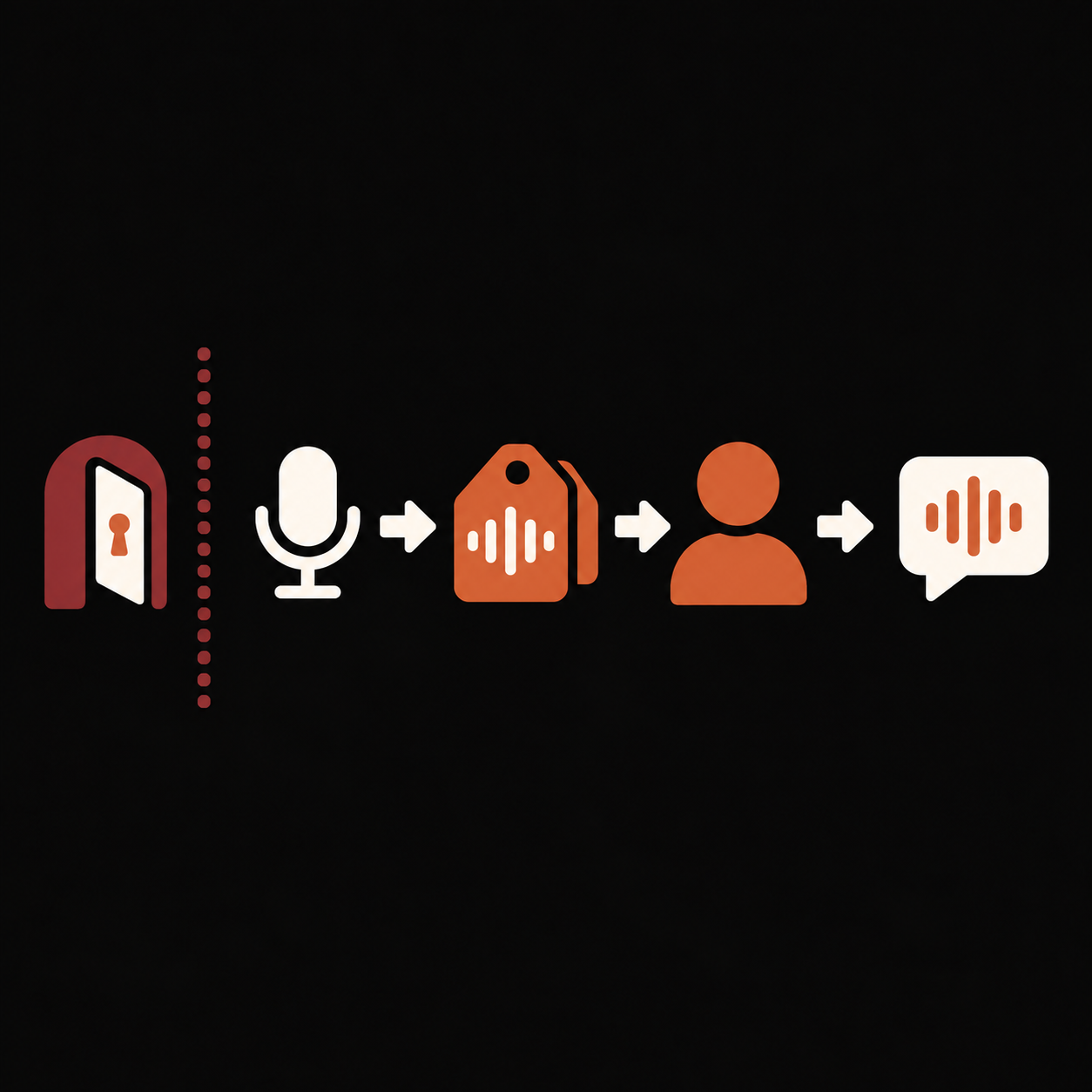
HeyGen’s release says it requires the voice owner’s explicit consent and describes safeguards in its avatar products. The captured instant-clone guide explains request fields and processing states, but it does not explain how that API endpoint checks the speaker’s consent. Treat HeyGen’s statement as a vendor policy claim and establish your own record of the speaker’s authorization for the work you propose. Do not assume that an upload field or a successful request proves permission.
Ask the speaker to approve a specific use. The useful questions are plain: Which videos may carry this voice? Who may write the words? May the team make corrections after the first approval? May it use the voice in another language or campaign? Who gets to hear the sample before a client sees it? A team can place those answers in its normal intake and approval process. This article does not claim that HeyGen offers fields for each limit or enforces them automatically.
The hypothetical founder update makes the boundary visible. Suppose the founder authorizes four monthly product videos. A later request for a fundraising pitch is a new use to discuss, even if the team can generate the audio with the same voice ID. Technical reuse and permission are separate decisions. If a staff member says the founder “will be fine with it,” ask the founder. A realistic clone increases the need to be precise about whose words the output represents.
 View image detail
Keep the recording itself within the agreed pilot. HeyGen's Instant Voice Clone guide says an instant clone uses one recording and only its first three minutes. That technical limit does not tell you which recording the team has the right to upload. Choose material the speaker has authorized for this purpose, and give the team a clear owner for receiving and handling it. If permission is incomplete, pause before upload. A clean sample made from an unauthorized recording would not make the service ready.
Speaker authorization should also cover review. A person may agree to a trial and reject the generated result because it sounds wrong or says something they would not say. Give that person a real chance to stop the project or request a revision. The production team can judge sound quality and edit fit; the speaker decides whether the representation of their voice is acceptable within the agreed use.
A public API guide is evidence of a documented route, not evidence that your workspace may use it. HeyGen's clone guide lists a 403 resource_access_denied response when a workspace is not allowed to create voice clones. Confirm eligibility in the account that would perform the client work. If the workspace cannot create a clone, resolve that access question with HeyGen before you promise a date or price. Do not build a client delivery schedule on the assumption that public documentation guarantees permission.
Billing needs the same care. HeyGen's October 9 release says HeyGen Voice is available free within the platform and API, without defining included usage. Its API pricing help page says it has offered no free API credits since February 2026 and describes a separate pay-as-you-go API balance. That page does not say whether the new Voice launch has an exception. The current Artificial Analysis Controlled Voice leaderboard lists $30 per million characters for HeyGen Voice at the model creator's default API settings. This dated benchmark is not a quote for the client's workspace and does not resolve the vendor's differing “free” and credit statements. HeyGen's speech guide documents the speech route and says an X-Request-Id can be matched to usage records. Confirm the workspace's current rate, credits, and billing unit before quoting a margin.
The release also describes Professional Voice Clone as a $99-per-month add-on using 30 minutes to three hours of the owner’s speech with explicit consent. That is a dated vendor statement about a separate offering. It is not the price of the one-recording instant path, a current checkout quote, or proof of eligibility for either option. Keep the two offerings separate in the proposal and confirm current terms if the client wants the professional path.
For the hypothetical four-video service, use the $30-per-million-character listing only as a benchmark, then replace it with the rate and included credits shown for the actual workspace. Estimate the entire production job, including audio generated for rejected takes and corrections, staff work to prepare scripts, speaker review, editing, and any applicable plan or add-on fee. A client quote based only on the final minutes of audio could miss the work that actually determines whether the service is profitable. Keep unverified account charges blank rather than treating the benchmark or the word “free” as the client's price.
 View image detail
The pilot should test a small version of the exact service you might sell. Use the authorized speaker, a script that resembles the intended videos, and a person who can approve the result. Include a name or product term that matters to the client, a sentence whose emphasis matters, and a likely correction. The aim is to learn whether the team can deliver approved narration for this scope.
The captured clone guide describes several ways to provide the single recording, including an uploaded asset, a public audio URL, or inline audio. It says only the first three minutes are used and that a silent recording fails. These are documented conditions, not a recommendation to expose client audio through a public URL. Choose an input route your team and speaker have approved, and record the actual route used. This article does not contain a recording, an API key, or a completed request.
For a proposed API pilot, submit the authorized recording with mode set to instant and retain the returned voice ID. Wait for ACTIVE before asking the model to speak. Then submit a short approved script to the documented text-to-speech endpoint. The guide describes these steps and says a speech request for a PENDING voice returns voice_not_ready. An operator still needs to read the current documentation and use the account’s own credentials and permissions when performing the pilot.
Save enough information to explain the result later: the approved scope, script version, recording owner, account and plan, relevant request outcome, generated audio, review comments, and any observed charge. This is a proposed record for future work, not a claim that Rise ran the workflow. Keep client approval tied to the exact sample and intended video. Approval of one line does not establish approval of every sentence the team may generate later.
A useful pilot ends with a decision. If the voice reaches ACTIVE and produces audio, ask the speaker whether it represents them appropriately. Ask the editor whether the line fits the video and whether a corrected sentence can be delivered without avoidable repair. If those checks pass and the terms are clear, the team can consider a limited paid offer. If they fail, the pilot has still answered a useful question before the team commits to a broad service.
 View image detail
The clone guide describes PENDING, ACTIVE, and FAILED voice states. PENDING means the recording is still being checked and prepared; the team should wait rather than report a usable voice. ACTIVE means the guide says the voice can speak; the team can attempt the approved sample. FAILED is final for that voice and includes a reason. None of these documented states tells us how often a real account will encounter a problem.
The clone guide names INVALID_AUDIO when the recording cannot be fetched or read, PREPROCESSING_FAILED when checks do not pass, DESIGN_FAILED when a voice cannot be made after the checks, and INTERNAL_ERROR for a HeyGen-side failure. It also advises that supplying a language can help rule out failed detection in one preprocessing case. These labels help the operator explain a result and choose a next attempt. They do not justify promising that every failure is easy to fix or that the first recording will work.
Decide in advance who acts on each result. A recording problem goes back to the person preparing the source file. An access denial goes to the account owner or HeyGen support. A voice that remains PENDING delays the sample review. A speaker’s rejection goes back to the service owner, even when the API returned a successful file. That last distinction matters: technical success is only one step toward an approved client deliverable.
Set a stop rule for the pilot. If the team lacks authorization, access, clear terms, or an approved sample, it should not present the service as ready. The team can explain the specific missing condition to the client and give a date for its next check if it has one. It should not turn an undocumented workaround into a production promise. A short, honest hold protects a longer client relationship better than a confident estimate built on an unresolved gate.
 View image detail
HeyGen describes its model as preserving natural emphasis, emotion, and pacing. That is the company’s product claim. The captured packet contains no audio sample that this article can inspect. In a future pilot, the speaker should judge identity fit, pronunciation, tone, and whether the words represent them. The editor should judge timing, clarity, and how the narration works with the visual cut. Both reviews matter because they answer different questions.
Put the generated line into a rough version of the intended video. A voice that sounds fine alone may place the wrong stress on a product term or rush through an on-screen instruction. Make one realistic script correction and review that replacement in the same context. Record the repair work: a respelled name, a rewritten sentence, a second take, a timing edit, or a rejected line. These are fields for the proposed pilot record, not outcomes observed here.
Keep approval specific. A speaker might approve the voice’s sound but reject a sentence. A client might approve the words but ask for a different pace. The team should know whose decision controls each revision and which version becomes the deliverable. If nobody owns the final approval, the team can produce many technically valid files without completing the service it sold.
 View image detail
A reusable voice creates work beyond the first approved file. Decide who in the team can request new speech, who checks the script against the authorized scope, and how the speaker can question or stop a proposed use. These are operating choices for the client relationship. For a recurring series, Rise's reusable-voice guide outlines separate continuity and producer-handoff checks. The captured guide does not establish a full consent-management or revocation system, so do not describe one as an observed HeyGen feature.
The clone guide documents listing and deleting voices, including deleting an instant voice while it is PENDING to cancel creation. That can inform an offboarding checklist, but deletion of a voice ID alone does not establish what happens to every recording, generated audio file, backup, or delivered video. Ask HeyGen about retention and account behavior when those details matter to the client, and keep your own deliverable records consistent with the agreement.
Return to the four-video example. At the end of the series, the team needs a decision about future use. It may have permission for another defined series, or it may need a fresh conversation. The next producer should not have to infer permission from a voice ID left in a workspace. Give the client and speaker a clear owner and a written answer before the team treats the clone as a reusable production asset.
 View image detail
A responsible offer can be narrow. For one authorized speaker and a defined video series, the team can offer a pilot followed by production if the workspace has access, the billing terms are clear, and the speaker approves the sample and review process. The scope should name who may request speech, which videos it covers, how revisions work, and what approval means. That is a service a client can evaluate.
If any gate remains open, say which one. “We need to confirm whether this workspace can create an instant clone” gives the client a useful next step. So does “We need the speaker’s approval for this script and the current speech billing terms before we can quote the work.” Neither statement pretends the technology failed. It keeps a possible service from becoming an unsupported commitment.
HeyGen’s announcement makes this pilot worth considering for teams that already deliver video. The captured guide gives a documented route for creating and using an instant voice. Your offer begins only when a real speaker, account, price, sample, and approval path support the exact work you propose to sell. That is the point where an interesting feature becomes a client service.
 View image detail
Checked for this article
Sources
Keep reading
Related posts

Creator Workflows
Should Your Video Team Move Narration Into HeyGen Voice?
HeyGen's new voice model gives video teams a reason to test an integrated narration workflow. Here is how to compare it with a current provider without assuming better quality, lower cost, or account access.
14 min read

Creator Workflows
How to Master Suno v6 Stems: Targeted Song Edits and Inpainting
A source-checked workflow for replacing a song section, extracting only the stems you need, exporting from Studio, and checking the result in a DAW.
15 min read

Creator Workflows
Adobe for Claude: How to Review PDFs and Edit Express Designs
Adobe for Claude pairs Acrobat tools and Express layer editing with conversational reasoning. Here is how to maintain document integrity and signoff.
14 min read