
Automation and Agents
Codex Guardian Review: What Must Reach a Delegated Agent?
A merged Codex pull request describes preserving earlier user restrictions in Guardian handoffs, subject to a shared message cap. Here is the operator decision it raises and the evidence still missing.

On this page
- Why the latest message may be the wrong starting point
- What the merged pull request says changed
- Two context gaps that call for different checks
- A method for deciding whether a review is informed
- Tool discovery is a separate source of confusion
- What the captures cannot establish
- The decision to make before relying on an answer
- Related reading
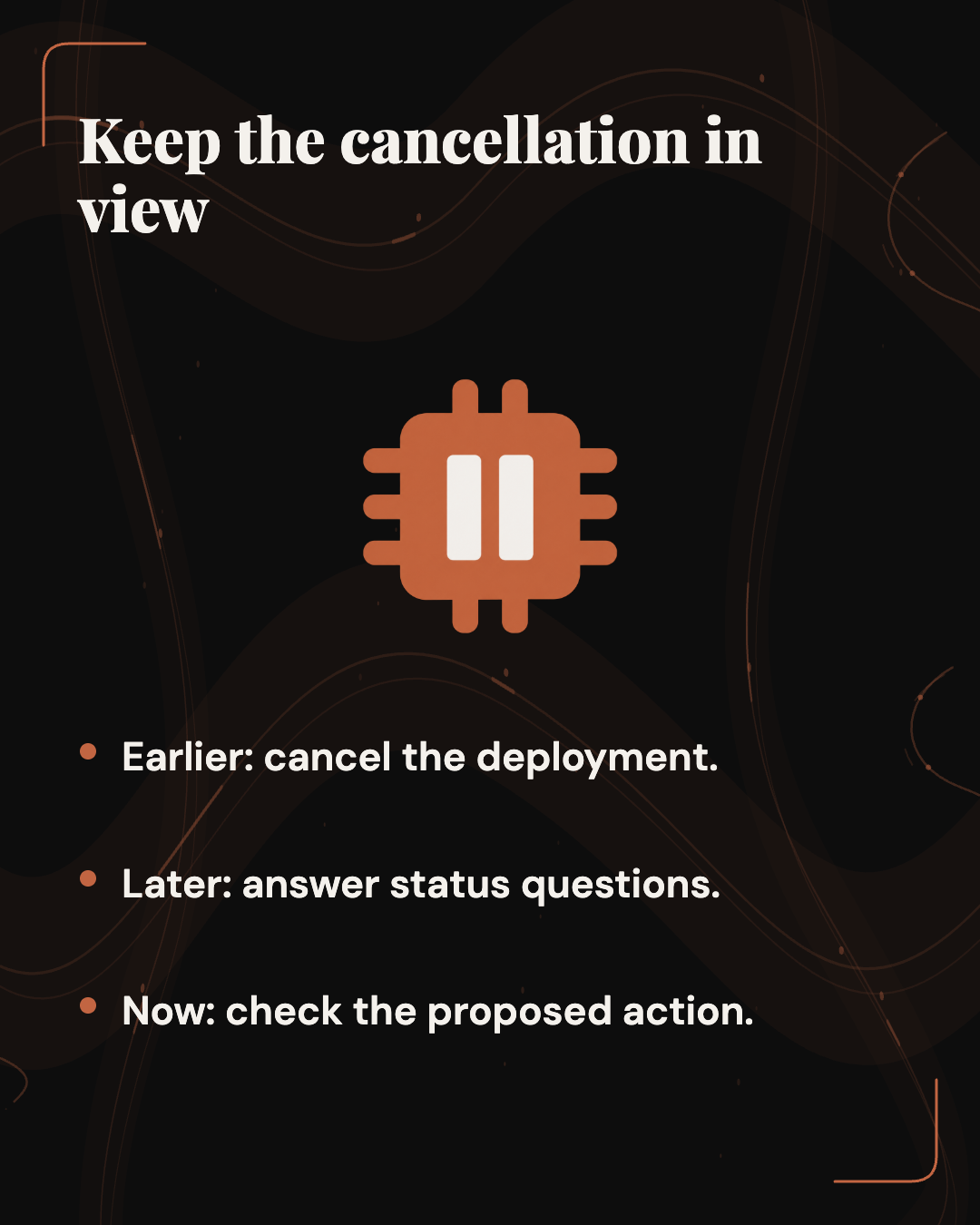
A user says, “Cancel the deployment.” Several unrelated status questions follow. Later, a delegated review assesses what an agent should do. The useful question is whether that review received the earlier instruction. The sequence is an illustration drawn from the rationale in OpenAI Codex pull request #50026, not a deployment or test performed for this article.
The pull request, shown as merged into the Codex main branch on October 1, 2026, says Guardian handoff filtering now preserves messages from the original user, subject to an existing shared message cap. It also describes changes for recurring heartbeats and for cases where filtering removes assistant context. Those are repository statements about a merged change. The captured pages do not show an actual handoff or prove that the change is included in a particular release.
For an operator, the decision is concrete: before relying on a delegated assessment, establish which relevant instructions and conversational context reached it. If that context cannot be inspected, the assessment may still be useful, but its basis is less certain. The pull request explains why an earlier restriction matters. It cannot certify what happened in any particular workflow.
Why the latest message may be the wrong starting point
A conversation has an order, but the last message does not necessarily carry every instruction that still matters. In the pull request’s example, “Cancel the deployment” is followed by unrelated status questions. A review that sees only a recent portion of the exchange could miss the restriction while still seeing a later question about progress. That creates a specific interpretation problem: the review may be asked to assess delegated work without seeing a user message relevant to that assessment.
 View image detail
Picture a hypothetical team preparing a release. An owner cancels the deployment, then asks whether a build completed and whether support has been notified. Those questions can be ordinary requests for information. They do not, by themselves, revoke the cancellation. If a later review receives the status questions but not the earlier restriction, the reviewer needs more context before treating a proposed deployment as consistent with the user’s instructions. This example explains the information problem; it does not describe a recorded Codex run or establish how Codex would decide.
The distinction matters beyond deployments. An agency owner might tell an assistant to hold client delivery until a document is approved, then spend several turns discussing formatting. An operations leader might rule out a particular data source, then ask for an update on the report. In each case, the later message may be recent while the governing instruction is older. These are proposed situations, not reports of product behavior. Their common feature is that an instruction can remain relevant after the conversation’s subject briefly moves elsewhere.
The right question is therefore narrower than “Did the agent remember everything?” Ask which earlier user message bears on the action under review and whether the review received it. That directs attention to an inspectable fact when inspection is possible, rather than to a general impression that the reviewer understood the conversation.
 View image detail
What the merged pull request says changed
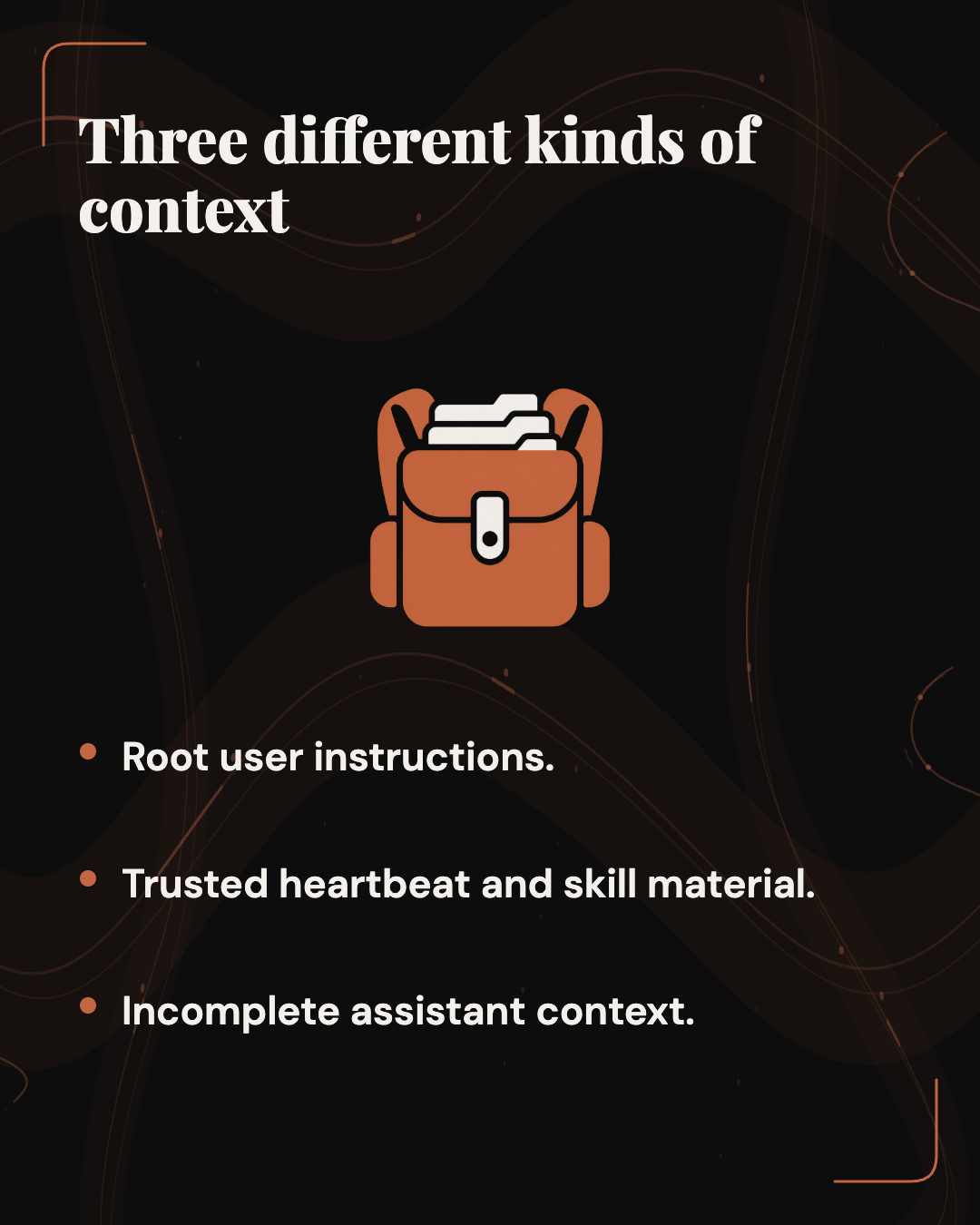
The captured text of PR #50026 describes a change to Guardian handoff relevance filtering. A handoff is the context supplied to a delegated review. Filtering selects material for that context. According to the PR, root user messages are preserved during filtering, subject to the existing shared message cap. “Root user messages” identifies messages from the original user in the conversation. The stated purpose is to keep a restriction such as the deployment cancellation available when later, unrelated messages would otherwise push it outside a recent-message window.
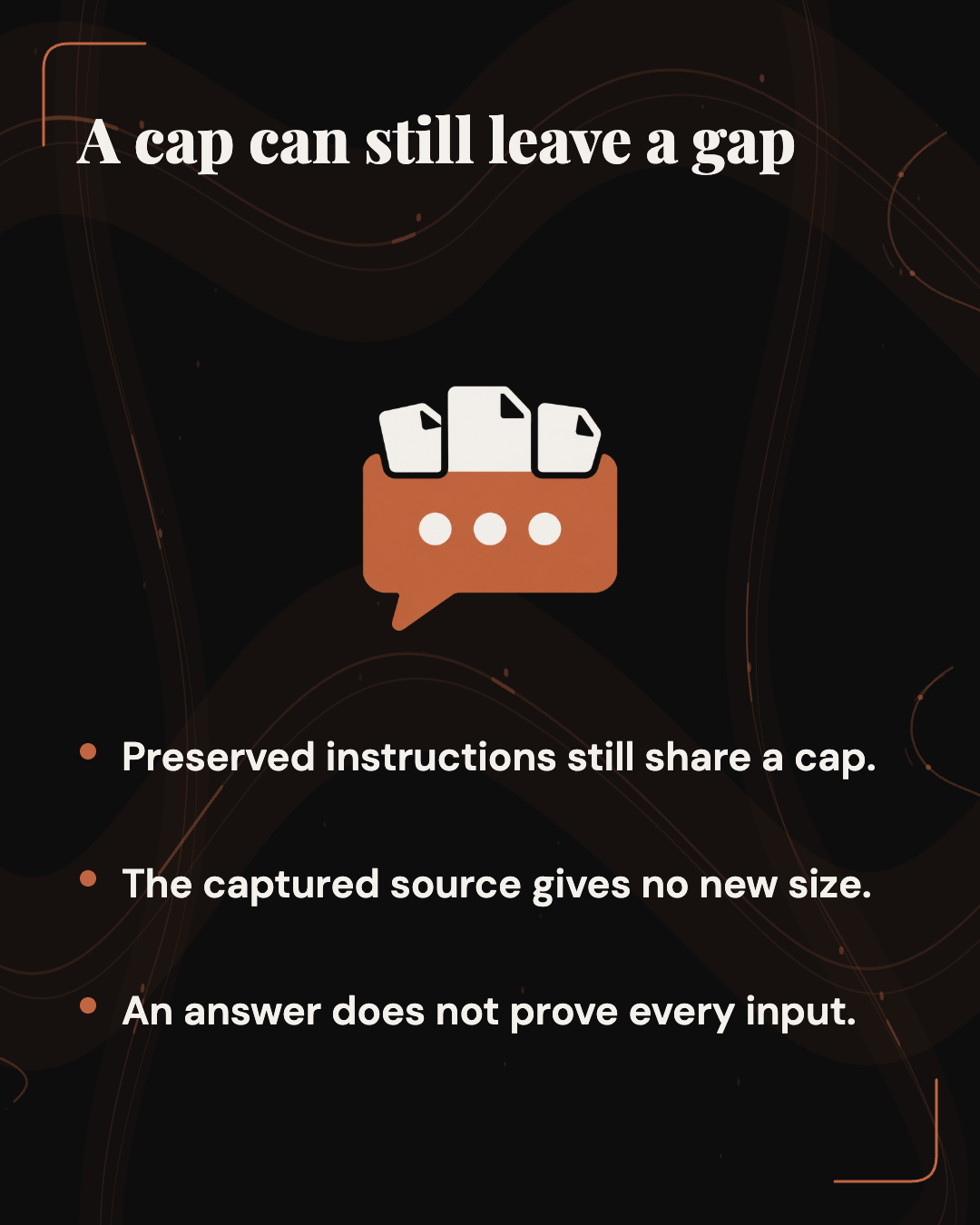
The cap belongs in the same sentence as the change. The source does not say that every older user message survives in every handoff. It says preservation is subject to a shared limit. The captured description does not explain the selection rule when that limit is reached. We can report the intended preservation and the limit; we cannot calculate which message a particular review would receive near the cap.
The PR describes two further changes. Handoff filtering also applies during heartbeats, while saved heartbeat instructions and the active turn’s trusted skills are retained. A heartbeat is a recurring point in the process described by the PR. The capture does not provide a full operational specification for it, so the useful point here is limited: the author considered repeated handoffs, not just the first one, and named material to retain during them.
Finally, the PR says assistant context is marked incomplete when filtering omits it. That marker addresses a different problem from the lost restriction. A user’s short answer can depend on an assistant question that is no longer present. Without the question, an ordinary reply might look like a standalone instruction. Marking the context incomplete signals that the available exchange may not support that reading. The PR reports regression coverage for these cases. Its reported tests are evidence of the change’s development, not an observation of this article’s hypothetical workflow.
 View image detail
Two context gaps that call for different checks
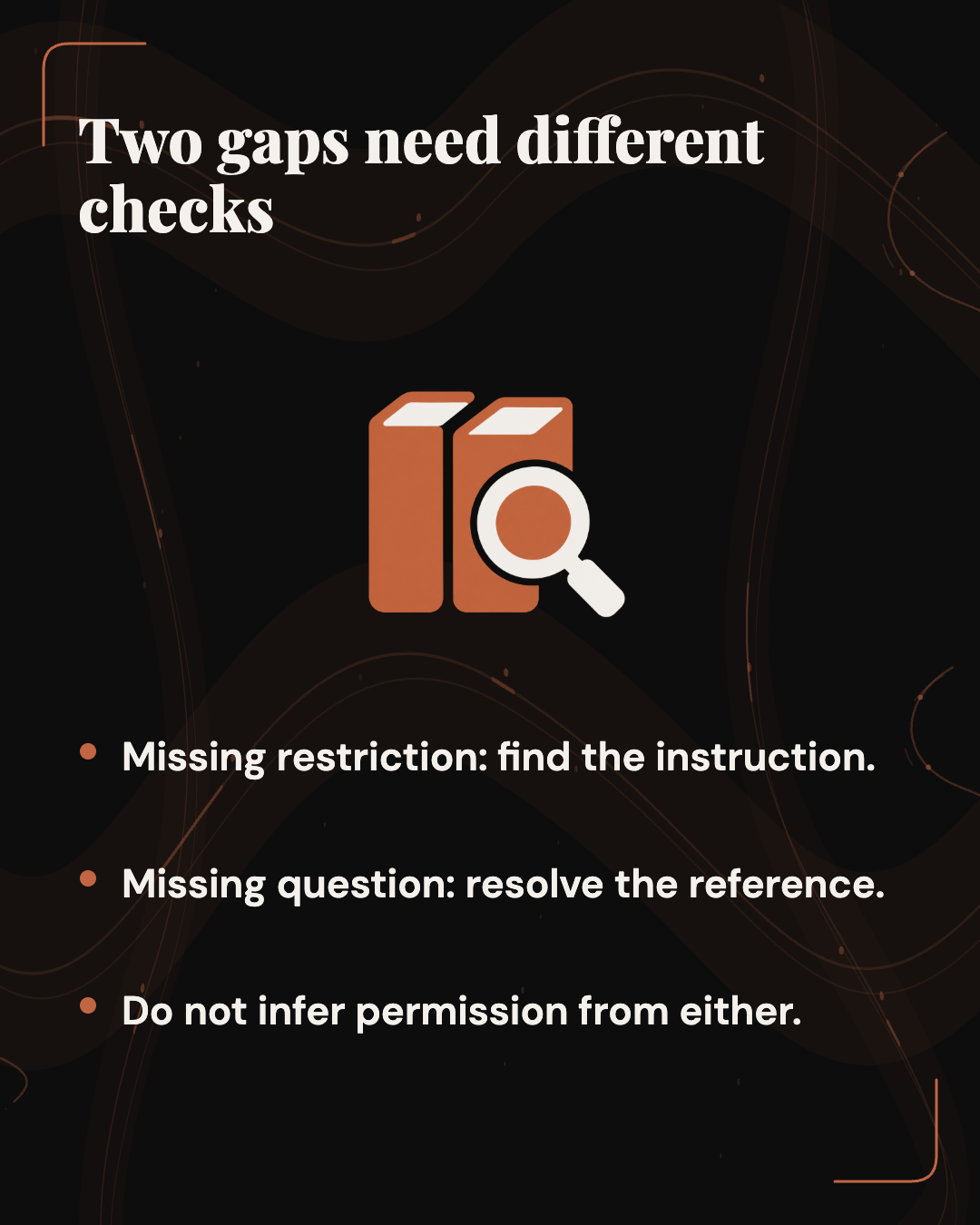
The cancellation example concerns a missing user instruction. Imagine the sequence as four cards: cancellation, status question, another status question, proposed action. If a review receives only the last three, it has the recent discussion but lacks a restriction relevant to the action. The PR’s stated preservation of root user messages addresses this kind of gap. An operator examining an actual handoff, if one is available, would look for the earlier instruction and its wording. A summary saying “the user asked about status” would not establish that the cancellation was supplied.
A second example concerns a missing assistant question. Suppose an assistant asks, “Should I prepare the release notes or send them?” The user replies, “Prepare them.” If filtering removes the question and leaves only the reply, “Prepare them” has less context. It cannot safely be treated as approval to send. This is an invented example of why the PR’s incomplete-assistant-context marker matters. It does not assert that this exact exchange occurred or that the marker alone would prevent an incorrect action.
The checks differ. For the cancellation, look for a specific earlier user message. For the short reply, look for enough surrounding exchange to interpret what the reply answers. These two failures can coexist: a review might have an older restriction but lack a question needed to understand a later answer, or have the question while missing the restriction. A broad statement that “the context was preserved” would hide the distinction.
There is also a practical reason to keep the examples separate. A reviewer can sometimes recognize that a reply lacks its question because the text is obviously incomplete. A missing restriction may leave no visible clue in the remaining conversation. The review may read smoothly while omitting the one sentence that changes the decision. That is an inference about the information presented, not a measured rate of failure. It explains why the source’s focus on original user messages is meaningful.
 View image detail
A method for deciding whether a review is informed
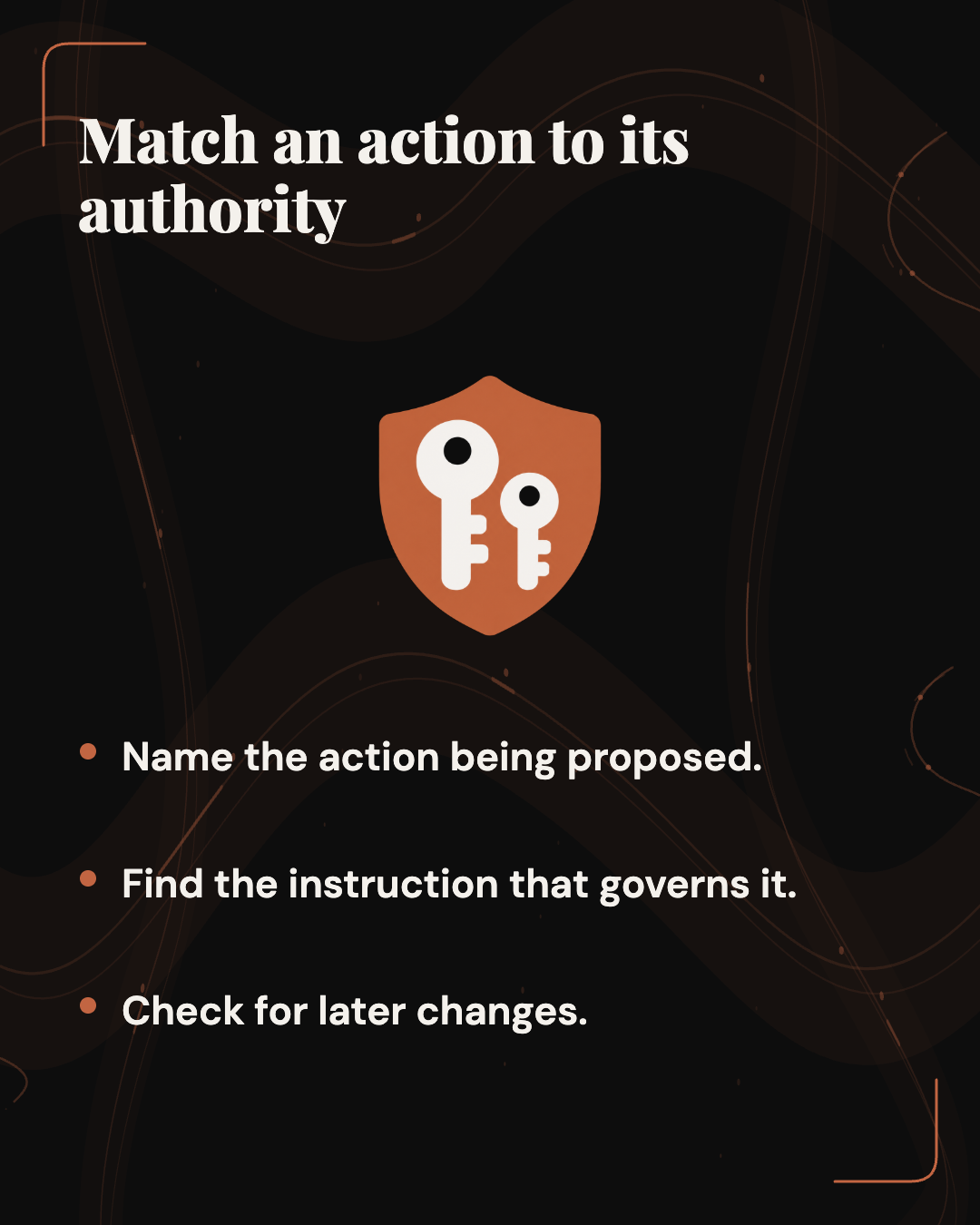
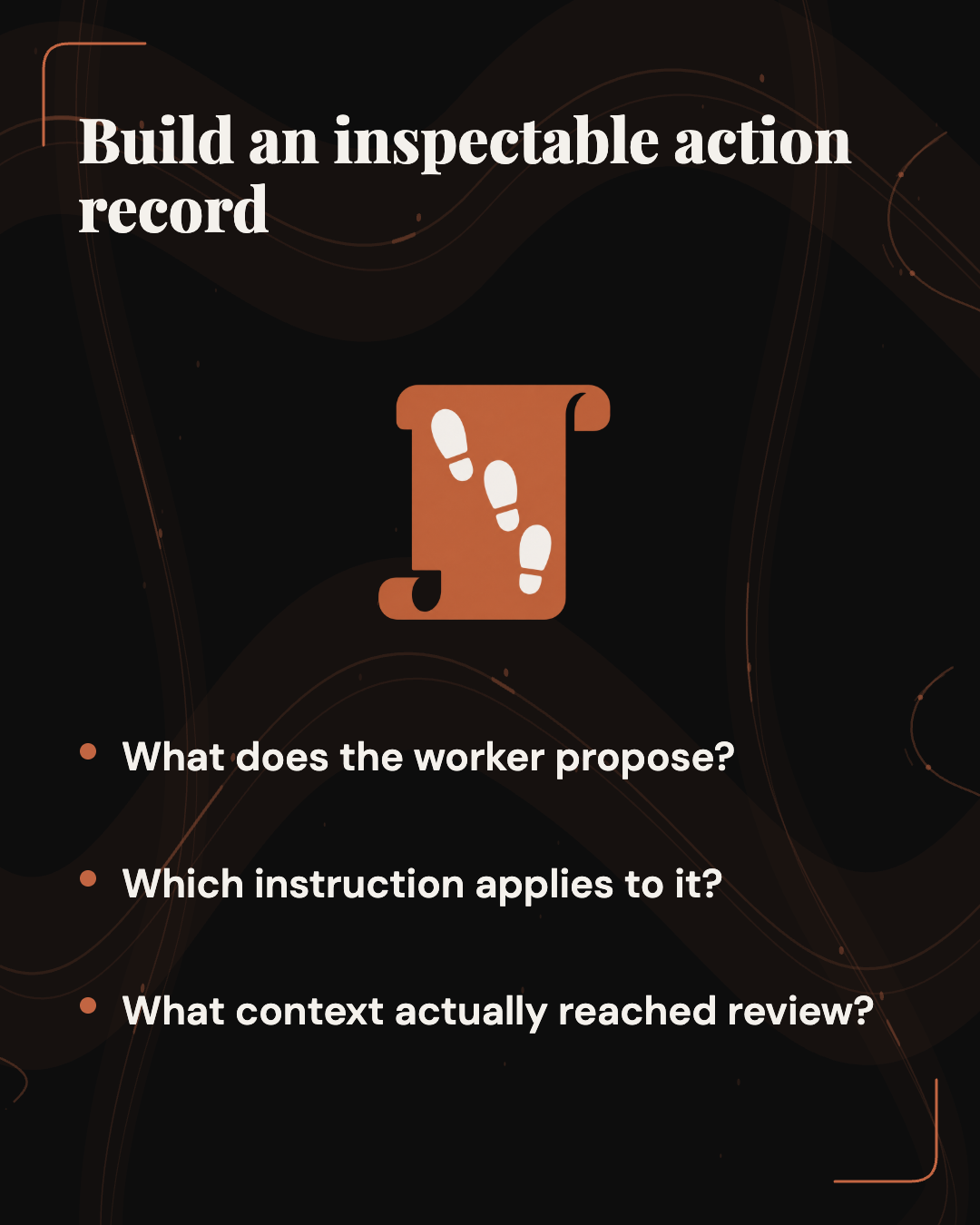
Start with the action being assessed. “Is the deployment allowed?” is more precise than “Does the review look good?” The relevant instruction depends on that action. A cancellation matters to a deployment assessment; it may have little bearing on a separate request to summarize build logs. Naming the action also helps avoid treating every historical message as equally useful.
Next, identify the user instructions that still bear on that action. Write down their actual wording if the workflow permits it. In the hypothetical release sequence, record “Cancel the deployment” as a restriction and treat the later status questions as questions unless their wording changes that restriction. This is an operator’s proposed review practice. The captured PR does not say that Codex provides a particular interface for recording or inspecting these messages.
Consider a later message that says, “The issue is resolved. Deploy the release.” That would call for a different assessment from a message asking, “Is the build ready?” The reviewer would need the wording and order of both the cancellation and the later direction to decide whether the user changed the instruction for the proposed action. If the available context contains only “Deploy the release,” the reviewer may miss why the decision changed. If it contains only the cancellation, the reviewer may miss that the user gave a later direction. This hypothetical comparison shows why preserving an older restriction is useful without treating it as permanent regardless of what the user says next. It makes the review’s job more precise: establish the relevant sequence, then assess the proposed action against it.
Then examine the context actually supplied to the review, if it is available. Check whether the relevant original user message appears. Check whether a later user reply has enough preceding context to interpret it. If the handoff indicates omitted assistant context, investigate the missing exchange before treating a short answer as broad permission. These checks follow the two problems described in PR #50026, but their feasibility depends on the visibility available in the real workflow. No such inspection was performed for this article.
 View image detail
Consider the shared message cap as a reason to ask for evidence rather than a reason to guess. The PR names the limit but the capture does not reveal how it chooses among messages near that limit. If the history is long, an operator should not infer that a particular old restriction survived solely because the PR says root user messages are preserved. The decisive observation would be the actual handoff or another reliable record of what was supplied. Where neither exists, the conclusion should remain conditional.
A review request can also state the decision it needs to resolve without pretending to know the handoff’s contents. For the hypothetical release, the operator could identify the proposed deployment, quote the cancellation from the conversation record, and note the later messages that might change its meaning. That gives a person checking the review a specific set of messages to compare with any available handoff. If the handoff cannot be seen, the same record still helps the operator explain the uncertainty: the earlier instruction exists in the conversation, but its arrival in the delegated review has not been established. This practice does not demonstrate a Codex feature or repair a missing message. It keeps the evidence for the operator’s own decision separate from assumptions about what the reviewer saw.
Finally, separate the reviewer’s answer from the material it received. A well-worded assessment does not prove that it saw every governing instruction. Conversely, an incomplete handoff does not tell us exactly what conclusion the review reached. The question is evidentiary: what basis can the operator establish for relying on the assessment? This method adds a review step to a proposed workflow; it is not a claim that the merged change creates an enforceable authorization boundary.
 View image detail
Tool discovery is a separate source of confusion
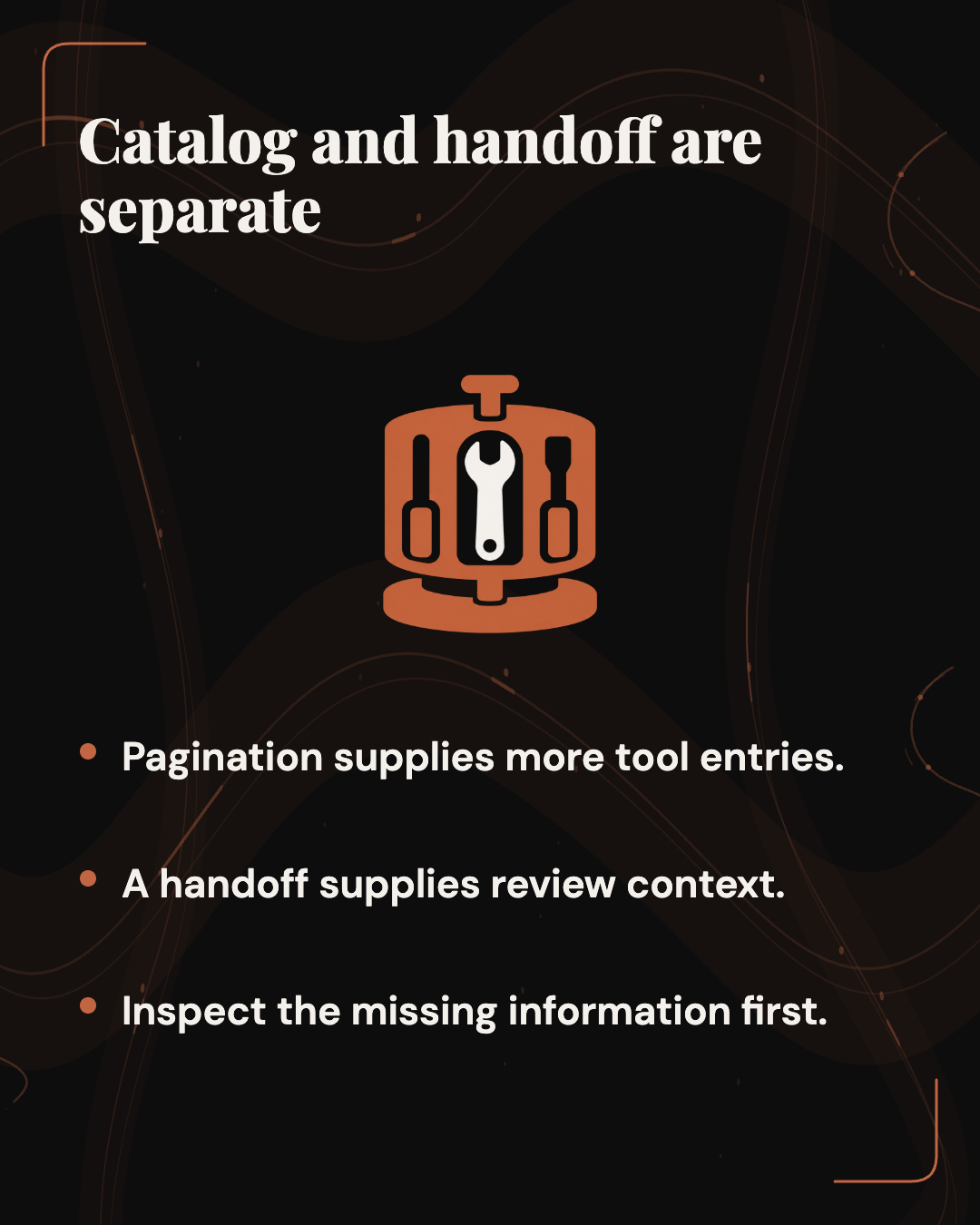
The captured Codex PR #50035, also shown as merged into main on October 1, 2026, describes a different change. Its text says legacy MCP tool discovery previously discarded pagination cursors, which left tools on later pages unavailable. The change passes tools/list cursors to an existing collector in both legacy and modern protocol modes, with the same pagination limits and cursor validation. The PR reports integration coverage for later-page tools and invalid cursors. No MCP catalog was queried for this article.
This gives an operator two distinct questions when a delegated workflow produces a surprising result. Did the system discover the tool it needed? Did the review receive the user instruction and conversation needed to judge an action? The first question concerns a tool catalog. The second concerns handoff context. A missing tool and a missing restriction can both make a workflow behave unexpectedly, but evidence for one does not establish the other.
For example, if a tool is absent from a legacy MCP catalog, PR #50035 suggests pagination as one issue worth investigating in an applicable configuration. It does not show that a delegated reviewer received or lost a deployment restriction. Likewise, PR #50026 says nothing about whether a tool on a later MCP page can be called. The two changes can sit near each other in a news snapshot while supporting different operator decisions.
 View image detail
The dashboard also claims a change to fresh V2 subagent inheritance of client-defined dynamic tools. The supplied source packet has no captured text for PR #50082, the cited source for that claim. This article therefore cannot establish its flag, default setting, scope, or behavior. It would be misleading to treat the pagination PR as a substitute source for subagent tool inheritance.
What the captures cannot establish
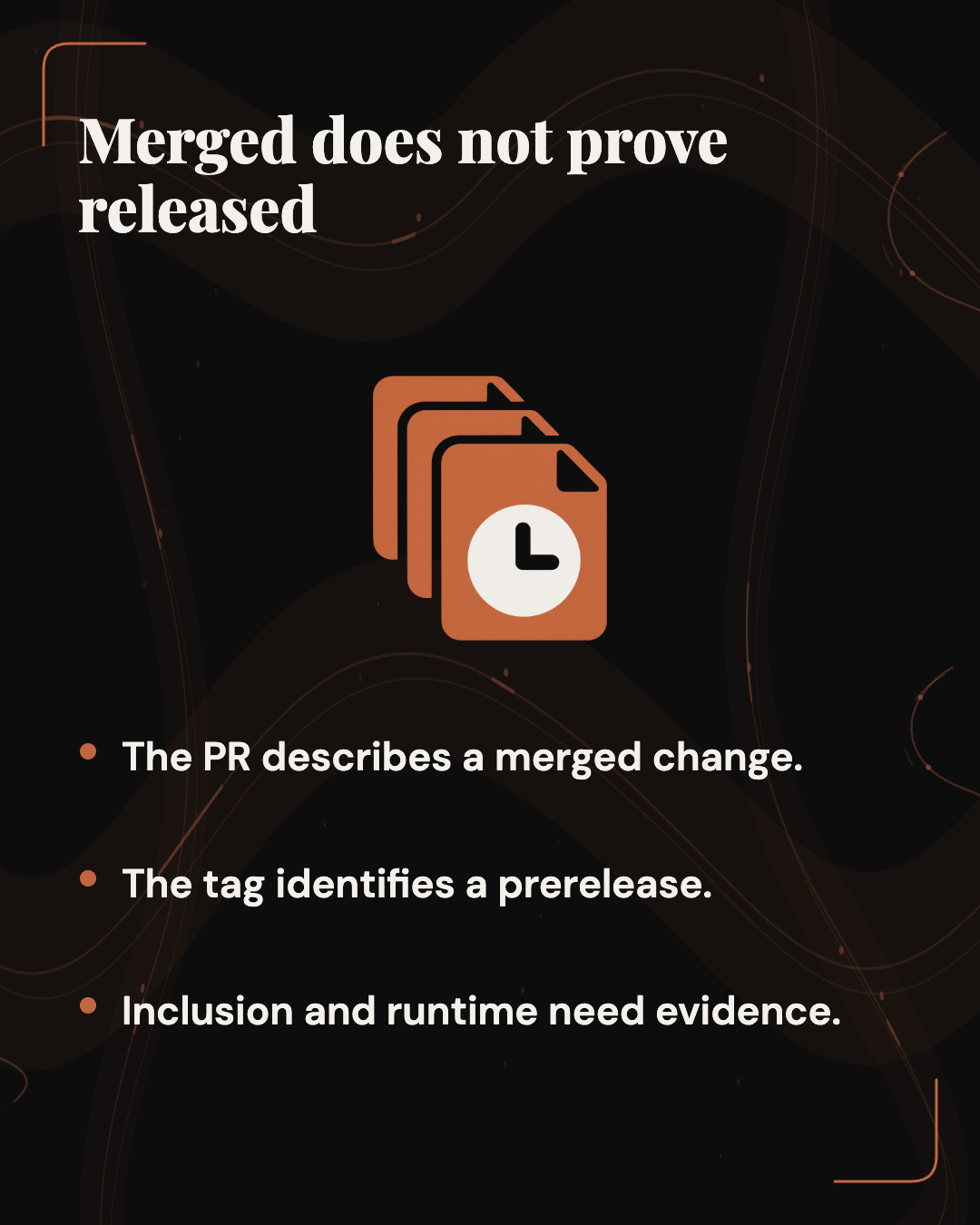
The supplied alpha release page, captured on October 3, 2026, identifies the prerelease tag rust-v0.162.0-alpha.1 and commit 838a0ae. Its displayed release line reads “01 Oct 22:57.” The captured line does not state a year or timezone. It therefore does not independently verify the dashboard’s exact October 1, 2026, 22:57 UTC timestamp. More important for this article, the captured release page contains no change list connecting PR #50026, #50035, or #50082 to that tag.
A PR shown as merged into main on October 1, 2026, is a concrete repository observation. It is not, by itself, proof that the change appears in the named alpha artifact. This article reports what the captured PR says and dates that observation; it does not advertise the Guardian change as a verified capability of alpha.1. A tag comparison or other original release evidence would be needed to make that attribution confidently.
Nor do the captures establish the outcome of a deployment. They contain no particular Guardian handoff, no run with intervening status questions, and no observation of the shared cap in action. They do not show whether an operator can inspect the handoff in a given product surface. They do not demonstrate that preserving a message changes enforceable permissions or guarantees a particular review decision. The repository description is valuable for understanding intent and implementation claims, but these limits affect what an operator can say about a real case.
 View image detail
The limits should guide the next evidence request. To verify release inclusion, inspect the official comparison for the tag or another original artifact that ties the merged commit to it. To verify the handoff in a particular workflow, inspect the actual context supplied, where access permits. To test behavior near the cap, design and run a separate controlled case, then record the inputs and observed output. Those are proposed investigations, not completed checks.
The decision to make before relying on an answer
If a delegated review will influence an action with consequences, define the action and keep the user’s governing instruction visible in the workflow’s own record. When a handoff is inspectable, compare its contents with that instruction and with any later reply that needs conversational context. If the context is missing or cannot be inspected, seek another basis for the decision before treating the review as fully informed. These are proposed operator practices, not guarantees supplied by Codex.
PR #50026 addresses a real information problem in its stated design: earlier user restrictions can matter after newer, unrelated messages appear. It describes preserving original user messages during Guardian handoff filtering, with a shared cap, and marking omitted assistant context as incomplete. Those details give an operator better questions to ask. They do not replace checking the material that reached a particular review.
Return to the illustrative cancellation. A useful assessment should be judged against the instruction that governed the proposed deployment, not merely against the most recent status question. The practical standard is simple: know what action is being reviewed, know which user instruction bears on it, and establish whether that instruction and enough surrounding context reached the review. Where the evidence stops, the conclusion stops too.
Related reading
For a related look at the authority boundary, read OpenAI Agents API browser permissions and recovery. For a different coding-agent decision, see what to review before expanding an AI agent’s authority.
Checked for this article
Sources
Keep going
Related notes.

Automation and Agents
Google CC for Households: What Members Can Share and What to Check
Google says CC can turn selected household information into a shared brief, Calendar entries and Tasks. Here is how to assess the inputs, the plan and permission before outside action.
Read the article
Automation and Agents
Agent-Native 0.200.0: A Prompt Recovery Plan for Chat Hosts
Builder.io describes the pieces of setup recovery. This plan defines the host decisions and disposable checks needed to make a recovered request understandable.
Read the article
Automation and Agents
Agent-Native 0.200.0: Check Prompt Recovery After Setup
Builder.io says toolkit 0.200.0 saves setup-refused prompts and coordinates retries. Here is how to check the request and result in a host you use.
Read the article