
Automation and Agents
How to Evaluate the Anthropic Life Sciences Verification Program
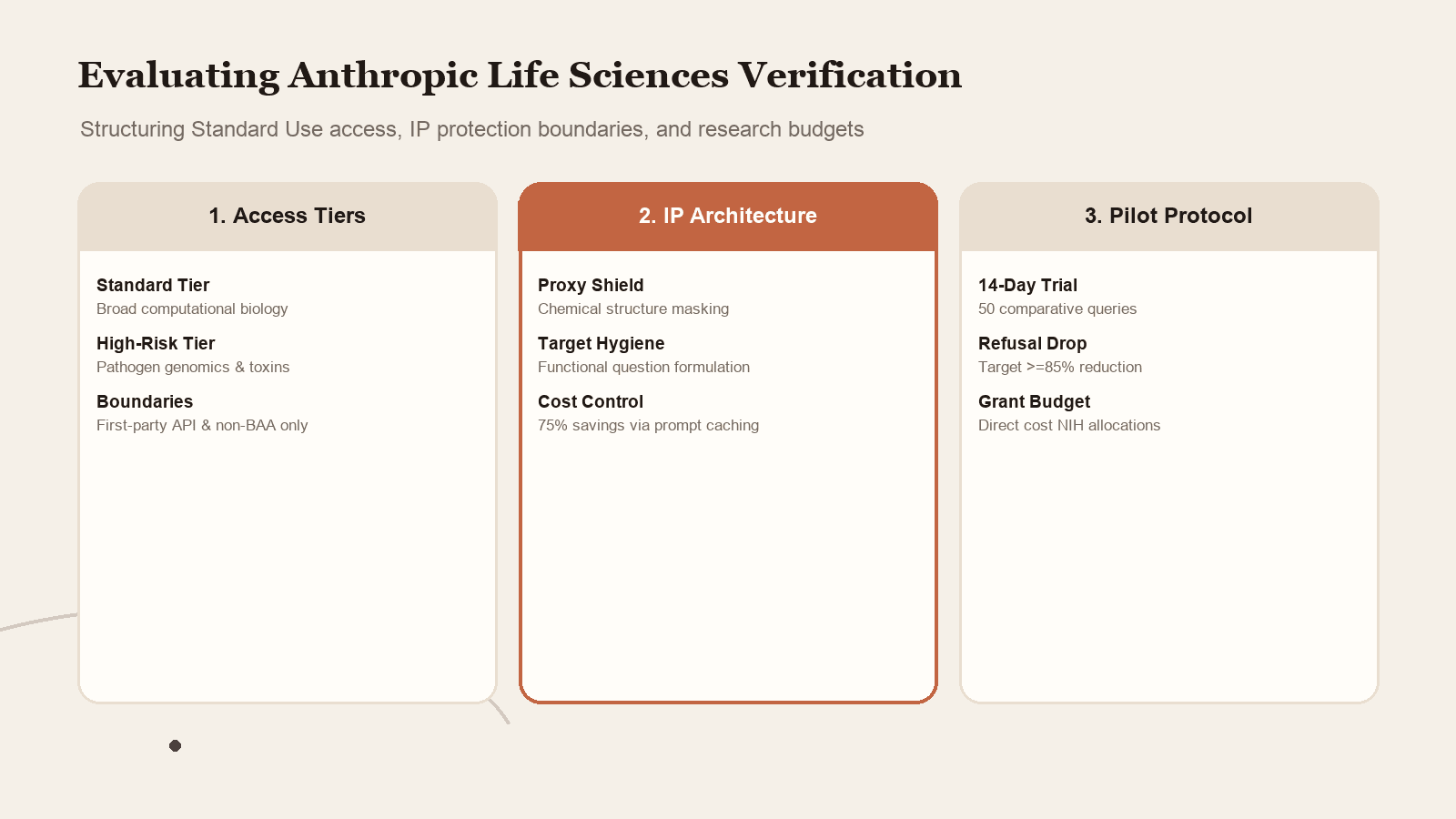
Anthropic opened beta applications for its Life Sciences Verification Program. Here is how research teams can evaluate Standard Use access, IP masking, and compute budgets.
On this page
- Program Architecture: What Anthropic Announced and What Beta Delivers
- When Does LSVP Justify Adoption? Five Operational Filters
- Filter 1: Core Research Workflow Eligibility
- Filter 2: Regulatory and Institutional Standing
- Filter 3: Intellectual Property and Data Confidentiality
- Filter 4: Technical Infrastructure and API Integration
- Filter 5: Ongoing Administrative Bandwidth
- Technical Architecture: Enterprise Tenancy and Platform Boundaries
- Core Architectural Components
- Financial Modeling: Token Consumption, Tiers, and Grant Planning
- Baseline Research Scenario: 20-Scientist Drug Discovery Team
- Return on Investment for Research Teams
- Federal Grant Budgeting and Direct Cost Allocations
- Measuring Scientific Impact: The Research Efficiency Scorecard
- Dimension 1: Literature Synthesis and Evidence Extraction
- Dimension 2: Bioinformatics Code Generation and Pipeline Debugging
- Dimension 3: False Refusal Rate on Benign Biological Queries
- Intellectual Property Protection: Keeping Proprietary Targets Safe
- Implementing the Internal Masking Protocol
- The Two-Week LSVP Evaluation Protocol
- Phase 1: Institutional Screening and Application Prep (Days 1 to 3)
- Phase 2: Controlled Benchmark Testing (Days 4 to 8)
- Phase 3: IP and Security Audit (Days 9 to 12)
- Phase 4: Executive Committee Gate Review (Days 13 to 14)
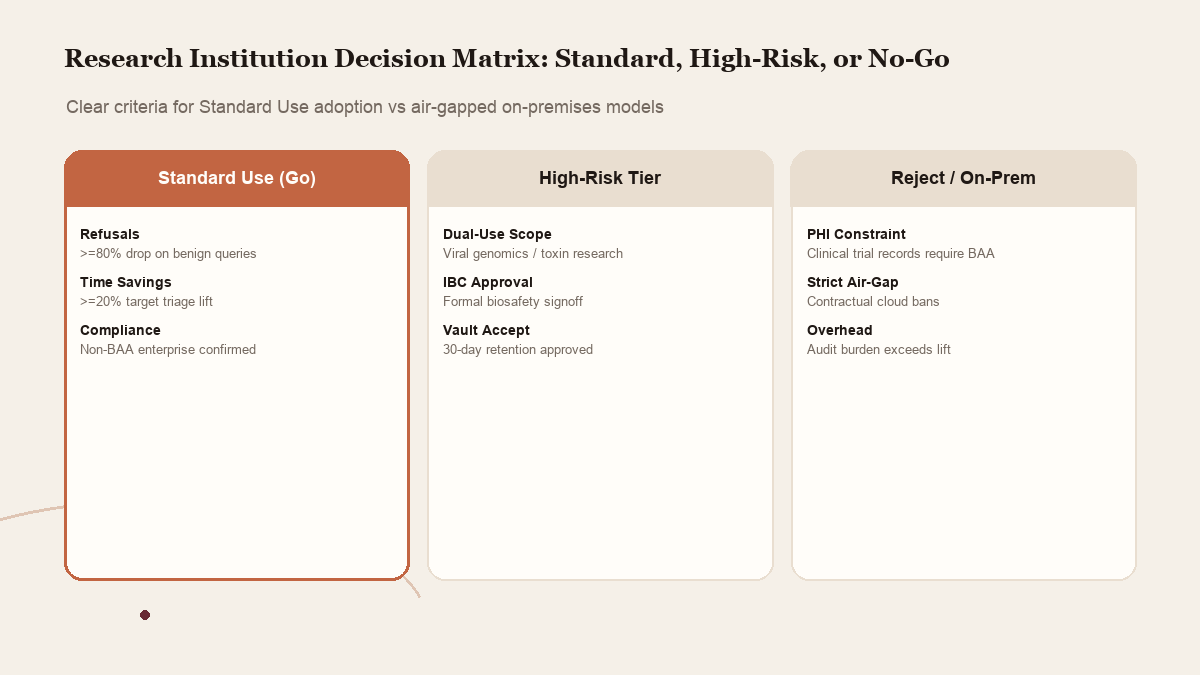
- Research Institution Decision Matrix: Standard, High-Risk, or No-Go
- Scenario A: Standard Use Program Adoption (Go)
- Scenario B: High-Risk Tier Application (Specialized Vetting)
- Scenario C: Program Rejection and Local Deployment (No-Go)
- Conclusion and Strategic Outlook
Artificial intelligence is transforming computational biology, pharmaceutical lead discovery, and genomic data analysis, but deploying frontier models in biological research carries unique regulatory, safety, and operational challenges. On September 17, 2026, Anthropic opened beta applications for its Life Sciences Verification Program (LSVP), establishing a structured access framework for research organizations using Claude 3.5 Sonnet and frontier models for advanced biological tasks.
According to Anthropic's launch documentation, the program introduces vetted access pathways designed to balance scientific acceleration with stringent biosecurity safeguards. For biotechnology executives, principal investigators, and academic research directors, however, evaluating the Life Sciences Verification Program requires looking beyond vendor promises. Research institutions must weigh significant operational trade-offs: strict organizational eligibility criteria, data retention rules, platform exclusions, and institutional compliance overhead.
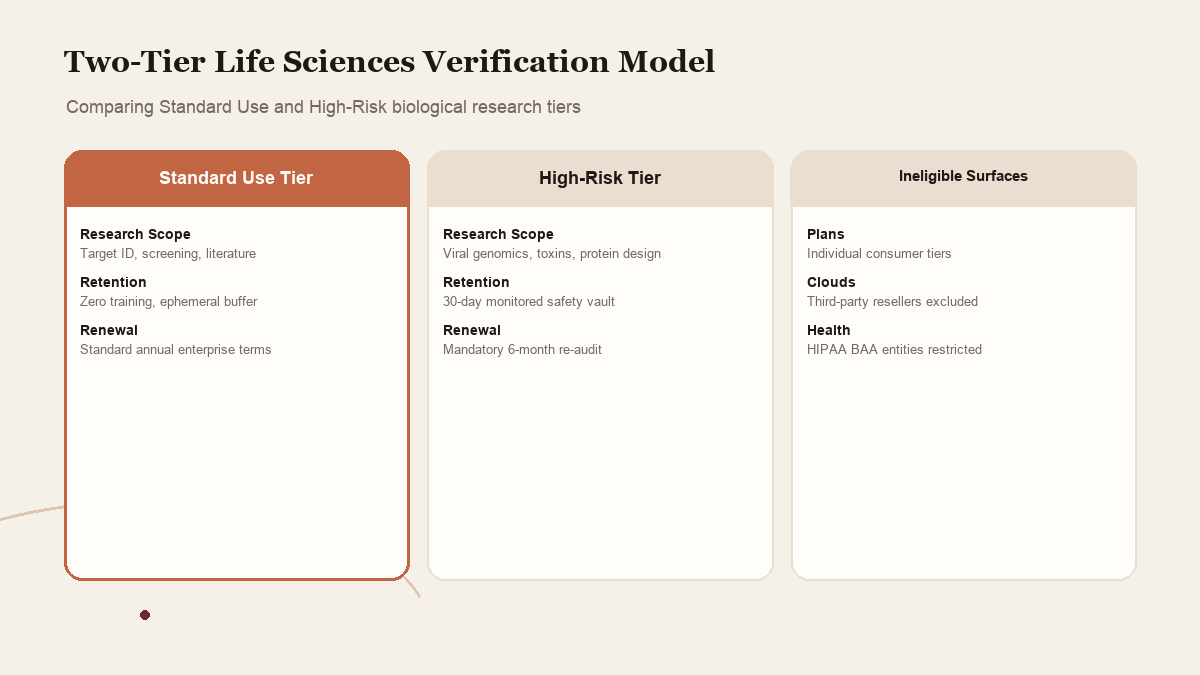
Crucially, the program is divided into two distinct access classifications: Standard Use for broad computational biology, literature discovery, and chemical informatics; and High-Risk for research touching sensitive biological domains, pathogen genomics, or dual-use protein engineering. Furthermore, the early beta is restricted to first-party API and Enterprise or Team workspaces, explicitly excluding individual commercial plans, third-party cloud reseller environments, and healthcare organizations operating under HIPAA Business Associate Agreements (BAAs).
This guide provides an objective evaluation framework for life sciences research teams considering the Life Sciences Verification Program. We examine the boundaries between Standard Use and High-Risk tiers, establish data hygiene protocols to protect proprietary intellectual property, model operational expenses, and provide a two-week onboarding protocol with clear go or no-go decision criteria.
 View image detail
Comparing Standard Use and High-Risk tiers across research scope, oversight obligations, data retention windows, and renewal cadences.
Program Architecture: What Anthropic Announced and What Beta Delivers
On September 17, 2026, Anthropic published its official program documentation, outlining the operational parameters of the Life Sciences Verification Program. The initiative addresses a structural challenge in biological AI: foundation models trained on scientific literature frequently encounter automated safety refusal boundaries when researchers query biochemical pathways, pathogen taxonomy, or molecular synthesis routes.
The documented features of the verification program include several foundational mechanisms:
- Vetted Organizational Verification: Rather than allowing self-service access, Anthropic requires applicants to undergo formal organizational screening, verifying academic accreditation, corporate registration, institutional biosafety affiliations, and principal investigator credentials.
- Standard Use Research Allowance: Approved teams gain expanded conversational latitude for legitimate computational workflows, including target identification, protein folding analysis, high-throughput screening data interpretation, and automated literature synthesis.
- High-Risk Project Classification: Projects involving potential dual-use biological materials, viral genomics, or toxin research require separate project-level vetting, accompanied by 30-day monitored prompt retention and mandatory six-month renewal reviews.
- Platform and Contract Boundaries: The beta operates strictly on Anthropic first-party API endpoints and Claude Enterprise or Team workspaces. Organizations cannot access LSVP through third-party cloud marketplace integrations, and entities requiring HIPAA Business Associate Agreements are currently ineligible.
Independent analyses, including reporting by ModelCurrent, emphasize that while the program opens important access pathways for legitimate researchers, it is not an open door. Anthropic maintains strict red-line refusals regarding actionable synthesis protocols for regulated toxins and select agents. Teams expecting complete removal of safety boundaries will find that guardrails remain actively enforced.
When Does LSVP Justify Adoption? Five Operational Filters
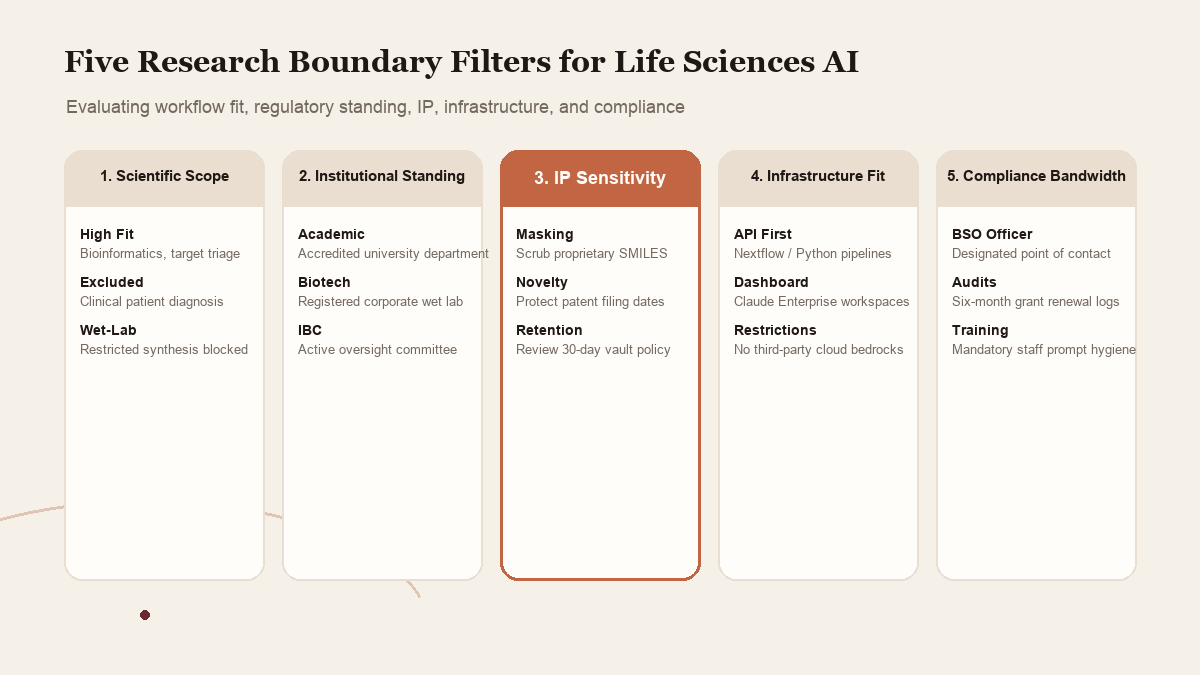
Applying for the Life Sciences Verification Program introduces administrative friction and institutional disclosure obligations. Before initiating the application process, research directors should apply Rise Productive's Five Operational Filters:
 View image detail
Five evaluation filters: workflow scope, regulatory standing, IP sensitivity, infrastructure fit, and compliance capacity.
Filter 1: Core Research Workflow Eligibility
Does your project fit within Anthropic's approved scientific scope?
- High-Fit Workflows: Identifying novel biological targets from multi-omics datasets, summarizing complex pharmacology literature, interpreting mass spectrometry outputs, refactoring bioinformatics code in Python and R, and designing non-hazardous computational screening libraries.
- Excluded or Impractical Workflows: Clinical patient diagnostic workflows (ineligible due to HIPAA BAA exclusions), wet-lab experimental protocol generation for restricted pathogens, or consumer health advisory systems.
If your primary need is general coding assistance or scientific literature summarization without querying sensitive biological mechanisms, standard enterprise Claude tiers may suffice without undergoing LSVP vetting.
Filter 2: Regulatory and Institutional Standing
Anthropic's vetting process requires verifiable institutional legitimacy:
- Academic departments must be affiliated with accredited research universities.
- Commercial biopharma applicants must provide corporate entity records, physical facility verification, and evidence of established Institutional Biosafety Committee (IBC) oversight where wet labs are operated.
- Early-stage startups operating entirely virtually without laboratory infrastructure must demonstrate verifiable scientific leadership and established venture backing to pass security screening.
Filter 3: Intellectual Property and Data Confidentiality
Biotech valuation is driven almost entirely by patent portfolios and proprietary target discoveries:
- Under Anthropic's enterprise terms, customer inputs and outputs are not used for foundation model training.
- However, for projects classified as High-Risk, Anthropic enforces a 30-day monitored retention window where designated Anthropic safety personnel may review flagged prompts for biosecurity compliance.
- Your legal counsel and IP steering committee must determine whether 30-day external retention for flagged prompts is permissible under existing confidentiality agreements with pharmaceutical partners or university technology licensing offices.
Filter 4: Technical Infrastructure and API Integration
How will your research staff interact with the model?
- If your bioinformatics team relies on programmatic pipelines (such as Nextflow, Snakemake, or custom Python orchestration), first-party API access provides seamless integration.
- If your computational biologists expect to work through third-party cloud platforms (such as AWS Bedrock or Google Cloud Vertex AI), the current first-party-only restriction represents a critical bottleneck that requires architectural adjustments.
Filter 5: Ongoing Administrative Bandwidth
Gaining LSVP approval is not a permanent grant:
- Teams must commit to maintaining research logs, documenting authorized user rosters, and participating in six-month grant renewal audits.
- Principal investigators must designate a compliance point-of-contact responsible for responding to safety inquiries within forty-eight hours.
Technical Architecture: Enterprise Tenancy and Platform Boundaries
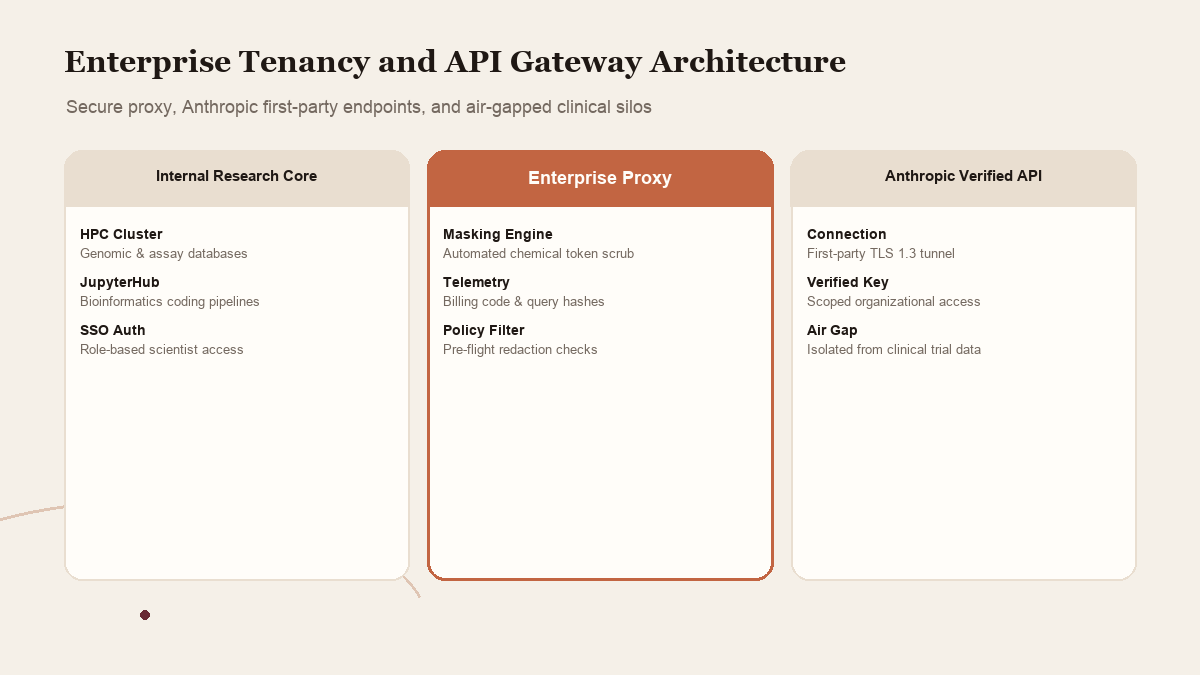
Integrating the Life Sciences Verification Program into a biotech computing environment requires strict separation between public cloud resources, internal laboratory databases, and Anthropic API endpoints.
 View image detail
System architecture: internal bioinformatics cluster, secure API proxy, Anthropic first-party endpoints, and air-gapped clinical trial databases.
Core Architectural Components
- Internal Research Environment:
- High-Performance Computing (HPC) clusters and cloud storage hosting proprietary genomic sequencing, chemical compound libraries, and phenotypic assay records.
- Secure JupyterHub and RStudio environments utilized by computational biologists and bioinformatics specialists.
- Enterprise API Gateway and Redaction Proxy:
- An internal mediation proxy that inspects all outgoing prompts before transmission to Anthropic endpoints.
- Automated token-scrubbing routines that strip proprietary compound identifiers, internal project codenames, and unpatented molecular structures, substituting reversible cryptographic tokens.
- Centralized logging capturing researcher identity, project billing codes, and timestamped query hashes.
- Anthropic First-Party Endpoint:
- Direct TLS 1.3 encrypted connection to Anthropic's verified life sciences API cluster.
- Enforces organizational API key scoping, preventing unauthorized personal accounts from accessing verified organizational capacity.
- Strict Isolation from Clinical Data Silos:
- Complete network air-gapping from clinical trial data, electronic health record (EHR) feeds, or patient registry databases to ensure strict compliance with HIPAA non-BAA boundaries.
Financial Modeling: Token Consumption, Tiers, and Grant Planning
Budgeting for life sciences AI requires modeling specialized token consumption patterns. Biological queries typically involve large context windows, including long DNA/RNA FASTA sequences, extensive scientific PDF appendices, and multi-megabyte CSV tabular datasets.
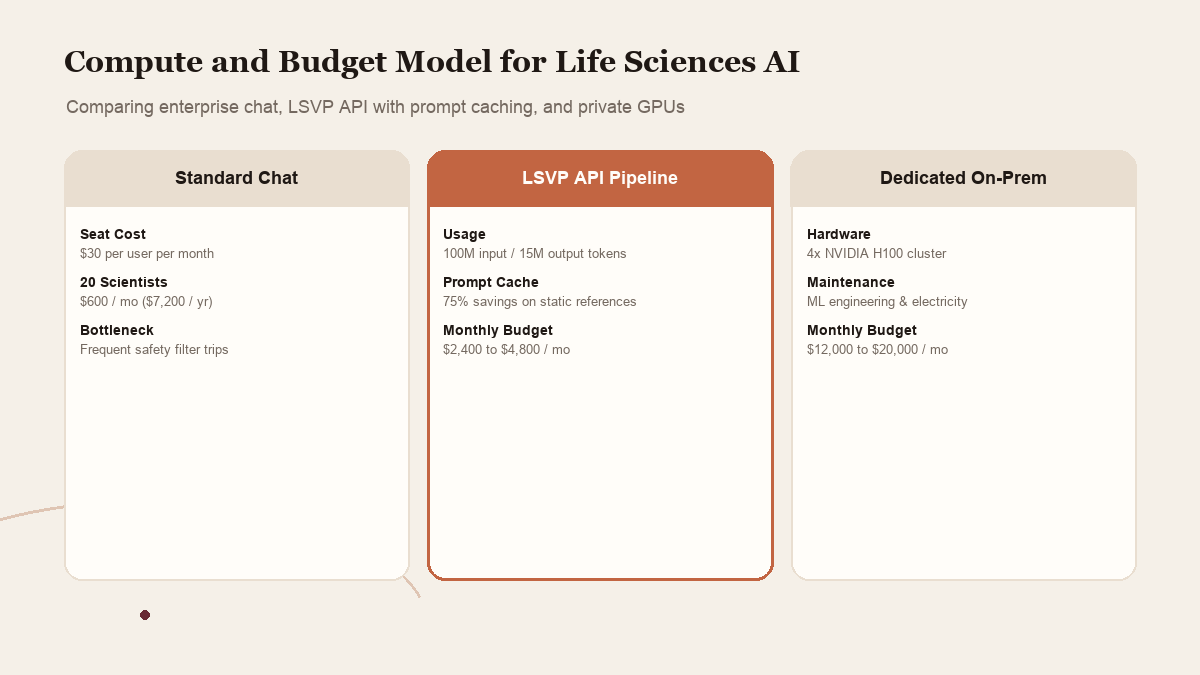 View image detail
Comparing monthly operating expenditures across standard enterprise chat, high-throughput LSVP API pipelines, and dedicated private instances.
Baseline Research Scenario: 20-Scientist Drug Discovery Team
Consider a representative biotechnology research team comprising twenty computational biologists and medicinal chemists conducting active target identification:
- Option A: Standard Claude Enterprise Chat (Team Tier)
- Pricing basis: Fixed seat license ($30 per user per month).
- Monthly cost: $600 base cost.
- Limitations: Standard conversational rate limits; frequent safety filter interruptions on pharmacological synthesis queries; no automated pipeline integration.
- Annual Total: $7,200.
- Option B: LSVP First-Party API Pipeline (Automated Bioinformatics)
- Pricing basis: Claude 3.5 Sonnet token pricing (input tokens, output tokens, prompt caching).
- Typical usage: 100,000,000 monthly input tokens (literature corpora, FASTA sequences) and 15,000,000 output tokens (synthesized summaries, structured JSON tables).
- Utilizing Anthropic prompt caching on static genomic references reduces recurring input costs by up to 75%.
- Average monthly token expenditure: $2,400 to $4,800.
- Annual Total: $28,800 to $57,600.
- Option C: Dedicated On-Premises Open-Source Models (Llama / DeepSeek)
- Pricing basis: Dedicated GPU server infrastructure (e.g., 4x NVIDIA H100 nodes), electricity, cooling, and ML engineering maintenance.
- Average monthly compute allocation: $12,000 to $20,000.
- Annual Total: $144,000 to $240,000.
Return on Investment for Research Teams
For most biotechnology teams, Option B (LSVP API with prompt caching) provides the optimal balance of reasoning capability, safety compliance, and cost efficiency. Reducing target triage time from three weeks of manual literature review to four days of automated synthesis delivers substantial financial value:
- Accelerating patent filing timelines ahead of commercial competitors.
- Reducing expensive wet-lab assay failures by eliminating poorly validated biological targets before synthesis.
- Enabling smaller research teams to analyze literature volume previously requiring dedicated external contract research organizations (CROs).
Federal Grant Budgeting and Direct Cost Allocations
For academic laboratories and non-profit research institutes operating on federal grant funding (such as National Institutes of Health or National Science Foundation awards):
- Direct Cost Classification: Cloud AI API token expenditures must be properly classified as computer service direct costs rather than general administrative overhead. Under Uniform Guidance (2 CFR 200), computing costs directly dedicated to specific grant aims are allowable if documented with project-specific billing codes.
- Budget Justification Narrative: When writing grant proposals, include a transparent justification explaining that LSVP Claude API tokens accelerate target prioritization and reduce expensive wet-lab reagent expenditures, demonstrating responsible stewardship of public research funds.
- Sub-Award Compliance: If research is conducted collaboratively across multiple sub-recipient institutions, ensure that sub-awards explicitly bind collaborator teams to identical LSVP data security and IP protection guidelines.
Measuring Scientific Impact: The Research Efficiency Scorecard
Evaluating whether the Life Sciences Verification Program delivers measurable value requires tracking concrete scientific and operational metrics rather than subjective user satisfaction.
Deploy Rise Productive's Life Sciences AI Scorecard across three primary research activities:
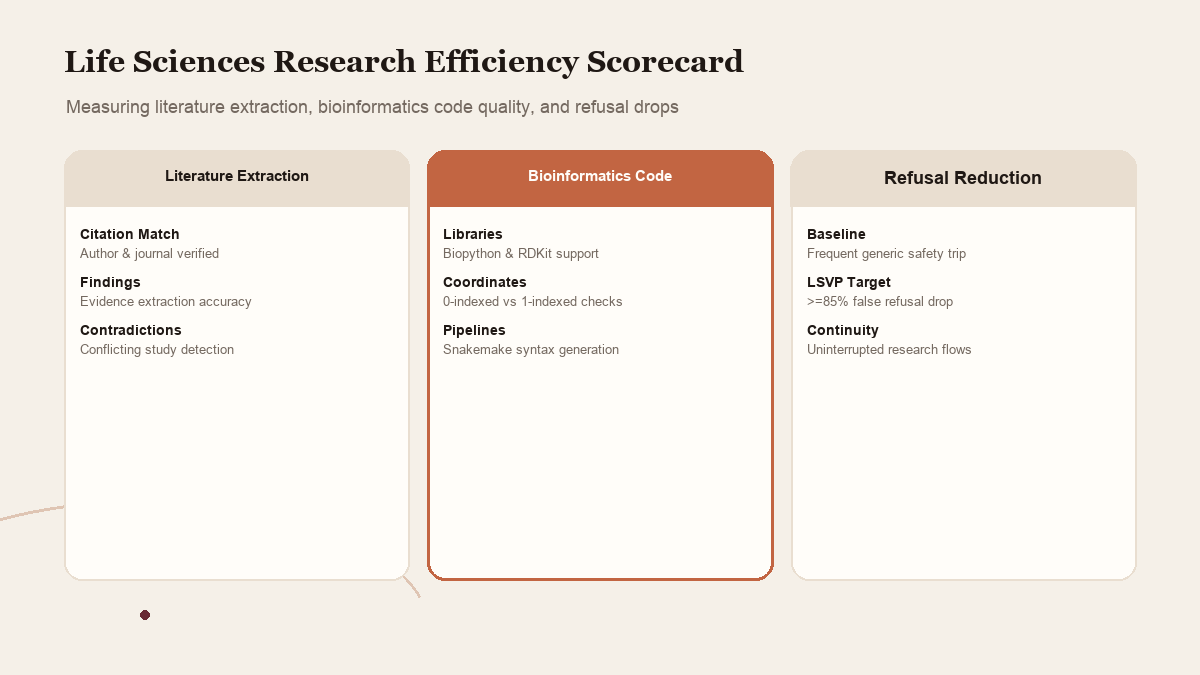 View image detail
Evaluation dimensions: target discovery acceleration, literature synthesis accuracy, chemical informatics code quality, and false refusal rates.
Dimension 1: Literature Synthesis and Evidence Extraction
- Citation Precision: Does Claude accurately extract author names, journal titles, and specific findings from uploaded scientific papers without conflating disparate studies?
- Evidence Contradiction Detection: Does the model identify conflicting published findings across competing research groups, or does it smooth over scientific disagreements?
Dimension 2: Bioinformatics Code Generation and Pipeline Debugging
- Script Syntax and Tool Accuracy: Does generated Python or R code correctly utilize standard bioinformatics libraries (such as Biopython, DESeq2, scanpy, or RDKit)?
- Algorithm Correctness: Does the model accurately handle 0-indexed versus 1-indexed genomic coordinates (e.g., BED vs GFF file conventions), avoiding common off-by-one errors that corrupt downstream sequencing analysis?
Dimension 3: False Refusal Rate on Benign Biological Queries
The primary operational justification for LSVP is reducing unwarranted safety refusals on legitimate scientific tasks:
- Baseline Refusal Frequency: On standard commercial Claude tiers, benign queries regarding viral capsids, bacterial plasmids, or oncology targets often trigger automated refusals.
- LSVP Resolution Target: Under LSVP verification, unwarranted refusals on approved research scopes should decrease by at least 85%, allowing uninterrupted analytical workflows.
Intellectual Property Protection: Keeping Proprietary Targets Safe
In the life sciences industry, premature disclosure of a novel drug target or proprietary lead molecule can invalidate patent novelty under 35 U.S.C. 102, destroying enterprise valuation.
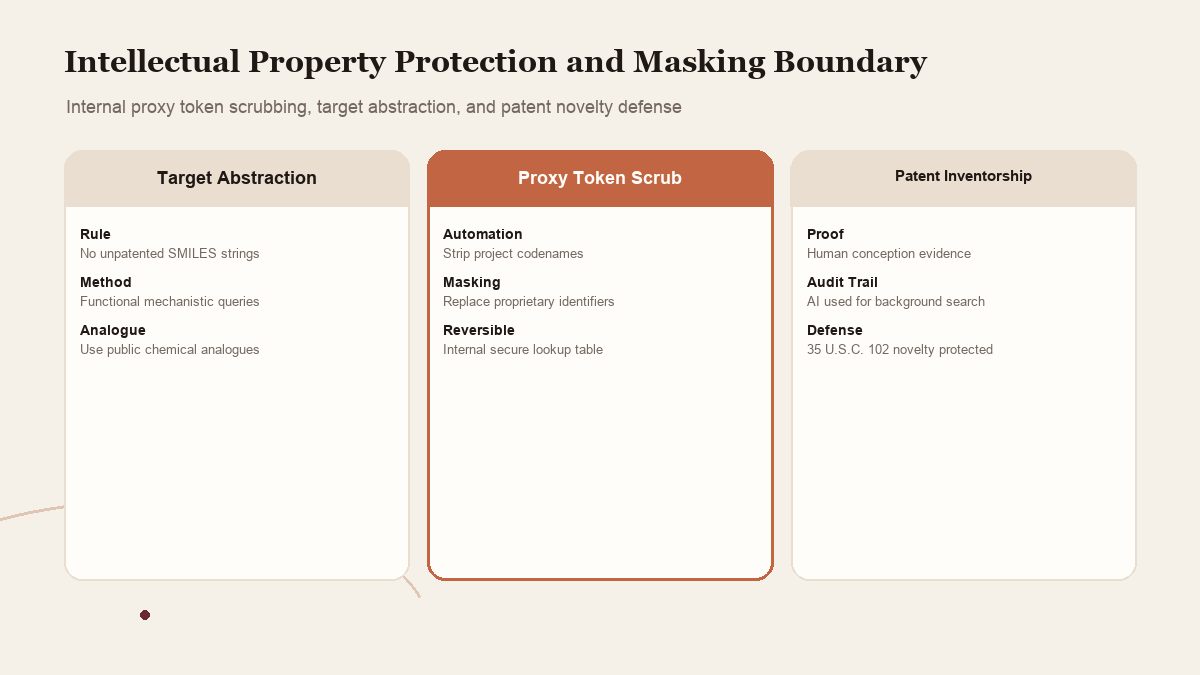 View image detail
IP boundary architecture: internal proxy abstraction, chemical token masking, zero-training cloud commitments, and patent novelty defense.
Implementing the Internal Masking Protocol
To maximize IP safety while utilizing cloud AI:
- Target Abstraction: Never submit unpatented, proprietary chemical structures (SMILES strings) or confidential genetic sequences into prompt windows alongside proprietary project goals.
- Functional Question Masking: Formulate queries around generalized mechanistic questions (e.g., "What are the known allosteric binding sites on kinase family X?") rather than revealing your specific proprietary molecule's binding coordinates.
- Audit Trail for Patent Defense: Maintain internal cryptographic logs proving that patentable inventions were conceived through independent human research, using AI strictly for background literature synthesis and code automation. This prevents litigation adversaries from challenging inventorship under emerging patent office guidance.
The Two-Week LSVP Evaluation Protocol
To assess whether your organization should commit to the Life Sciences Verification Program, execute a structured fourteen-day evaluation protocol with a selected pilot team of five researchers.
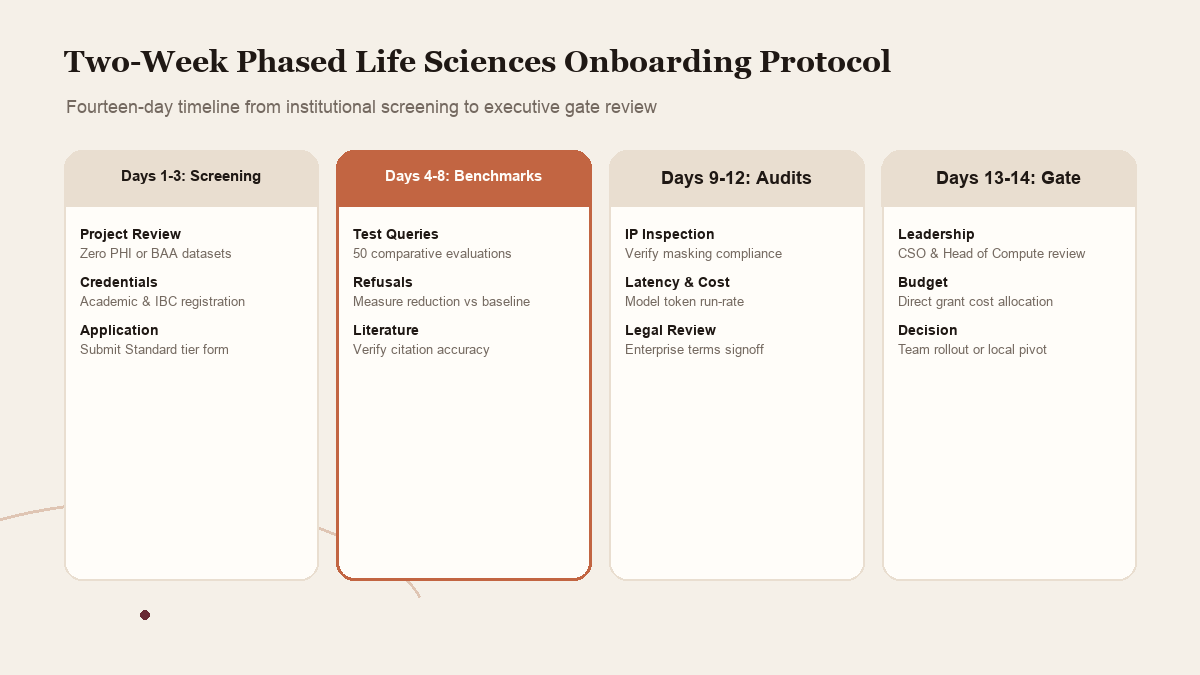 View image detail
Two-week pilot protocol: days 1 to 3 application and security review, days 4 to 8 benchmark testing, days 9 to 12 IP and compliance audit, days 13 to 14 committee gate.
Phase 1: Institutional Screening and Application Prep (Days 1 to 3)
- Review project rosters: identify specific research projects that require expanded biological context and verify that zero patient-identifiable data or BAA-restricted datasets are involved.
- Compile institutional verification documentation: academic affiliations, corporate registrations, and IBC certifications.
- Submit the formal LSVP application to Anthropic designating the Standard Use tier.
Phase 2: Controlled Benchmark Testing (Days 4 to 8)
- Test fifty representative research prompts against both standard Claude 3.5 Sonnet and the verified LSVP beta environment.
- Measure the reduction in false refusal rates across pharmacology, molecular genetics, and biochemical assay queries.
- Evaluate the accuracy of synthesized literature reviews against verified human expert benchmarks.
Phase 3: IP and Security Audit (Days 9 to 12)
- Inspect internal prompt logs to ensure research staff adhere strictly to target abstraction and chemical masking rules.
- Review API gateway latency and token usage patterns to establish realistic monthly operating budgets.
- Conduct a compliance review with institutional legal counsel regarding Anthropic's enterprise terms and retention schedules.
Phase 4: Executive Committee Gate Review (Days 13 to 14)
- Present empirical benchmark results to the Chief Scientific Officer and Head of Research Computing.
- Review net time savings, refusal mitigation data, and annualized token projections.
- Decide formally whether to expand LSVP adoption across all computational biology teams or restrict usage to designated projects.
Research Institution Decision Matrix: Standard, High-Risk, or No-Go
At the conclusion of the evaluation protocol, scientific leadership must make an informed architectural decision based on empirical findings.
 View image detail
Decision criteria: Standard Use adoption, High-Risk project vetting, or retaining existing air-gapped computational workflows.
Scenario A: Standard Use Program Adoption (Go)
Approve team-wide adoption of the Standard Use tier when:
- The pilot demonstrates an 80% or greater reduction in unwarranted safety refusals on legitimate computational biology queries.
- Research staff achieve measurable time savings (at least 20%) on literature synthesis, target triage, and bioinformatics script debugging.
- Legal counsel confirms that the institution does not require HIPAA BAA terms for the proposed research and that enterprise terms sufficiently protect IP.
Scenario B: High-Risk Tier Application (Specialized Vetting)
Proceed with formal High-Risk project vetting only if:
- The research specifically investigates dual-use biological mechanisms, viral genomics, or complex toxin biochemistry that cannot be processed under Standard Use.
- Institutional leadership and the Institutional Biosafety Committee formally approve Anthropic's 30-day monitored prompt retention and six-month renewal audits.
- The research project is backed by substantial funding capable of supporting rigorous external compliance reporting.
Scenario C: Program Rejection and Local Deployment (No-Go)
Decline participation and deploy air-gapped on-premises open models if:
- Research involves protected health information (PHI) or clinical trial records that legally require HIPAA BAA execution.
- Institutional IP policies or pharmaceutical co-development contracts strictly prohibit cloud transmission of proprietary molecular research.
- The administrative overhead of continuous monitoring and six-month grant audits exceeds the productivity gains delivered by the model.
Conclusion and Strategic Outlook
Anthropic's Life Sciences Verification Program establishes an important precedent for the responsible commercialization of scientific AI. By introducing structured verification rather than binary access blocks, Anthropic provides legitimate biological researchers with powerful computational tools while preserving necessary societal biosecurity guardrails.
For research institutions, successful adoption requires disciplined evaluation. By verifying research eligibility, enforcing internal IP masking proxies, modeling token budgets, and following a structured pilot protocol, life sciences organizations can harness the analytical power of Claude safely, ethically, and cost-effectively.
Checked for this article
Sources
Keep going
Related notes.
Automation and Agents
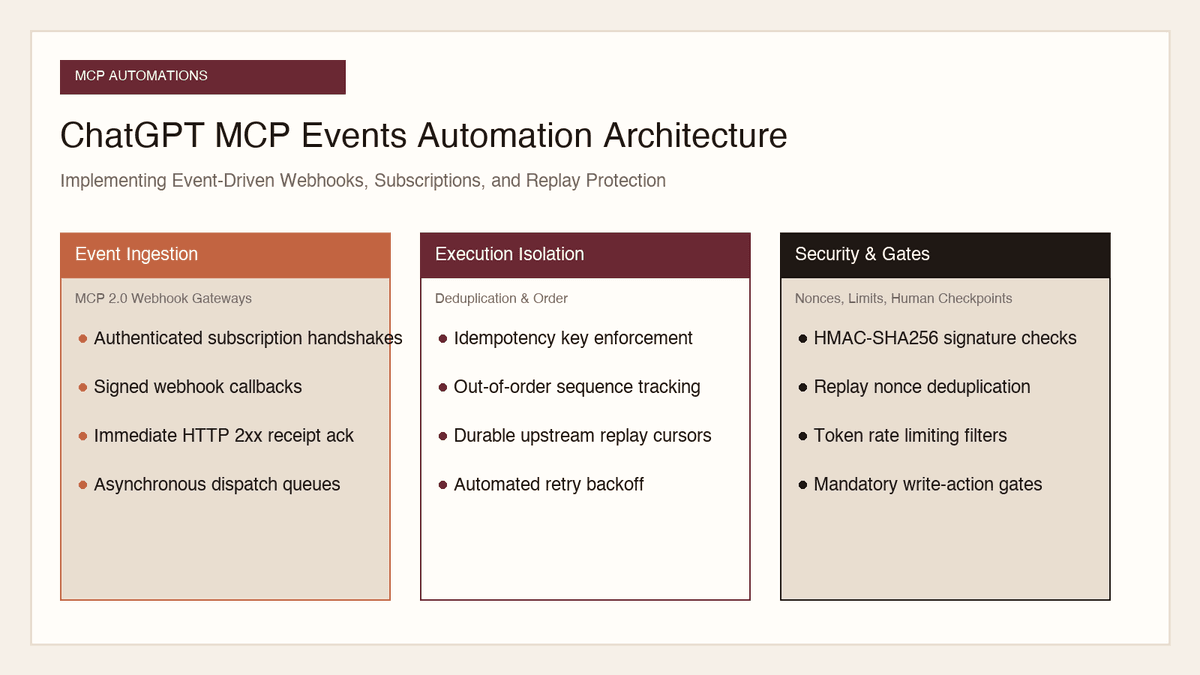
How to Implement MCP Events in ChatGPT: Event-Triggered Automations
Autonomous conversational agents no longer need to rely on wasteful polling loops. Here is how to implement event-triggered automations using ChatGPT MCP Events.
Read the article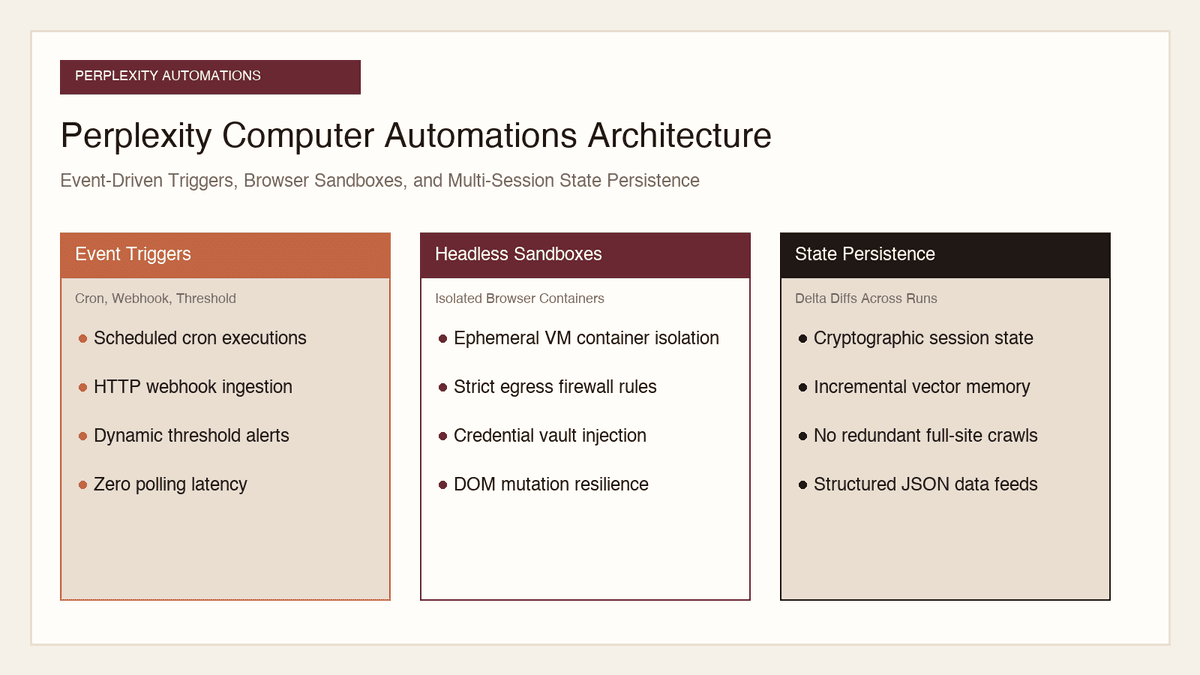
Automation and Agents
How to Build Recurring Web Automations with Perplexity Computer
Web scraping scripts break whenever a layout shifts. Here is how to build durable, recurring web automations using Perplexity Computer and persistent state.
Read the article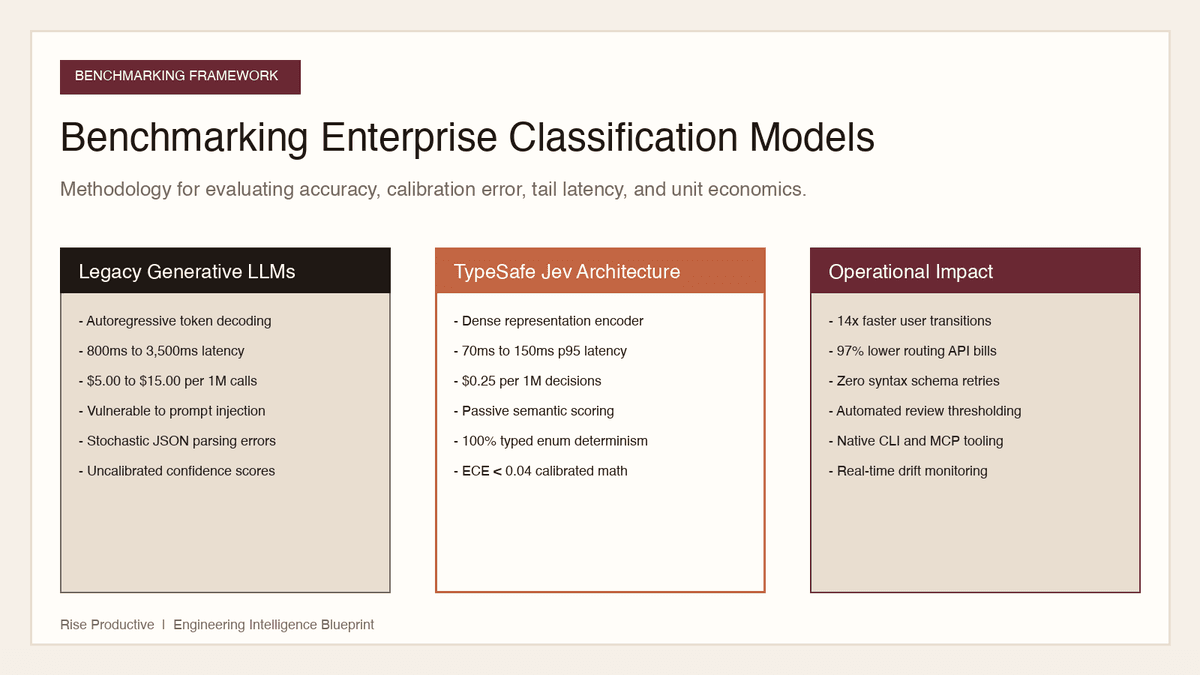
Automation and Agents
How to Benchmark Classifier Models: Latency, Cost, Determinism
Evaluating AI classifiers requires looking beyond static accuracy. Here is how to benchmark probability calibration, latency percentiles, and unit economics.
Read the article