
Automation and Agents
How to Govern High-Risk Life Sciences AI: Audits and Biosafety
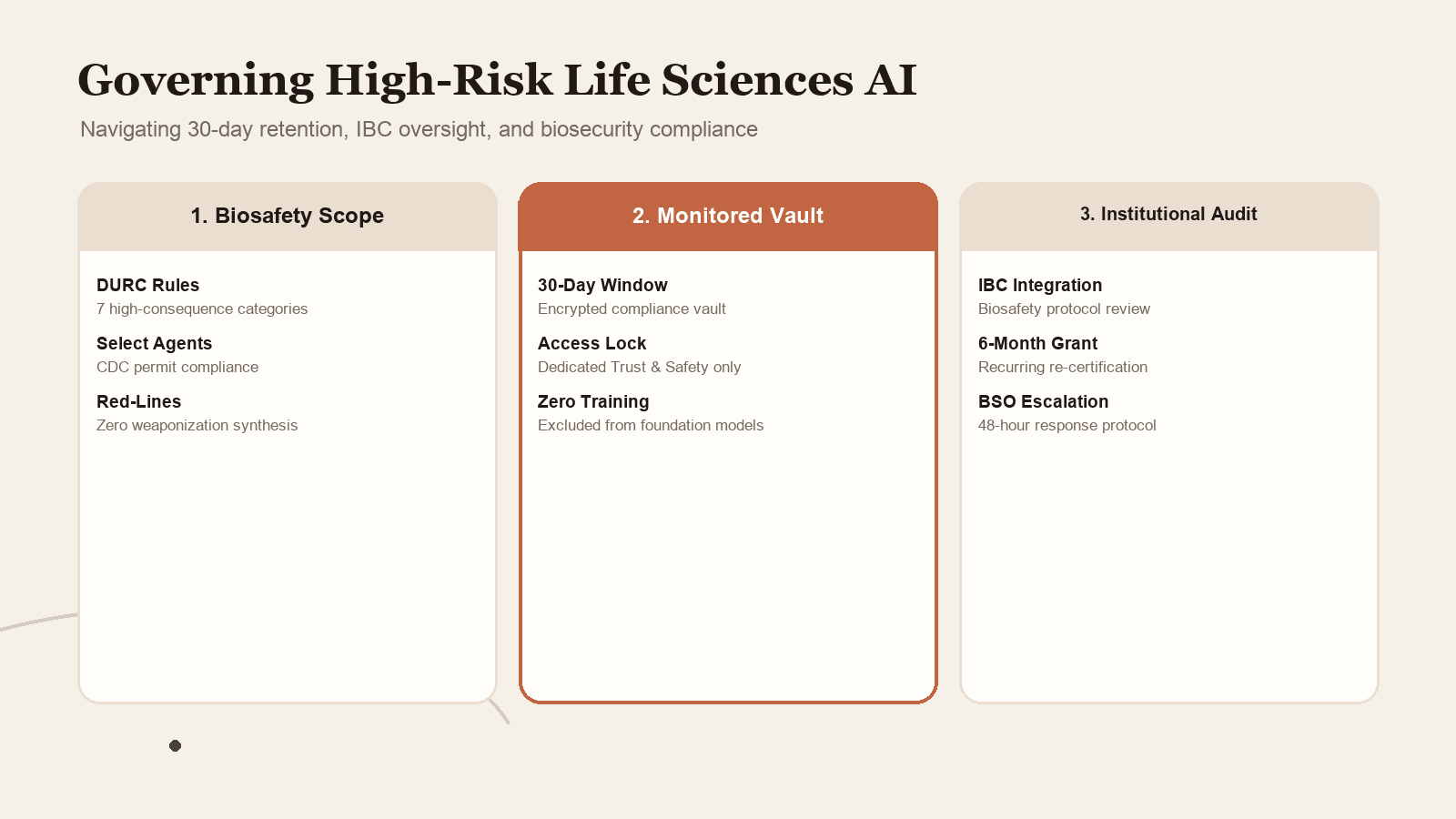
High-risk biological AI requires institutional oversight. Here is how to navigate Anthropic's 30-day monitored retention, IBC integration, and biosecurity audits.
On this page
- The Biosecurity Landscape: Defining Dual-Use Research of Concern
- Integrating AI Oversight with Institutional Biosafety Committees (IBCs)
- The Three-Step IBC Integration Protocol
- Technical Mechanics of 30-Day Monitored Prompt Retention
- Deconstructing the Retention Protocol
- Internal IP Hygiene Rules
- Constructing the Comprehensive Biological Research Audit Trail
- Required Telemetry for Biological AI Audit Logs
- The Six-Month Grant Renewal and Compliance Audit
- The Renewal Evaluation Protocol
- Regulatory Mapping: DURC, Export Controls, and International Standards
- 1. United States Export Administration Regulations (EAR)
- 2. Guidance for Providers of Synthetic Nucleic Acids
- 3. European Union AI Act and High-Risk Classification
- Lab Security and Incident Response: Managing Accidental Red-Lines
- The Four-Step Incident Response Protocol
- Biosafety Level (BSL) Containment Alignment
- Whistleblower Protections and Anonymous Reporting
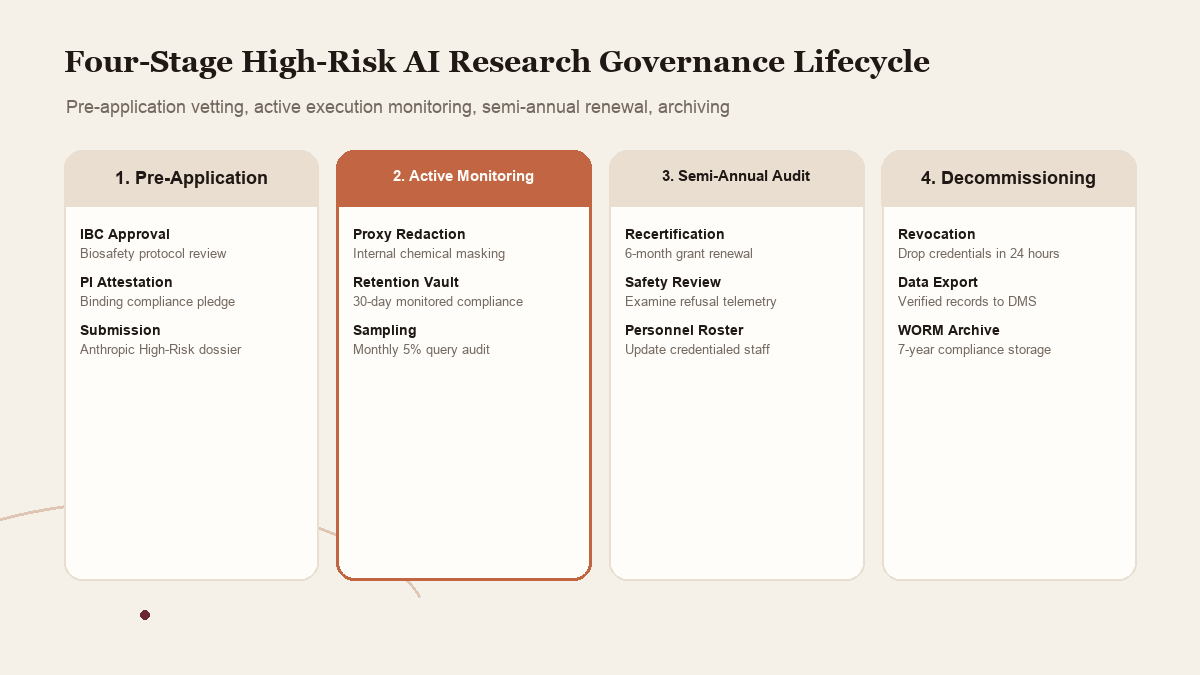
- The Four-Stage High-Risk AI Governance Lifecycle
- Stage 1: Pre-Application Vetting and IBC Approval
- Stage 2: Active Execution and Real-Time Monitoring
- Stage 3: Semi-Annual Renewal and Oversight
- Stage 4: Project Conclusion and Secure Decommissioning
- Institutional Risk Committee Oversight and Board Reporting
- Conclusion and Biosafety Officer Checklist
Deploying advanced artificial intelligence in high-consequence biological research is an institutional governance responsibility of the highest order. When Anthropic introduced the Life Sciences Verification Program (LSVP) on September 17, 2026, it recognized that frontier models possess capabilities that intersect with biosecurity risks, pathogen genomics, and dual-use research of concern (DURC).
To address these risks, Anthropic established a separate, tightly regulated High-Risk access classification within the verification program. While the Standard Use tier accommodates general computational biology and literature synthesis, projects touching viral genomics, potential pandemic pathogens, toxin biochemistry, or dual-use protein engineering must submit to rigorous project-specific vetting, mandatory 30-day monitored prompt retention, and recurring six-month compliance renewal audits.
For biotechnology executives, institutional biosafety officers (BSOs), and academic research vice presidents, entering the High-Risk verification tier requires building robust internal governance structures. Research institutions must balance scientific inquiry with federal oversight mandates, maintain absolute control over proprietary biotechnology IP, ensure compliance with national biosafety standards, and establish emergency incident response protocols.
This guide provides an enterprise governance framework for research institutions operating in high-consequence biological AI domains. We examine the biosecurity perimeter, integrate AI oversight with Institutional Biosafety Committees (IBCs), dissect the technical mechanics of 30-day monitored retention, and outline an end-to-end governance lifecycle designed for life sciences compliance.
 View image detail
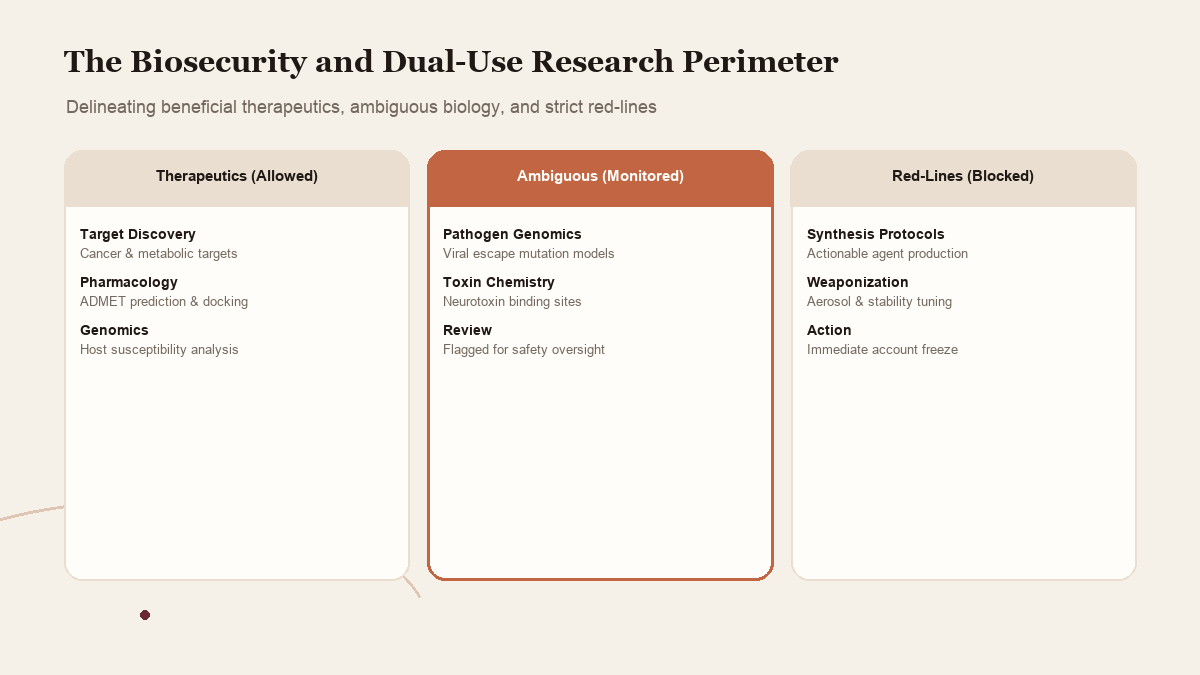
The biosecurity perimeter: delineating beneficial computational therapeutics, ambiguous biological queries, and strict dual-use red-lines.
The Biosecurity Landscape: Defining Dual-Use Research of Concern
The governance of biological artificial intelligence is rooted in the long-standing scientific principle of Dual-Use Research of Concern (DURC). In biological sciences, dual-use technologies are legitimate scientific discoveries and tools that could be repurposed by malicious actors to create biological threats, engineer synthetic pathogens, or lower technical barriers to toxin production.
Under federal oversight frameworks, including the United States Government Policy for Institutional Oversight of Life Sciences Dual Use Research of Concern and guidance from the National Science Advisory Board for Biosecurity (NSABB), research institutions must maintain strict administrative oversight over seven specific high-consequence experimental categories:
- Enhancing the harmful consequences of a biological agent or toxin.
- Disrupting immunity or the effectiveness of an immunization against a biological agent without clinical justification.
- Conferring resistance to clinically useful antibiotics or antivirals.
- Increasing the stability, transmissibility, or ability to disseminate an agent.
- Altering the host range or tropism of a potential pandemic pathogen.
- Enhancing the susceptibility of a host population.
- Generating or reconstituting an eradicated or extinct agent of concern.
In its High-Risk LSVP tier, Anthropic applies these foundational biosecurity principles to AI model interactions. When researchers use Claude to analyze viral mutations, model protein binding for neurotoxins, or optimize delivery mechanisms, the model operates under continuous scrutiny. Governance leaders must understand that Anthropic's safety filters will continue to block actionable, step-by-step instructions for producing dangerous biological agents, regardless of institutional verification status.
Integrating AI Oversight with Institutional Biosafety Committees (IBCs)
In modern biological research, every wet lab operating with recombinant DNA, infectious agents, or regulated toxins must operate under the supervision of an Institutional Biosafety Committee (IBC). However, in many research organizations, computational and bioinformatics teams operate in organizational silos, disconnected from traditional biosafety oversight.
Deploying high-risk biological AI requires closing this governance gap by integrating AI model access directly into the institutional IBC workflow:
 View image detail
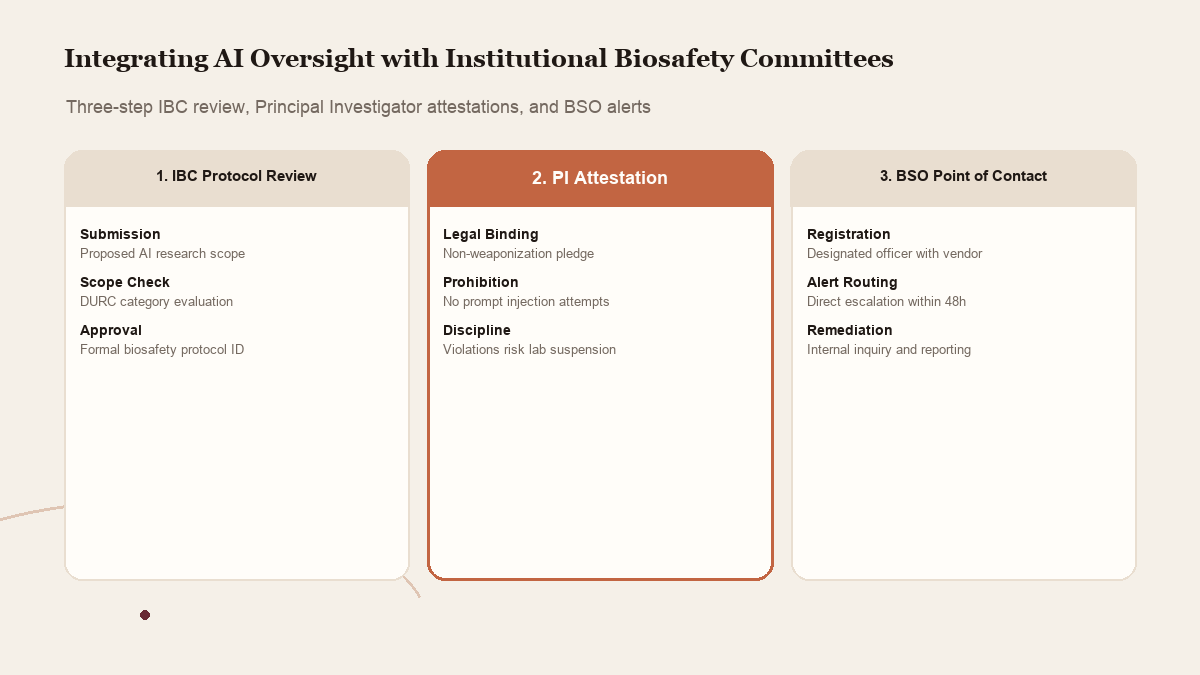
Integrating AI safety protocols into institutional biosafety committee (IBC) approvals, researcher certifications, and lab oversight.
The Three-Step IBC Integration Protocol
- Mandatory AI Biosafety Protocol Review:
- Before an investigator submits an application for Anthropic's High-Risk LSVP tier, the proposed computational research protocol must undergo formal review by the institution's IBC.
- The protocol must define specific research boundaries, identify the biological agents or protein families being investigated, and specify the intended computational outputs (e.g., binding affinity scores, phylogenetic trees).
- Principal Investigator Attestation:
- The Principal Investigator (PI) must sign a binding institutional attestation certifying that AI models will be utilized solely for authorized, non-weaponizable research objectives.
- The attestation must explicitly acknowledge that attempting to bypass model safety filters or prompt the system for restricted synthesis protocols constitutes a severe institutional biosafety violation subject to immediate lab suspension.
- Designated Biosafety Officer (BSO) Oversight:
- The institution's Biosafety Officer must be registered with Anthropic as the designated institutional point of contact for safety escalations.
- If Anthropic's monitoring systems flag a recurring anomaly or high-risk prompt sequence, the alert routes directly to the BSO within forty-eight hours for internal institutional review.
Technical Mechanics of 30-Day Monitored Prompt Retention
A primary operational distinction between Anthropic's standard enterprise terms and the High-Risk LSVP tier is the data retention policy. While standard enterprise agreements provide zero model training and ephemeral prompt processing, High-Risk biological access requires accepting a 30-day monitored prompt retention window.
For research institutions handling proprietary chemical structures and commercial lead compounds, this retention window represents a critical data security and IP boundary that must be managed with precision:
 View image detail
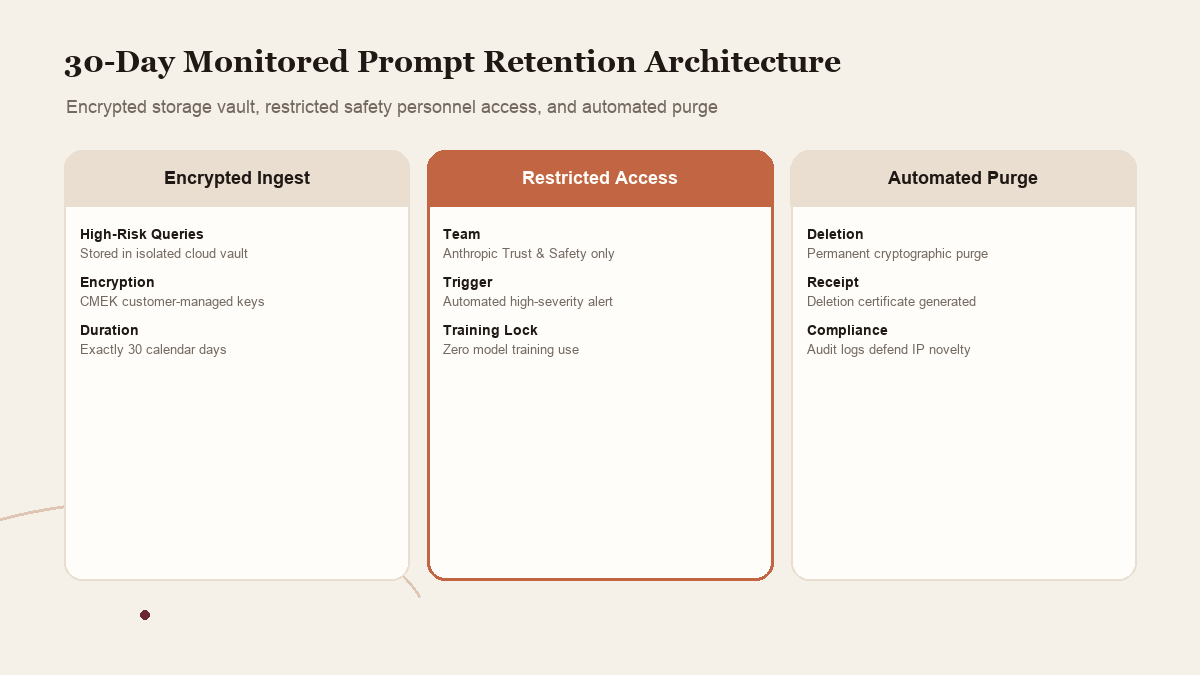
Data retention architecture: client prompt submission, Anthropic encrypted 30-day vault, restricted safety personnel access, and automated purge.
Deconstructing the Retention Protocol
According to Anthropic's program documentation and verified enterprise controls:
- Scope of Retention: Prompts and generated completions submitted under High-Risk project credentials are stored in an isolated, encrypted repository for exactly thirty calendar days from execution.
- Access Restrictions: Stored prompts are not accessible to Anthropic product teams, commercial sales personnel, or general engineers. Access is restricted exclusively to specialized Anthropic Trust & Safety and biosecurity personnel, who review records only when automated telemetry triggers a high-severity biosecurity safety alert.
- Zero Foundation Model Training: Anthropic contractually guarantees that retained prompts are never utilized to train, fine-tune, or calibrate future public foundation models.
- Automated Cryptographic Purge: At the expiration of the 30-day window, stored records are permanently deleted from active storage, with formal cryptographic deletion logs maintained for compliance audits.
Internal IP Hygiene Rules
To protect patentable biotechnology discoveries during the 30-day retention window:
- Establish an internal policy prohibiting the submission of unpatented, proprietary chemical structures (SMILES strings) or novel target sequences into High-Risk sessions.
- Require researchers to utilize abstract biochemical descriptions and publicly known analogue compounds when testing computational hypotheses.
- Maintain internal cryptographic records of all research prompts to document the date of conception and preserve patent novelty defenses under United States and international patent laws.
Constructing the Comprehensive Biological Research Audit Trail
In regulated life sciences environments, research integrity relies on meticulous record-keeping. Under Good Laboratory Practice (GLP) and Good Clinical Practice (GCP) standards, research organizations must be capable of reconstructing every analytical step that contributed to a scientific conclusion.
Standard commercial chat logs are completely inadequate for regulated life sciences governance. Organizations must maintain an immutable, synchronized audit trail:
 View image detail
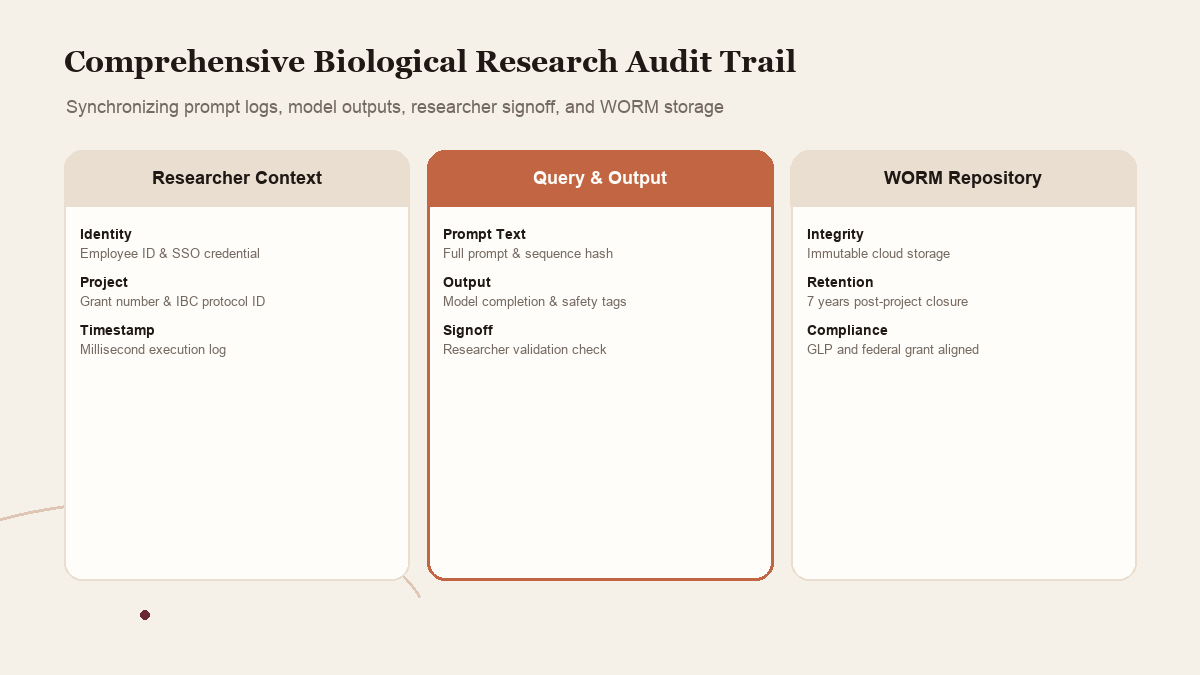
Audit trail architecture: synchronizing prompt logs, raw model outputs, researcher verification signoffs, and WORM storage.
Required Telemetry for Biological AI Audit Logs
For every computational query executed under High-Risk LSVP access, the institution's secure API proxy must capture:
- Researcher Identity: Full legal name, institutional employee ID, laboratory role, and authenticated SSO credential.
- Project Metadata: Active institutional grant number, internal project billing code, and corresponding IBC approval protocol ID.
- Query Provenance: Exact prompt text submitted, attached scientific documents, FASTA sequence hashes, and precise execution timestamp.
- Model Output: Raw generated response, system safety classification tags, and token consumption metrics.
- Researcher Verification Signoff: Mandatory electronic signoff certifying that the researcher reviewed the output for scientific accuracy and verified that no biosecurity red-lines were breached.
Store all audit records in write-once-read-many (WORM) cloud repositories protected by Customer-Managed Encryption Keys (CMEK) and strict access controls. Enforce a minimum retention schedule of seven years post-project closure to satisfy federal grant compliance and institutional governance mandates.
The Six-Month Grant Renewal and Compliance Audit
Anthropic's High-Risk verification is not a permanent, perpetual license. Access grants are issued on a provisional basis and require formal re-certification every six months.
 View image detail
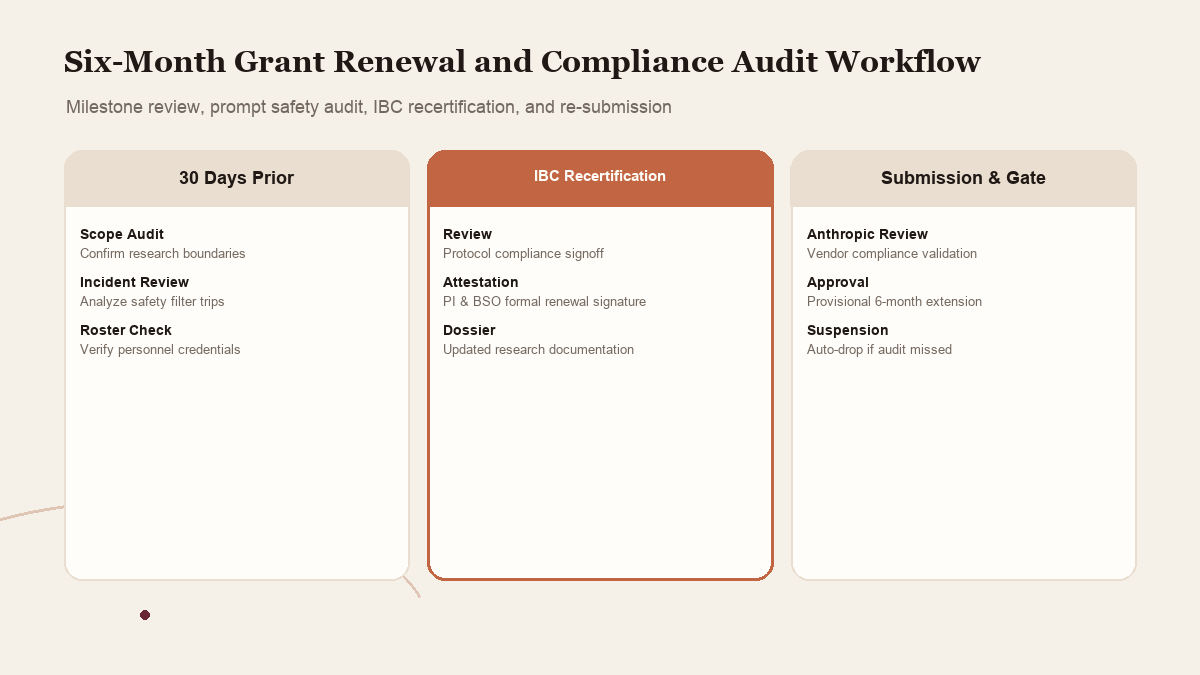
The six-month renewal lifecycle: milestone review, prompt safety audit, IBC recertification, and Anthropic renewal submission.
The Renewal Evaluation Protocol
To prepare for the recurring six-month audit, the institution's AI governance committee must execute a structured review thirty days prior to grant expiration:
- Research Scope Recertification: Confirm that the project remains within the authorized scientific domain approved by Anthropic. If the research has pivoted toward new viral vectors or novel protein engineering targets, an amended protocol must be submitted.
- Internal Safety Filter Incident Audit: Review all automated model refusals and safety warnings logged during the preceding six months. Investigate any recurring refusal patterns and document institutional remediation steps taken.
- Personnel Access Roster Audit: Verify that all active researchers on the project credential remain employed by the institution and possess current biosafety training certifications. Revoke credentials for any personnel who have departed the lab.
- Formal Submission to Anthropic: Submit an updated compliance dossier, signed by the Principal Investigator and Institutional Biosafety Officer, certifying full compliance with LSVP terms.
Failure to complete the six-month renewal on schedule results in automated suspension of High-Risk API access, disrupting ongoing computational workflows.
Regulatory Mapping: DURC, Export Controls, and International Standards
Life sciences governance does not operate in a legal vacuum. Institutions deploying high-risk biological AI must harmonize their internal policies with an evolving matrix of federal, state, and international regulations:
 View image detail
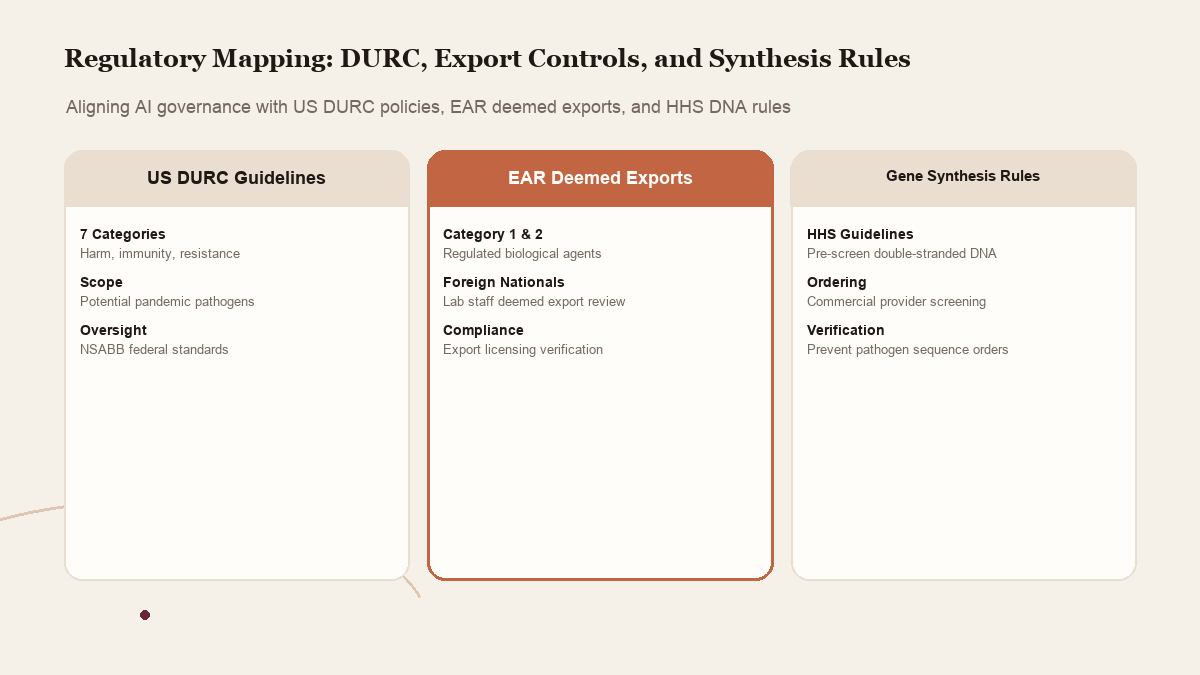
Mapping AI governance across US Dual Use Research of Concern rules, export administration regulations (EAR), and biosafety standards.
1. United States Export Administration Regulations (EAR)
Biological technology, software, and technical data related to regulated biological agents and toxins are subject to strict export controls under the Export Administration Regulations (EAR), administered by the Department of Commerce Bureau of Industry and Security (BIS).
- Transmitting technical data regarding the production or genetic modification of Category 1 or Category 2 biological agents to foreign nationals, even within a domestic U.S. laboratory, can constitute a deemed export violation.
- Law firm counsel and institutional export control officers must review whether cloud-based AI inference involving foreign national postdocs requires specific deemed export licenses.
2. Guidance for Providers of Synthetic Nucleic Acids
The U.S. Department of Health and Human Services (HHS) enforces strict screening guidance for providers of synthetic double-stranded DNA. When computational researchers use Claude to design genetic sequences intended for third-party commercial synthesis:
- The research team must verify that proposed sequences comply with gene synthesis screening protocols.
- Automated sequence designs intended for ordering from synthesis vendors (such as Integrated DNA Technologies or Twist Bioscience) must be pre-screened internally against regulated pathogen sequence databases.
3. European Union AI Act and High-Risk Classification
For European research institutions or international consortia operating within the EU, biological foundation model applications touching critical public health infrastructure may fall under the High-Risk AI systems classifications of the European Union AI Act. Deployers must prepare formal Fundamental Rights Impact Assessments (FRIAs) and maintain comprehensive technical documentation.
Lab Security and Incident Response: Managing Accidental Red-Lines
Even in legitimate research environments, automated safety filters may occasionally misinterpret a benign query as a potential biosecurity violation, or a researcher may inadvertently prompt the model on a restricted dual-use pathway.
Without a well-defined incident response plan, safety filter trips can lead to abrupt account freezes, institutional panic, and compromised research timelines.
 View image detail
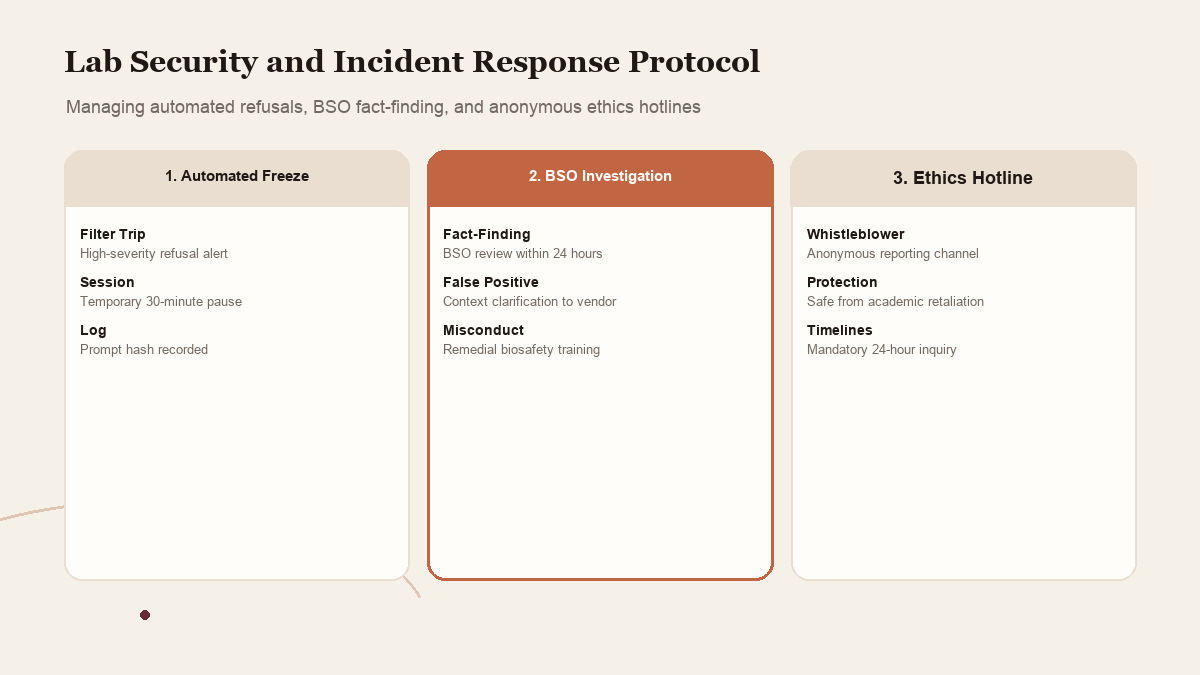
Incident response workflow: automated alert detection, immediate session freeze, internal BSO investigation, and vendor resolution.
The Four-Step Incident Response Protocol
- Automated Alert and Session Pause:
- When a researcher receives a high-severity biosecurity refusal, the internal API gateway automatically logs the prompt hash and temporarily pauses the researcher's session for thirty minutes.
- Internal Fact-Finding Investigation:
- The designated Biosafety Officer and Principal Investigator review the prompt context within twenty-four hours to determine whether the query represented a legitimate scientific inquiry or an impermissible breach of lab policy.
- Proactive Vendor Coordination:
- If the refusal was an unwarranted false positive on approved research, the BSO submits a formal context clarification through Anthropic's designated enterprise support channel, documenting the scientific justification and requesting guardrail calibration.
- Corrective Action and Retraining:
- If the inquiry was deemed improper under institutional policy, the researcher undergoes mandatory remedial biosafety training, and an internal incident report is filed with the IBC.
Biosafety Level (BSL) Containment Alignment
Physical biological research is categorized into four Biosafety Levels, ranging from standard BSL-1 teaching labs to high-containment BSL-4 facilities handling life-threatening aerosol-transmitted pathogens (such as Ebola or Marburg viruses). AI governance must mirror physical containment:
- BSL-2 Research: Standard computational modeling of common human pathogens (such as influenza or Staphylococcus aureus) is permitted under LSVP with standard institutional controls and designated PI oversight.
- BSL-3 and BSL-4 Prohibitions: Research directly intended to facilitate the physical culture, weaponization, or aerosol dispersion of BSL-4 agents is strictly prohibited by Anthropic policies. Attempting to generate actionable computational protocols for high-consequence select agents triggers immediate account termination and regulatory referral.
- Pathogen Transfer and CDC Select Agent Registration: Laboratories possessing registered Select Agents under the Federal Select Agent Program must ensure that AI model outputs do not circumvent regulatory transfer permits or material transfer agreements (MTAs).
Whistleblower Protections and Anonymous Reporting
A robust institutional biosafety program must provide safe reporting avenues for research personnel:
- Confidential Ethics Hotline: Establish an independent, anonymous reporting mechanism allowing graduate students, postdocs, and technical staff to report suspected misuse of biological AI models without fear of academic retaliation.
- Mandatory Reporting Timelines: Any credible report of deliberate prompt tampering to bypass biosecurity filters must be investigated by the Institutional Biosafety Officer within twenty-four hours, with written findings submitted to the institutional oversight board.
The Four-Stage High-Risk AI Governance Lifecycle
Institutional AI governance is an ongoing operational lifecycle that governs every project from initial grant application to final data archiving.
 View image detail
The high-risk governance lifecycle: pre-application vetting, active execution and monitoring, semi-annual renewal, and final archiving.
Stage 1: Pre-Application Vetting and IBC Approval
- Review proposed computational research scope against DURC categories and institutional IP guidelines.
- Secure formal IBC protocol approval and Principal Investigator compliance attestations.
- Submit High-Risk tier application to Anthropic with full institutional credentials.
Stage 2: Active Execution and Real-Time Monitoring
- Route all computational queries through secure internal API proxies with automated chemical masking.
- Enforce 30-day monitored retention protocols and track telemetry for safety filter activations.
- Conduct random monthly audits reviewing 5% of research queries for compliance with prompt hygiene standards.
Stage 3: Semi-Annual Renewal and Oversight
- Execute comprehensive six-month project audit thirty days prior to grant expiration.
- Re-certify project scope, researcher rosters, and safety incident logs.
- Submit updated compliance dossier to Anthropic for formal grant renewal.
Stage 4: Project Conclusion and Secure Decommissioning
- Upon project completion, revoke High-Risk API credentials within twenty-four hours.
- Export verified research records and computational models into institutional archives.
- Archive immutable WORM audit logs for seven years to satisfy statutory compliance mandates.
Institutional Risk Committee Oversight and Board Reporting
Beyond the technical purview of the IBC, enterprise life sciences organizations must establish periodic reporting to the executive risk committee and board of directors:
- Quarterly Risk Dashboard: Present aggregated telemetry detailing all AI model usage across biological research projects, including the frequency of high-risk tier activations, prompt retention compliance, and vendor communication logs.
- Independent Security Audits: Commission annual external third-party penetration testing and architectural reviews of the internal API proxy, verifying that cryptographic token scrubbing and chemical structure masking routines remain resilient against evolving prompt extraction techniques.
Conclusion and Biosafety Officer Checklist
Anthropic's Life Sciences Verification Program provides biological researchers with an unprecedented capability to accelerate scientific discovery, model complex molecular systems, and analyze massive scientific datasets. However, working at the frontier of biology demands uncompromised ethical responsibility and rigorous operational governance.
By integrating AI oversight into Institutional Biosafety Committees, enforcing strict IP masking boundaries, managing 30-day monitored retention with care, and adhering to formal incident response protocols, research institutions can harness the full potential of artificial intelligence while safeguarding their intellectual property, fulfilling federal compliance obligations, and upholding the highest standards of global biosecurity.
Checked for this article
Sources
Keep going
Related notes.
Automation and Agents
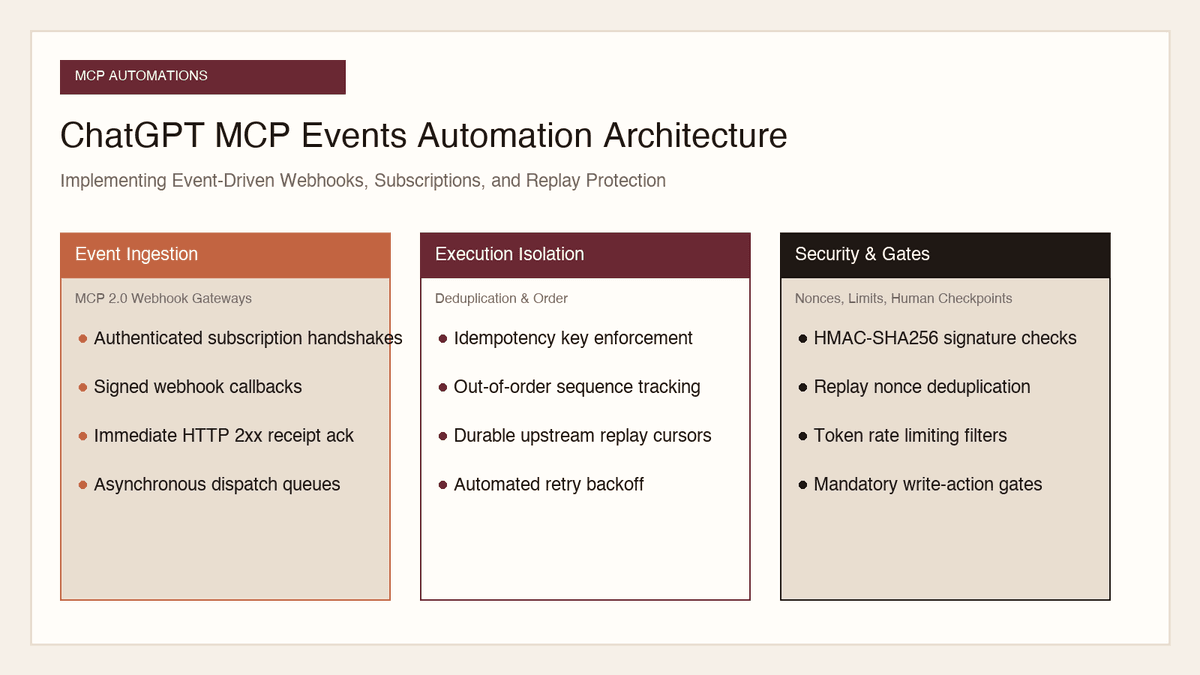
How to Implement MCP Events in ChatGPT: Event-Triggered Automations
Autonomous conversational agents no longer need to rely on wasteful polling loops. Here is how to implement event-triggered automations using ChatGPT MCP Events.
Read the article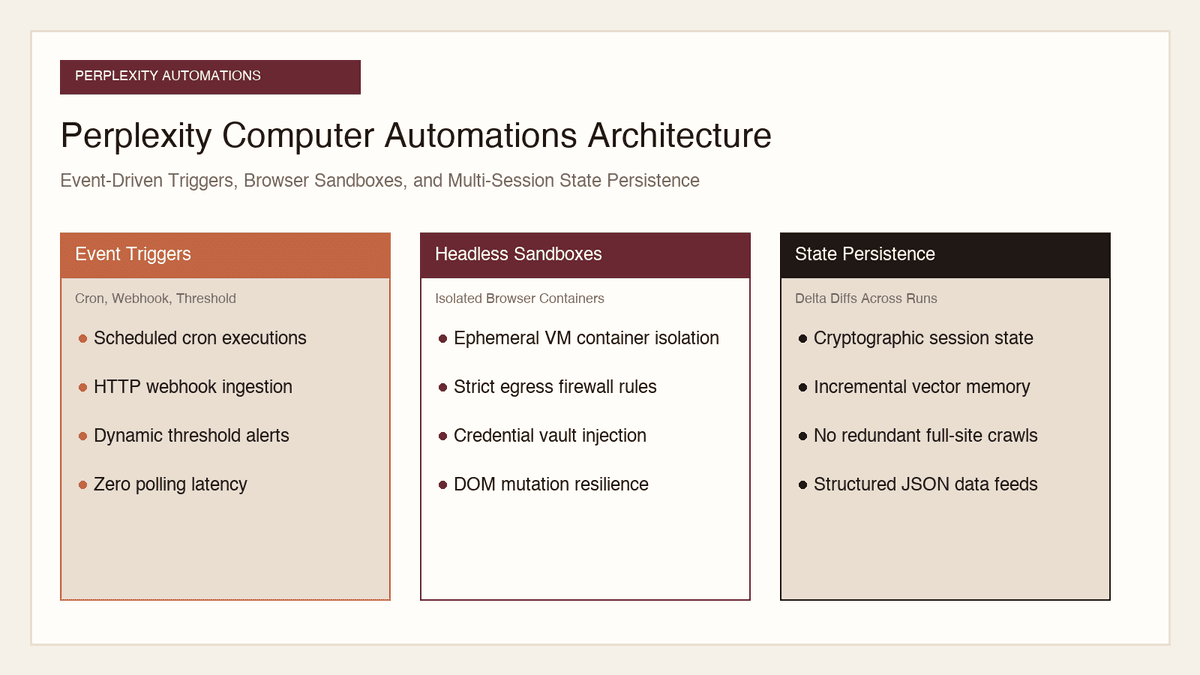
Automation and Agents
How to Build Recurring Web Automations with Perplexity Computer
Web scraping scripts break whenever a layout shifts. Here is how to build durable, recurring web automations using Perplexity Computer and persistent state.
Read the article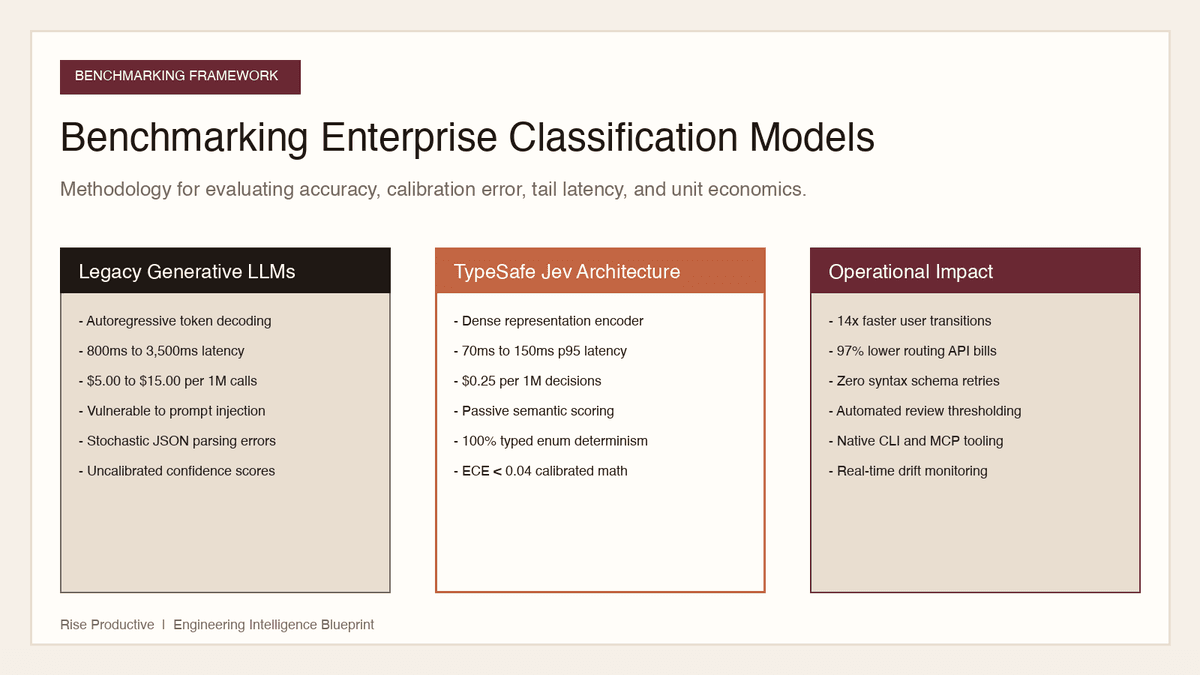
Automation and Agents
How to Benchmark Classifier Models: Latency, Cost, Determinism
Evaluating AI classifiers requires looking beyond static accuracy. Here is how to benchmark probability calibration, latency percentiles, and unit economics.
Read the article