
Automation and Agents
How to Govern Legal AI: Trusted Access, Ethical Walls, and Privilege
Deploying legal AI is an ethical and confidentiality challenge. Here is how to structure Trusted Access, automated ethical walls, and privilege defenses.
On this page
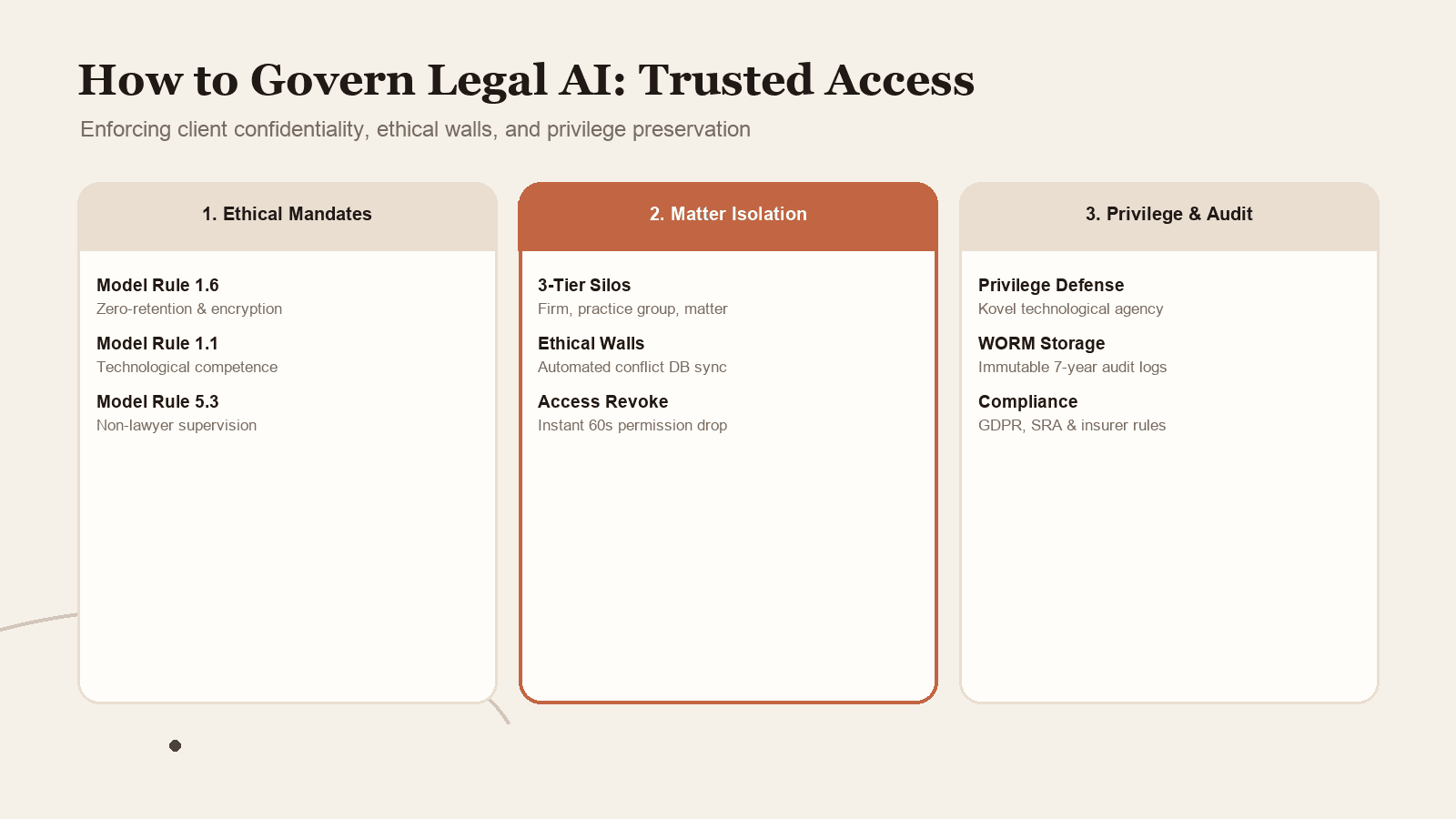
- The Core Ethical Mandates: ABA Model Rules 1.6, 1.1, and 5.3
- 1. Model Rule 1.6: Confidentiality of Information
- 2. Model Rule 1.1: Competence and Technological Literacy
- 3. Model Rule 5.3: Supervision of Non-Lawyer Assistance
- Technical Architecture: Deconstructing Trusted Access
- Architectural Pillars of Trusted Access
- Matter-Level Isolation and Ethical Wall Enforcement
- Implementing Three-Tier Matter Isolation
- Automated Conflict Database Synchronization
- Preserving Attorney-Client Privilege and Work Product Protections
- Defending Privilege in AI-Assisted Work Product
- Constructing the Tamper-Proof Legal Audit Trail
- Required Telemetry for Legal Audit Records
- Vendor Due Diligence and Contractual Protections
- Non-Negotiable Contractual Covenants
- Cross-Border Data Transfers and International Regulatory Alignment
- Training and Professional Responsibility: Model Rule 1.1 Competence
- Core Educational Modules for Legal Staff
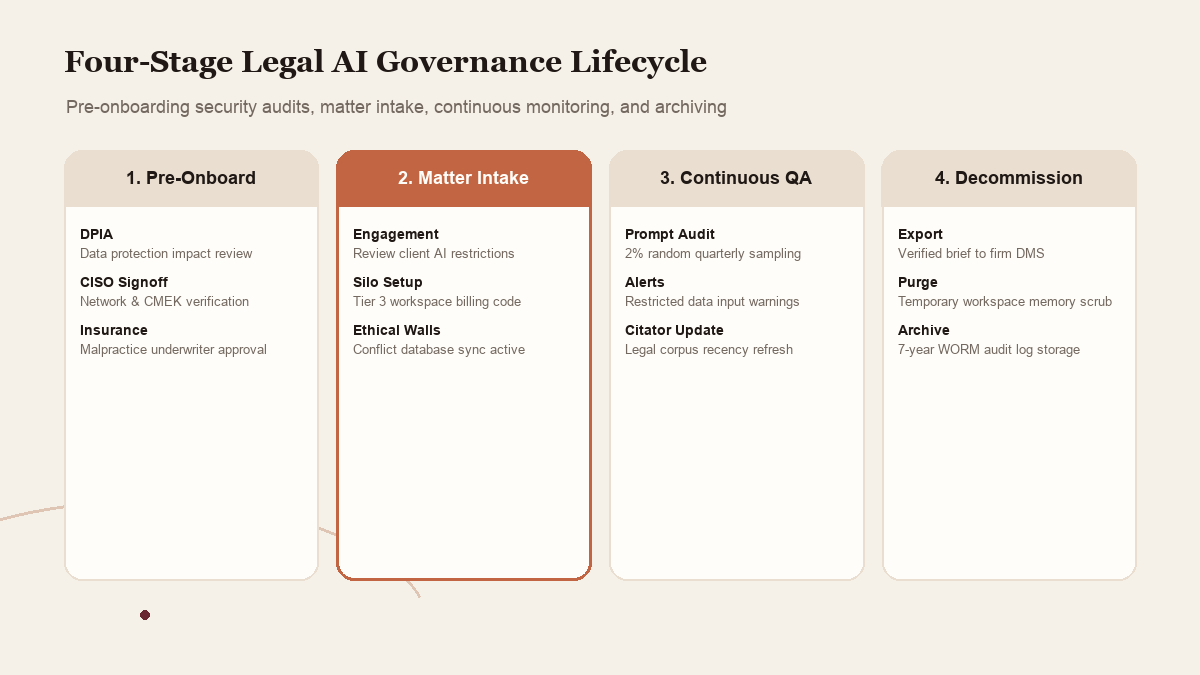
- The Four-Stage Legal AI Governance Lifecycle
- Stage 1: Pre-Onboarding Technical and Security Audit
- Stage 2: Matter-Level Gating and Intake
- Stage 3: Continuous Monitoring and Quarterly Audit
- Stage 4: Secure Matter Archiving and Decommissioning
- Conclusion and General Counsel Checklist
Deploying artificial intelligence within a law firm is fundamentally an ethical, confidentiality, and risk governance challenge. When an enterprise law firm evaluates OpenAI's Astra for Law, the operational questions extend far beyond whether the model can synthesize a coherent legal memorandum. The critical questions concern data sovereignty, client confidentiality, attorney-client privilege preservation, conflict of interest management, and ethical wall enforcement.
Under the American Bar Association (ABA) Model Rules of Professional Conduct, particularly Rule 1.6 (Confidentiality of Information), Rule 1.1 (Competence), and Rule 5.3 (Responsibilities Regarding Nonlawyer Assistance), lawyers bear an affirmative, non-delegable duty to safeguard client information and supervise automated systems that touch client matters.
If a corporate law firm inputs confidential client disclosures, merger terms, trade secrets, or litigation strategy into an external artificial intelligence system without adequate contractual, technical, and operational safeguards, the firm risks waiving attorney-client privilege, breaching client engagement agreements, and triggering severe disciplinary and malpractice liability.
This guide provides an enterprise governance blueprint for law firms deploying Astra for Law or similar legal AI systems. We examine the technical architecture of Trusted Access, establish strict matter-level isolation protocols, construct automated ethical walls, design tamper-proof audit trails, and provide an operational compliance framework aligned with legal ethics mandates.
 View image detail
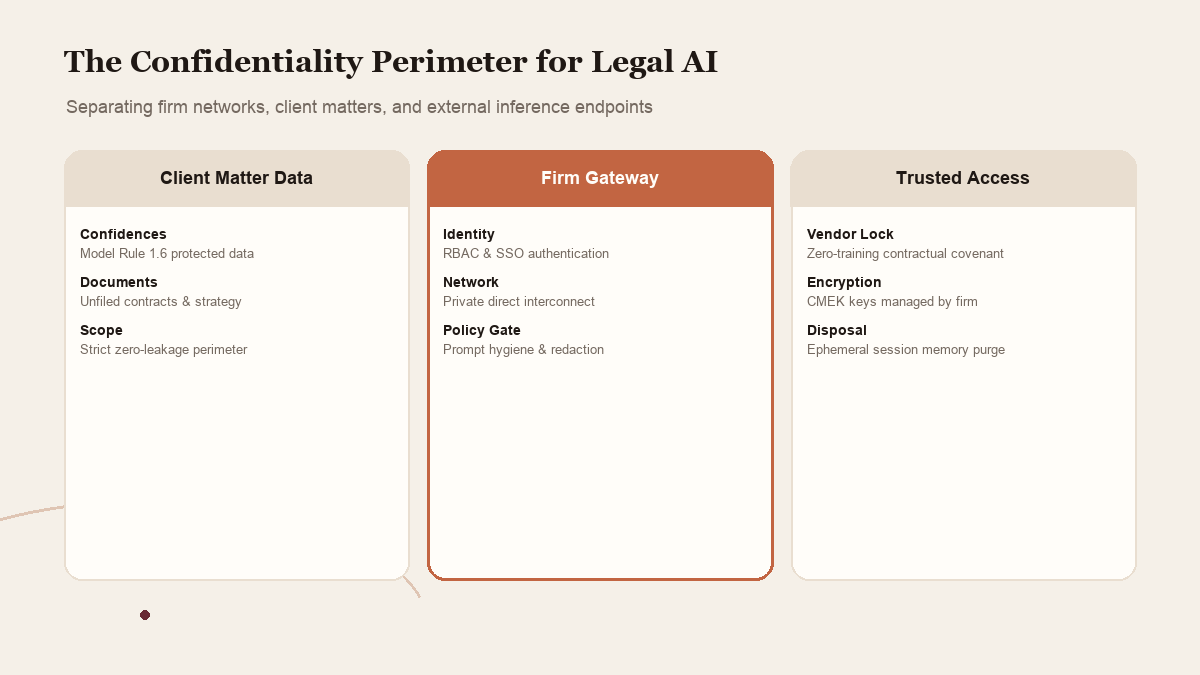
The confidentiality perimeter: separating client confidential records, firm private networks, and external model inference endpoints.
The Core Ethical Mandates: ABA Model Rules 1.6, 1.1, and 5.3
Law firms operate under a distinct regulatory regime that sets them apart from typical commercial enterprises. The adoption of artificial intelligence must be analyzed directly through the lens of established legal ethics rules:
1. Model Rule 1.6: Confidentiality of Information
Rule 1.6 mandates that a lawyer shall not reveal information relating to the representation of a client unless the client gives informed consent, the disclosure is impliedly authorized, or specific statutory exceptions apply. Furthermore, Rule 1.6(c) requires lawyers to make reasonable efforts to prevent the inadvertent or unauthorized disclosure of, or unauthorized access to, client information.
- Transmitting un-redacted client confidences to a third-party vendor without contractual guarantees of zero-retention, zero-training, and encrypted transit constitutes a direct breach of Rule 1.6.
- The existence of standard consumer terms of service that grant the AI provider rights to review prompts for service improvement or use data for model training violates professional duties.
2. Model Rule 1.1: Competence and Technological Literacy
Comment 8 to Rule 1.1 states that to maintain requisite knowledge and skill, a lawyer should keep abreast of changes in the law and its practice, including the benefits and risks associated with relevant technology.
- Lawyers cannot plead ignorance regarding how an AI tool processes data, where prompts are stored, or how hallucinations occur.
- Competence requires understanding the boundaries, failure modes, and verification requirements of generative legal tools.
3. Model Rule 5.3: Supervision of Non-Lawyer Assistance
Rule 5.3 governs a lawyer's responsibilities regarding non-lawyer assistance, extending by analogy and formal bar ethics opinions (including ABA Formal Opinion 512) to artificial intelligence systems.
- Partners and supervisory attorneys must establish reasonable policies ensuring that AI tools conform to professional obligations.
- Lawyers remain entirely responsible for the work product generated by AI, exactly as if it were prepared by a junior paralegal or external contract vendor.
Technical Architecture: Deconstructing Trusted Access
In its September 17, 2026 launch documentation, OpenAI specified that Astra for Law is deployed through a specialized architecture termed Trusted Access. For law firm general counsel and chief information security officers (CISOs), evaluating Trusted Access requires scrutinizing the underlying technical and contractual controls:
 View image detail
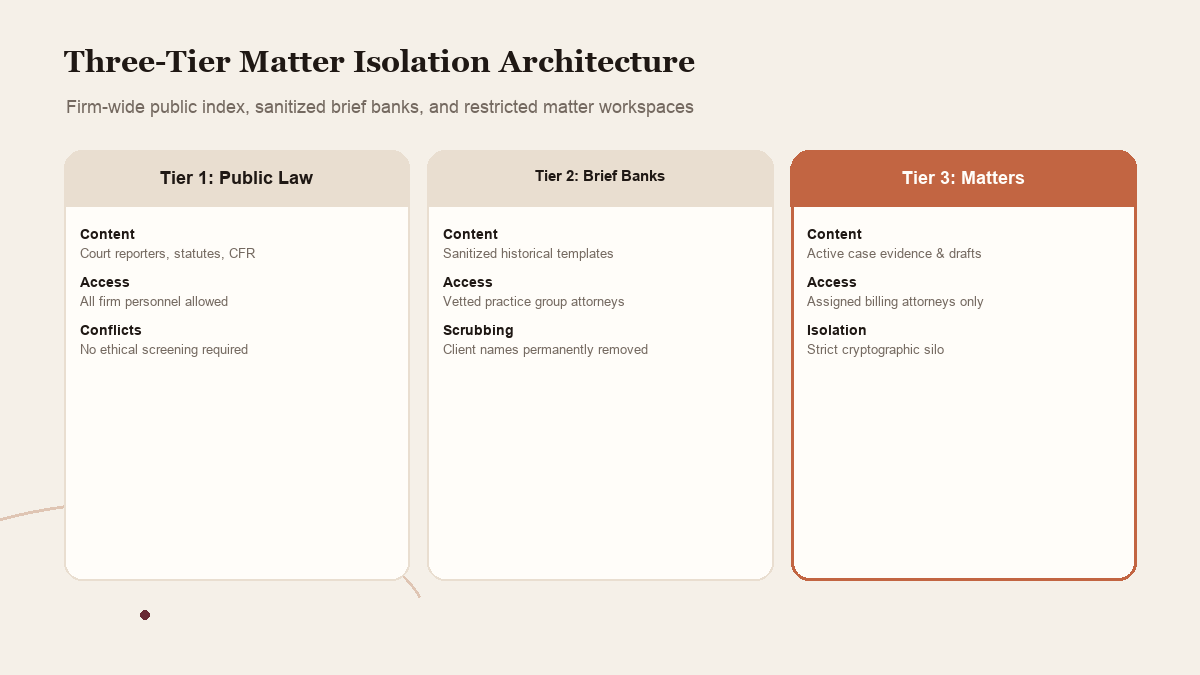
Three-tier matter isolation: firm-wide enterprise tenant, practice group knowledge silos, and restricted matter workspaces.
Architectural Pillars of Trusted Access
A compliant legal enterprise deployment must satisfy five core technical requirements:
- Zero-Training and Zero-Retention Commitments:
- Contractual and technical guarantees that customer prompts, attached client documents, research queries, and generated outputs are never used to train, fine-tune, or calibrate OpenAI foundation models.
- Enforce ephemeral processing for live inference: session context must be stored only within customer-designated storage and purged according to firm retention schedules.
- Customer-Managed Encryption Keys (CMEK):
- Firm data at rest within the cloud environment must be encrypted using encryption keys managed exclusively by the law firm via AWS KMS, Google Cloud KMS, or Azure Key Vault.
- If an urgent security alert or subpoena requires freezing access, the firm can instantaneously revoke the encryption key, rendering all hosted session data unreadable even to the cloud infrastructure provider.
- Dedicated Private Networking and VPC Peering:
- Traffic between the law firm document repository and the Astra for Law inference endpoint must travel over dedicated private connections (such as AWS Direct Connect, Azure ExpressRoute, or Google Cloud Dedicated Interconnect) rather than traversing the public internet.
- Disallow external web egress from within the secure legal research sandbox.
- Single-Tenant Cryptographic Boundaries:
- Ensure that vector databases, prompt cache memory, and document retrieval indices are logically and cryptographically segregated by client matter, preventing cross-tenant data leakage.
Matter-Level Isolation and Ethical Wall Enforcement
Law firms frequently represent corporate clients whose commercial interests compete directly, or litigate opposite parties across multiple active matters. In large multi-office law firms, ethical walls (or screening mechanisms) are legally required to prevent lawyers representing Client A from accessing confidential information regarding Client B.
Deploying a shared AI research platform introduces acute ethical wall contamination risks: if an associate working on an adversarial patent dispute submits a draft patent claim into an AI environment that indexes previous briefs across the entire firm, the system could inadvertently retrieve and expose confidential work product from a screened team.
 View image detail
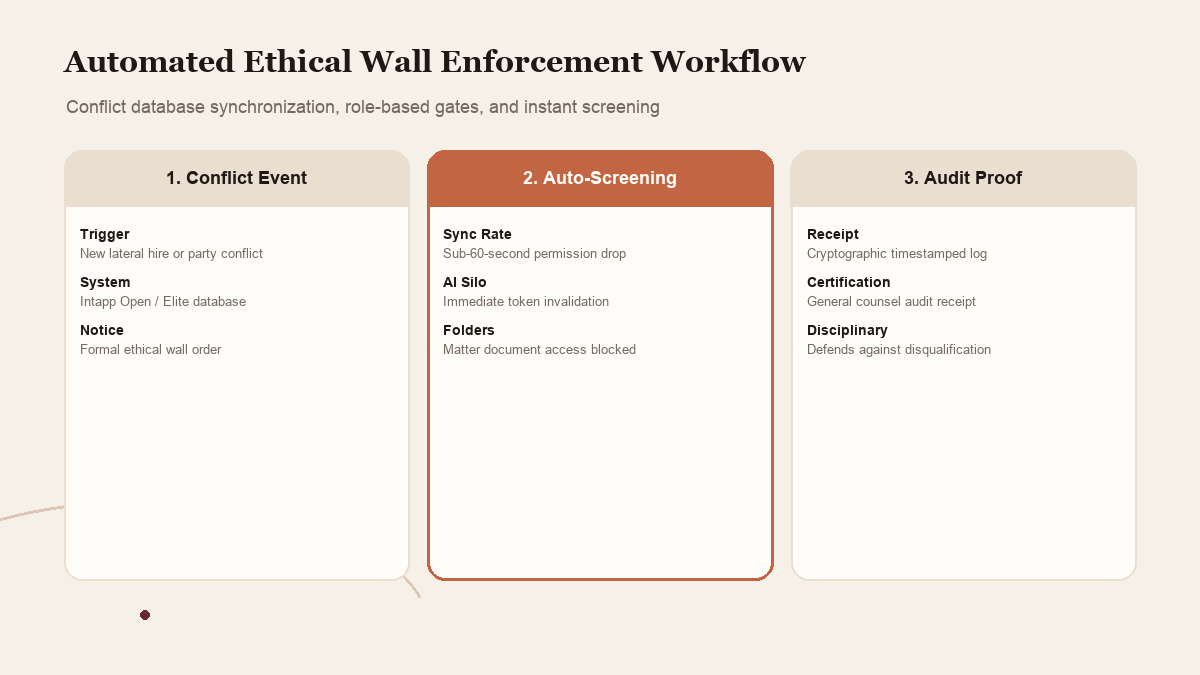
Ethical wall workflow: automated conflict database integration, matter tagging, role-based access gates, and instant conflict isolation.
Implementing Three-Tier Matter Isolation
To prevent cross-matter data contamination, configure Astra for Law using a Three-Tier Isolation Model:
- Tier 1: Firm-Wide Public Law Index:
- Contains published judicial opinions, federal and state statutes, administrative regulations, and court rules.
- Accessible by all firm attorneys and staff without conflict restrictions.
- Tier 2: Practice Group Sanitized Brief Banks:
- Contains historical, sanitized firm work product, standard form templates, and approved research memoranda from which all client names, deal terms, and identifying facts have been permanently scrubbed.
- Accessible by vetted practice group members for boilerplate research and template drafting.
- Tier 3: Matter-Restricted Workspaces:
- Dedicated, isolated workspaces created for specific active client matters (e.g., Matter #10492-001).
- Access is restricted exclusively to attorneys and paralegals officially assigned to the matter billing code.
- Custom documents, client evidence, deposition transcripts, and prompt histories generated within Tier 3 are strictly isolated and never indexed into Tier 1 or Tier 2.
Automated Conflict Database Synchronization
The AI platform's access control layer must integrate directly with the firm's central conflict checking system (such as Intapp Open or Elite). When a new ethical wall is established or an attorney is screened from a matter:
- The integration automatically updates the AI platform's permissions within 60 seconds, revoking the screened attorney's access to that matter's AI research sessions, document folders, and prompt logs.
- The system generates an immutable audit receipt certifying that the ethical wall was implemented and enforced across all automated tools.
Preserving Attorney-Client Privilege and Work Product Protections
The attorney-client privilege protects confidential communications between attorney and client made for the purpose of seeking or providing legal advice. The attorney work-product doctrine protects documents and tangible things prepared in anticipation of litigation by or for an attorney.
A central legal question surrounding legal AI is whether disclosing facts, strategy, or draft arguments to a third-party AI model waives privilege or work-product immunity.
 View image detail
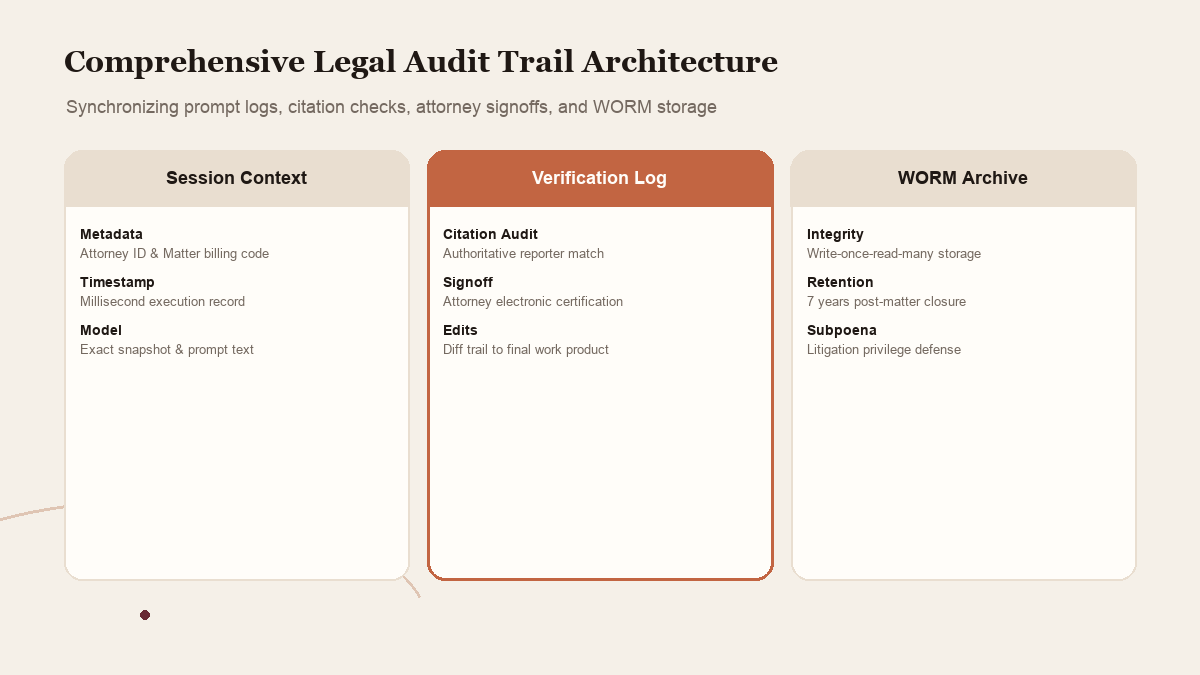
Audit trail architecture: synchronizing prompt logs, model inference records, attorney review signoffs, and privilege tagging.
Defending Privilege in AI-Assisted Work Product
To maintain robust privilege defenses against potential discovery challenges by litigation adversaries, law firms must establish strict operational protocols:
- Third-Party Agent Status:
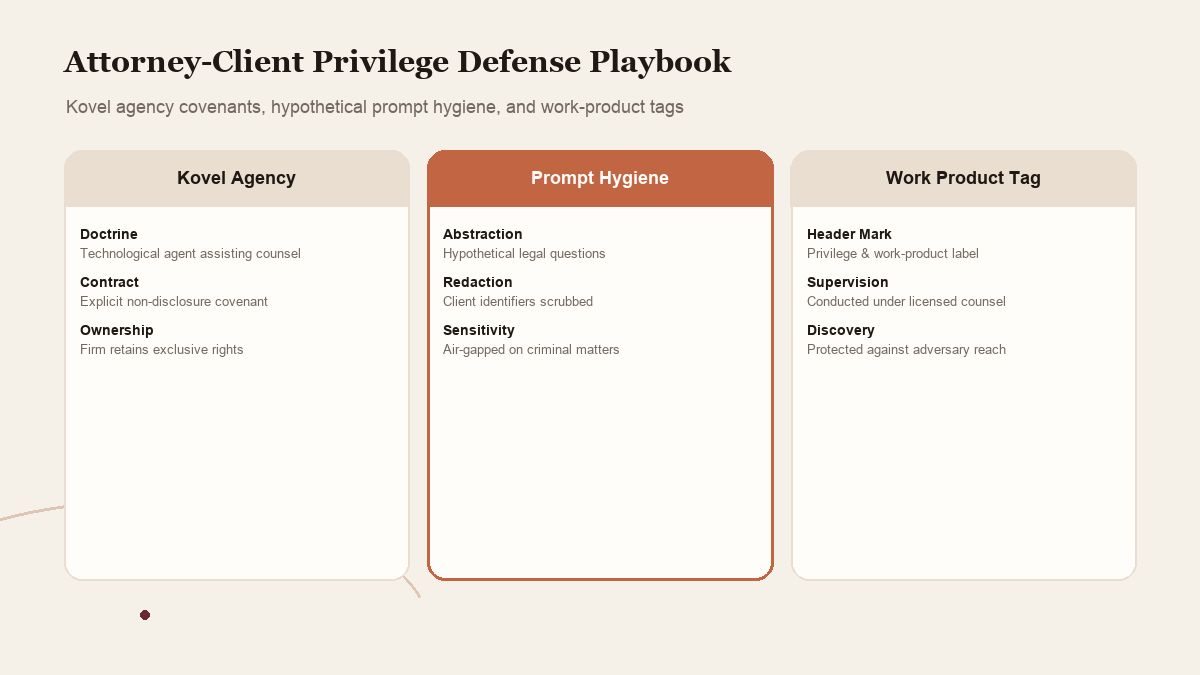
- Structure vendor agreements to explicitly recognize the AI service provider as an independent technological agent assisting counsel in rendering legal services, functioning analogously to external forensic accountants, e-discovery vendors, or specialized litigation consultants (the Kovel doctrine doctrine in federal jurisdictions).
- Ensure the vendor agreement contains explicit non-disclosure covenants, data ownership clauses, and strict confidentiality protections.
- Privilege-Aware Prompt Engineering:
- Train attorneys to structure research prompts as legal hypothesis inquiries rather than raw recitations of un-redacted client confessions.
- For highly sensitive investigations or criminal defense matters, use anonymized, hypothetical fact patterns that evaluate legal doctrines without disclosing party identities or unique transaction details.
- Privileged Work Product Watermarking:
- Automatically append metadata tags and visible header markings to all AI-generated research outputs and drafts: "CONFIDENTIAL ATTORNEY-CLIENT PRIVILEGED / WORK PRODUCT PREPARED IN ANTICIPATION OF LITIGATION."
- Ensure that internal audit trails record that the AI session was conducted under the direct supervision of licensed counsel for a specific client matter.
Constructing the Tamper-Proof Legal Audit Trail
In litigation and regulatory proceedings, law firms may be called upon to prove how an analysis was reached, demonstrate that research was conducted thoroughly, or defend against claims of unauthorized practice of law or inadequate supervision.
A standard text chat log is completely inadequate for formal legal compliance. Law firms must maintain comprehensive, immutable audit trails.
 View image detail
Privilege defense playbook: vendor agency agreements, Kovel compliance, prompt abstraction rules, and privilege log maintenance.
Required Telemetry for Legal Audit Records
For every research session conducted in Astra for Law, the firm's compliance gateway must record:
- Session Identity: Unique session ID, client-matter billing number, responsible partner ID, and executing attorney ID.
- Input Provenance: Exact prompt text submitted, attached document filenames, cryptographic hashes of ingested source records, and timestamp to the second.
- Model Parameters: Exact model version, configuration snapshot, and retrieval corpus timestamp.
- Output Record: Full synthesized text, raw citation list, and system confidence metrics.
- Verification Trail: Mandatory electronic signoff from the executing attorney certifying that all citations were independently verified against authoritative primary law before inclusion in client deliverables.
Store all audit records in write-once-read-many (WORM) cloud repositories with automated retention policies aligned with state bar record-keeping requirements (typically five to seven years post-matter closure).
Vendor Due Diligence and Contractual Protections
Before executing an enterprise agreement for Astra for Law or connecting firm systems to cloud inference endpoints, law firm general counsel must require specific contractual commitments from the vendor:
 View image detail
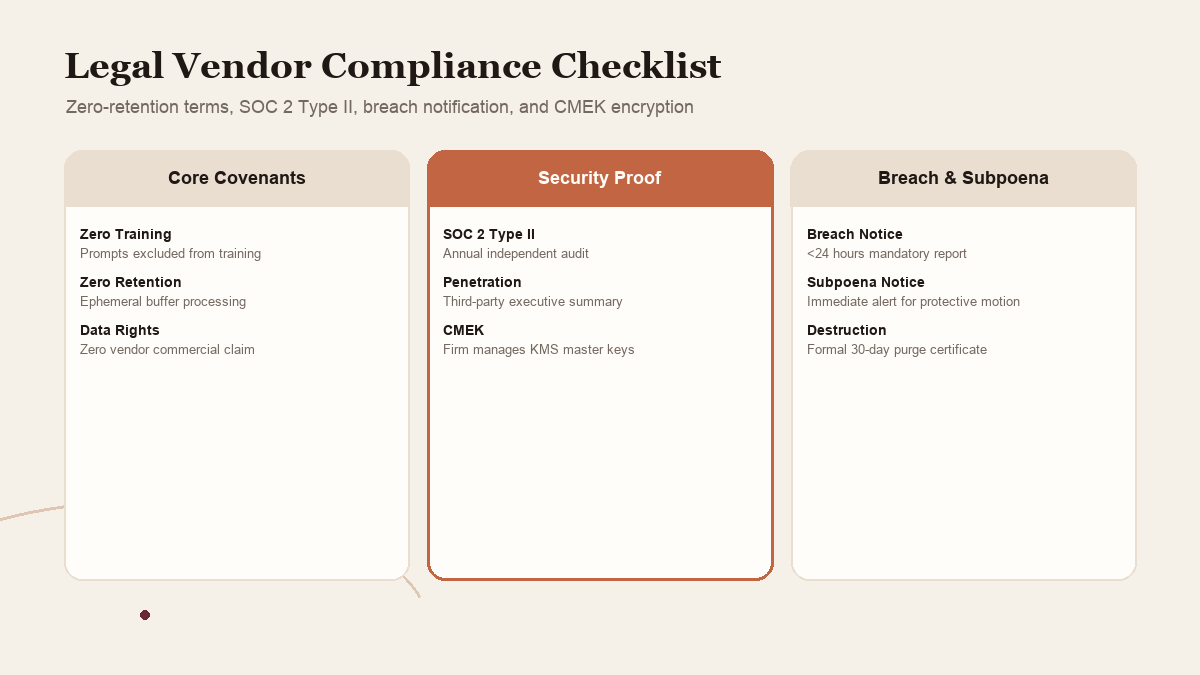
Vendor compliance checklist: security certifications, contractual covenants, audit rights, and breach notification terms.
Non-Negotiable Contractual Covenants
- Absolute Proprietary Ownership: The firm retains exclusive ownership of all prompts, inputs, attachments, and generated outputs. The vendor acquires zero intellectual property rights or licenses to customer data.
- Mandatory Breach Notification: The vendor must notify the law firm CISO within twenty-four hours of any confirmed or suspected unauthorized access, data breach, or security incident affecting firm data.
- Subpoena and Government Request Notification: If the vendor receives a subpoena, civil investigative demand, or court order seeking law firm or client records, the vendor must notify the firm immediately (unless legally prohibited) to allow the firm to move for a protective order.
- Third-Party Security Certifications: Annual independent SOC 2 Type II compliance reports, ISO/IEC 27001 certification, and regular third-party penetration test executive summaries.
- Post-Termination Data Decommissioning: Within thirty days of contract termination, the vendor must permanently sanitize and destroy all cached data, backups, and temporary files, providing a formal officer certificate of destruction.
Cross-Border Data Transfers and International Regulatory Alignment
Large law firms frequently litigate international commercial arbitrations, multijurisdictional cartel investigations, and cross-border mergers involving data subjects located outside the United States. Deploying Astra for Law on international matters introduces additional compliance layers:
- General Data Protection Regulation (GDPR) and Transfer Impact Assessments: Under EU and UK GDPR, transferring personal data embedded within witness statements, corporate emails, or discovery exhibits to U.S.-hosted cloud endpoints requires a valid transfer mechanism (such as EU Standard Contractual Clauses or the EU-U.S. Data Privacy Framework). Firms must conduct a formal Transfer Impact Assessment (TIA) certifying that U.S. government surveillance laws do not undermine data subject protections.
- UK Solicitors Regulation Authority (SRA) Directives: For firms with London offices, the SRA requires law firms to ensure that generative AI tools do not compromise client confidentiality, that client consent is obtained where appropriate, and that legal professional privilege (LPP) is vigorously defended under English common law standards.
- Legal Malpractice and Cyber Insurance Underwriting: Leading professional liability insurers now include specific underwriting questions regarding law firm generative AI usage. Firms must demonstrate documented AI policies, mandatory citation verification protocols, and CMEK data encryption to maintain favorable premium rates and prevent policy exclusions for AI-generated brief errors.
Training and Professional Responsibility: Model Rule 1.1 Competence
Technical guardrails and contractual agreements are ineffective if individual attorneys do not understand their ethical duties when using AI tools. A law firm governance program must include mandatory annual training on legal AI ethics.
 View image detail
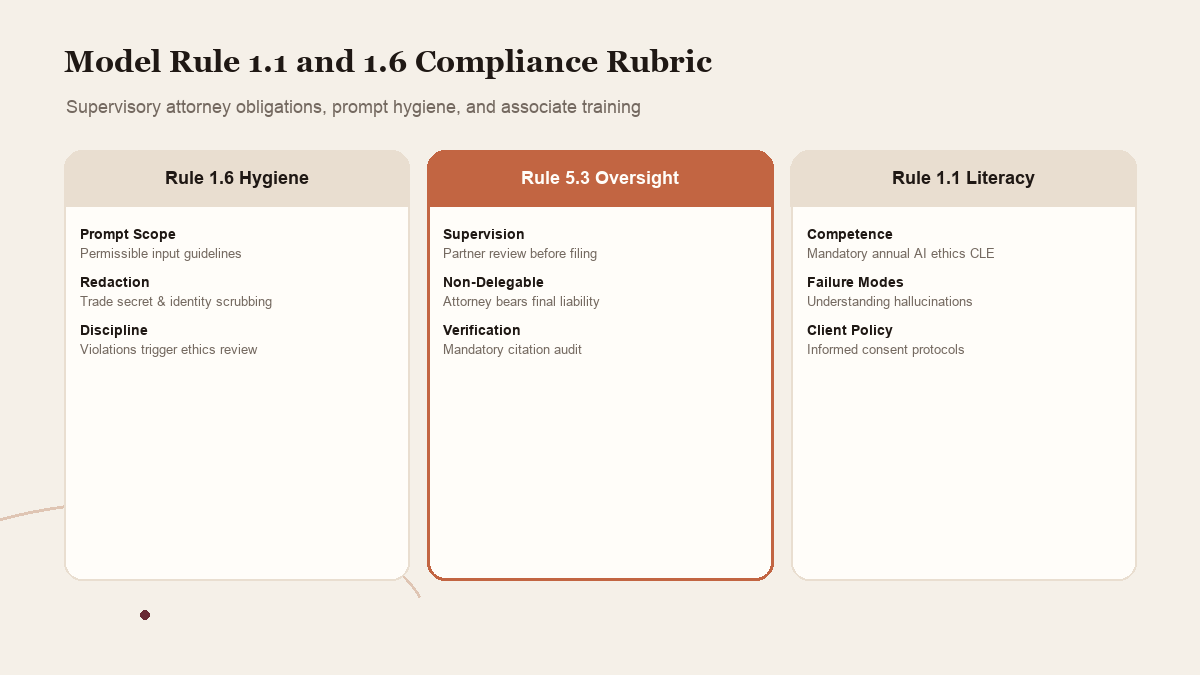
Training rubric: prompt confidentiality hygiene, mandatory citation verification protocols, and supervisory review standards.
Core Educational Modules for Legal Staff
- Module 1: Prompt Confidentiality Hygiene: What information may be entered into the system, how to anonymize client details, and when to restrict usage on high-stakes matters.
- Module 2: The Art of Citation Verification: Practical training on detecting subtle hallucinations, verifying negative subsequent history, and identifying inaccurate statutory quotations.
- Module 3: Ethical Wall Compliance: Understanding how matter isolation works and recognizing when an ethical conflict requires immediate session termination.
- Module 4: Client Engagement and Disclosure Policies: Reviewing when firm policy or client engagement letters require affirmative disclosure of AI usage, and how to communicate technological safeguards to corporate clients.
The Four-Stage Legal AI Governance Lifecycle
Governance is not a one-time onboarding checklist. It is an ongoing operational lifecycle that governs every client matter from intake to archiving.
 View image detail
The governance lifecycle: pre-onboarding technical audit, matter-level gating, quarterly compliance reviews, and secure matter archiving.
Stage 1: Pre-Onboarding Technical and Security Audit
- Validate cloud tenant isolation, CMEK configuration, and private network routing.
- Execute formal Data Protection Impact Assessment (DPIA) and review professional liability insurance coverage.
- Secure firm executive committee and risk management approval.
Stage 2: Matter-Level Gating and Intake
- Review client engagement terms for specific restrictions on AI usage.
- Configure Tier 3 matter workspace tied to active billing codes.
- Apply automated ethical wall access lists based on conflict database status.
Stage 3: Continuous Monitoring and Quarterly Audit
- Monitor prompt logs for unauthorized attempts to input restricted personal data or un-redacted trade secrets.
- Conduct quarterly compliance audits reviewing 2% of anonymized research sessions for citation verification compliance.
- Update firm brief banks and primary law indices to incorporate recent statutory revisions and court decisions.
Stage 4: Secure Matter Archiving and Decommissioning
- Upon conclusion of client representation, export verified research memoranda into firm document management archives.
- Purge active matter workspace context and temporary prompt histories according to firm record retention schedules.
- Re-certify ethical wall status and archive comprehensive audit logs to WORM storage for statutory compliance periods.
Conclusion and General Counsel Checklist
Astra for Law represents a powerful new capability for legal research, analysis, and brief drafting. However, the integrity of legal practice rests upon confidentiality, ethical rigor, and uncompromised client advocacy.
By establishing robust Trusted Access perimeters, enforcing three-tier matter isolation, automating ethical walls, preserving attorney-client privilege, and training attorneys in rigorous citation verification, law firms can embrace the efficiency of generative AI while safeguarding their clients' most sensitive confidences and maintaining the highest standards of the legal profession.
Checked for this article
Sources
Keep going
Related notes.
Automation and Agents
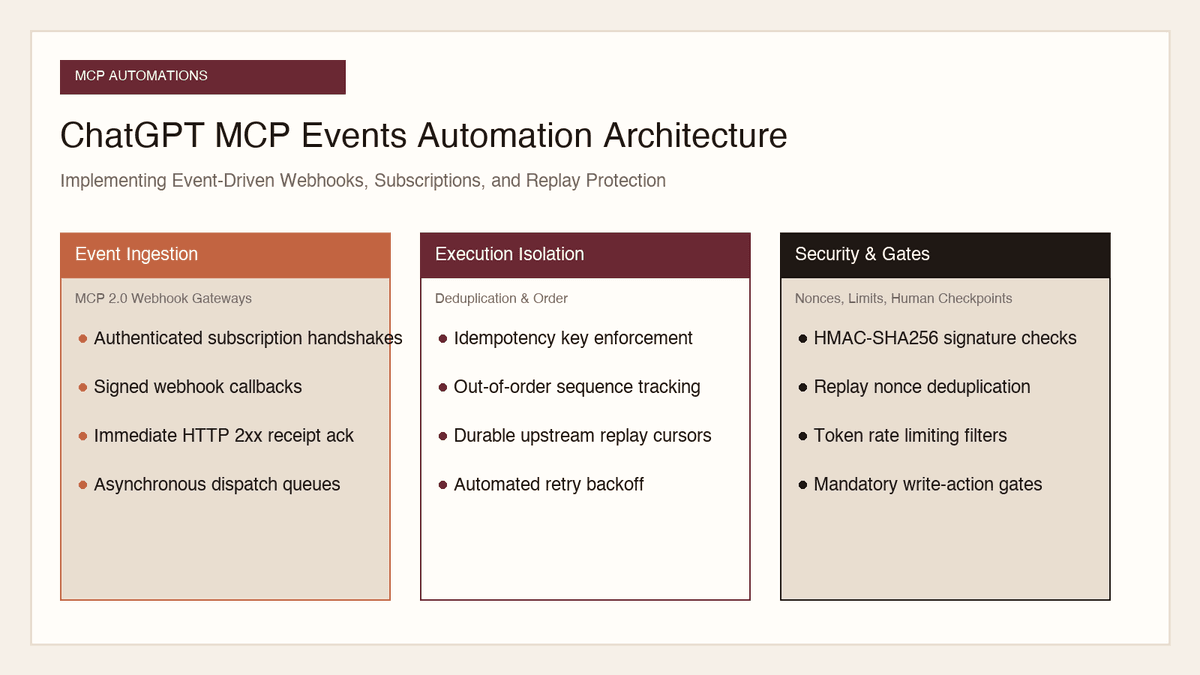
How to Implement MCP Events in ChatGPT: Event-Triggered Automations
Autonomous conversational agents no longer need to rely on wasteful polling loops. Here is how to implement event-triggered automations using ChatGPT MCP Events.
Read the article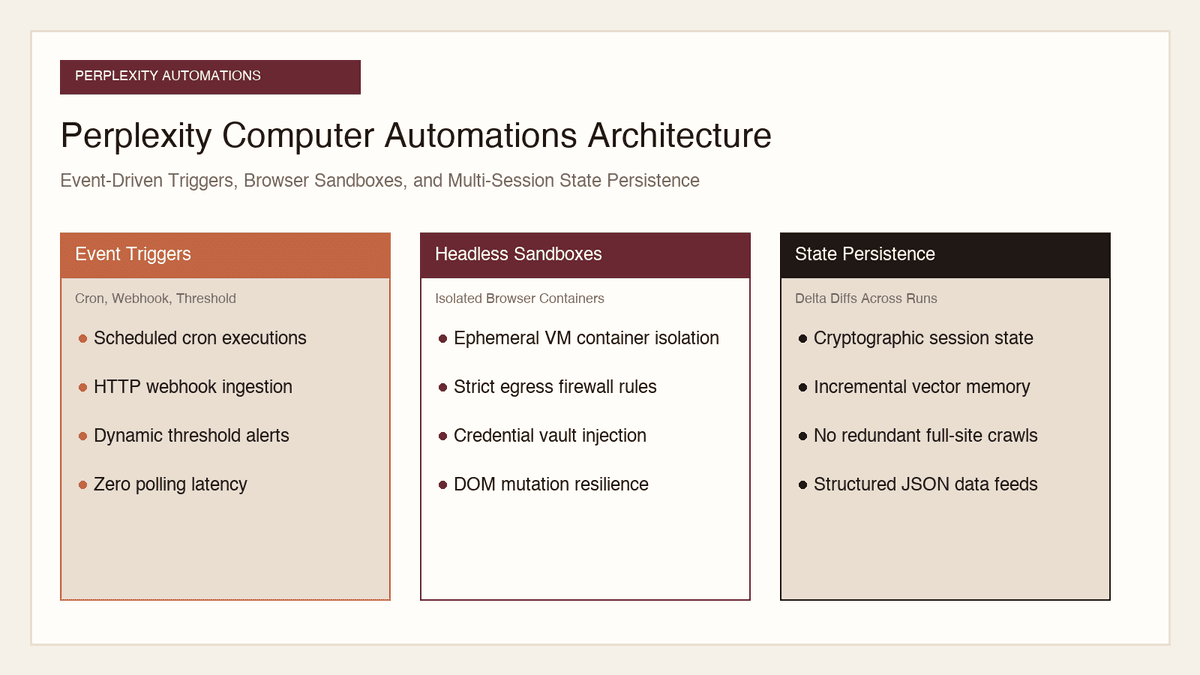
Automation and Agents
How to Build Recurring Web Automations with Perplexity Computer
Web scraping scripts break whenever a layout shifts. Here is how to build durable, recurring web automations using Perplexity Computer and persistent state.
Read the article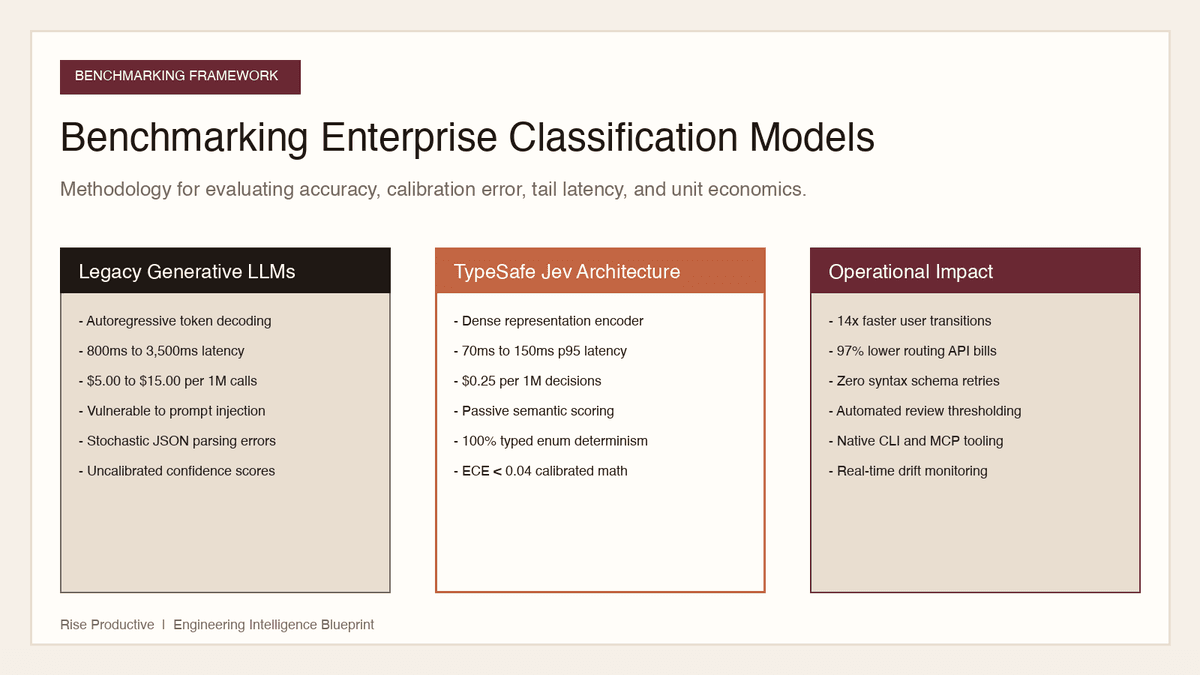
Automation and Agents
How to Benchmark Classifier Models: Latency, Cost, Determinism
Evaluating AI classifiers requires looking beyond static accuracy. Here is how to benchmark probability calibration, latency percentiles, and unit economics.
Read the article