
AI in Practice
SynthID Detector Goes Public: AI Media Gets an Origin Check
Public access brings supported AI-media origin evidence to more recipients. Here is what the SynthID expansion changes, and what a detector still cannot establish.
On this page
- Public access changes who can ask the origin question
- A watermark carries a signal inside the media
- A recognized signal answers a bounded question
- An absent signal leaves an open question
- Three ways to check a file have different limits
- Shared origin signals become useful at the handoff
- Better disclosure depends on the claim attached to the asset
- Missing evidence deserves better methods, not stronger labels
An AI image can travel farther than the explanation of how someone made it. A creator sends a file, an editor changes it, and a publisher chooses the caption the audience will see. Google’s public SynthID Detector gives publishers another place to look for evidence about the file’s origin. More people can now check for a signal the tool knows how to recognize, even after the file leaves its creator’s workspace.
On October 7, 2026, Google announced that SynthID Detector is available globally in English. The announcement covers images, video and audio from Google and participating partners, naming OpenAI, NVIDIA and Kakao, with Apple coming soon. The named partners do not mean that every model or every file from those companies works with the checker. Apple’s support is still described as coming soon.
For people who commission, edit or publish creative work, this is a welcome development. A public check can give the team something more specific to discuss than “it looks AI.” It still leaves a separate question for the publisher: does the content support the story you plan to tell with it? That difference helps the team use the tool for the question it can answer.
The release lets more people use a checker first offered to a smaller group. In its May 20, 2025 announcement, Google described an early rollout for testers and a waitlist for journalists, media professionals and researchers. October’s announcement moves access beyond that initial audience. That older post shows who could use the tool at first. Its early plans do not tell us which file types work today.
The change matters to the person who receives the file. The person who made an image may know the tool, the brief and the intended use. An account manager, editor or client who receives the image may have none of that context. Those people can now check for a signal on their own, if the tool supports the file. The creator does not need to run every check for them.
Imagine a hypothetical agency commissioning a visual for a product launch. The designer delivers an illustration through a shared folder. The client’s marketing lead wants to understand whether AI contributed to the asset before deciding how to describe it. The lead can check the file for a watermark. The lead can then ask the designer about the process with something more concrete than a suspicion about unusually smooth lighting.
 View image detail
That does not establish that the service will recognize this particular illustration. The example describes the new opportunity to ask, not an observed result. The agency still needs the file and the creator’s account of how it was made. A public tool can add evidence to a conversation; it cannot recreate all the context that the people involved forgot to pass along.
This is why wider access matters even without a claim that the tool catches more AI content. A tool for a small group of experts serves a different need from one that editors and clients can use. A person choosing a caption, accepting a file or questioning a shared clip can check for clues about how it was made. The value comes from understanding the answer when that publishing decision arrives.
Google DeepMind describes SynthID as technology that embeds imperceptible digital watermarks directly into generated content. For images and video, it adds the watermark when the content is created. The checker later looks for that signal. SynthID also covers text as a technology. The October public portal announcement, though, names image, video and audio checks.
This mechanism helps explain what makes the service interesting. A viewer does not need to spot a visible stamp in a corner of the image. The signal lives within the media rather than appearing as a label the creator deliberately places on top. The checker looks for a mark it knows how to read within the file. It does not just look for the word “AI” or a style that seems AI-made.
Think about how someone made the image and how it looks. A designer can use generative tools to create a deliberately rough illustration. Another person can make a polished image through ordinary photography and editing. How it looks does not tell you how it was made. A hidden signal gives you a different clue from a guess that the scene looks too perfect.
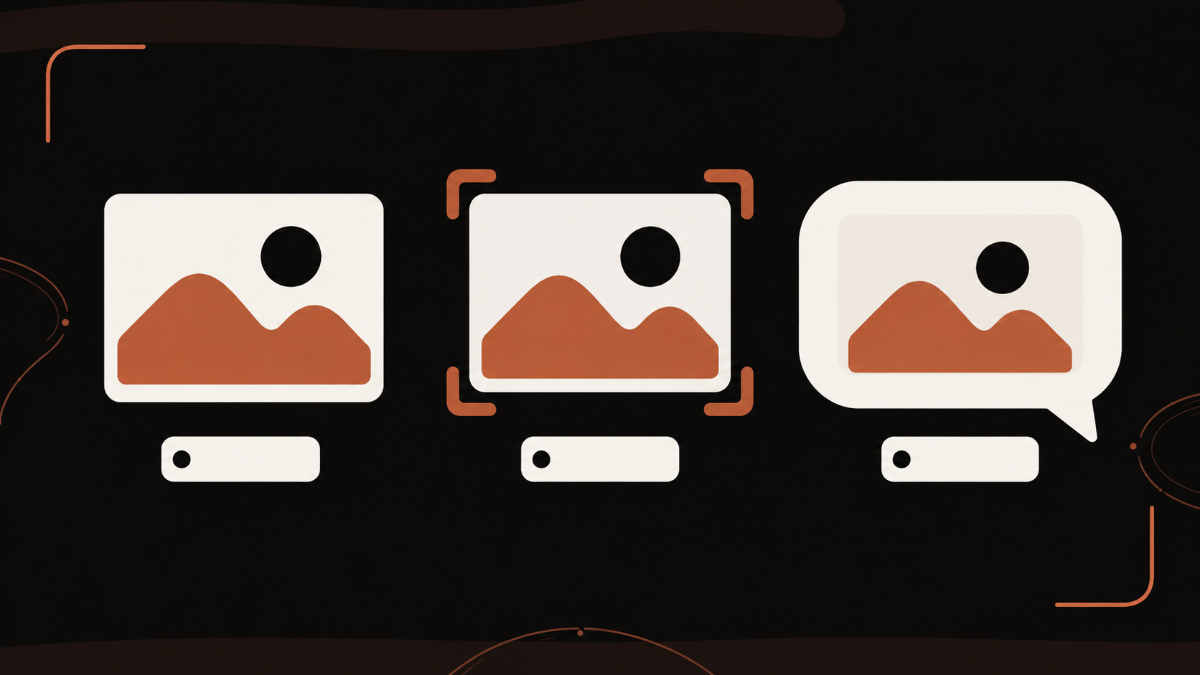
The file matters because it holds what the checker reads. A screenshot, a copy sent through a chat app and the original file are different versions of the same work. Keep track of which version someone checked. That does not tell us how much any one edit changes the signal, but it does tell us which file the result describes. Otherwise, two people can report different findings while quietly discussing different files.
 View image detail
Google says SynthID’s image and video watermarks are designed to withstand modifications such as cropping and lossy compression. That is a design claim, not a promise that every possible edit preserves a detectable signal. Keep the steps and their limits together. The provider adds a watermark. A tool tries to find it. What the tool can read depends on the signal left in the file you give it.
A recognized supported watermark gives a publisher evidence of AI involvement in the submitted media. The publisher still needs to know who ordered the work, whether they may use it and whether the event it shows happened. The watermark does not answer those questions.
Consider a hypothetical generated picture of a crowded conference room. A watermark finding could help the editor describe the picture as an AI illustration. It would not establish that the conference attracted the number of attendees shown. If the page presents the image as an illustration of a possible event, the production method and the caption can fit together. If the caption presents it as a photograph of yesterday’s event, the editor needs evidence of yesterday’s event.
This also leaves room for work that openly uses AI. An imagined office, a stylized product concept or a fictional scene can serve its purpose openly. An AI-made asset can still fit the job. The useful next question concerns the claim attached to it: what will a reader reasonably understand the image to show, and does the surrounding explanation make that meaning accurate?
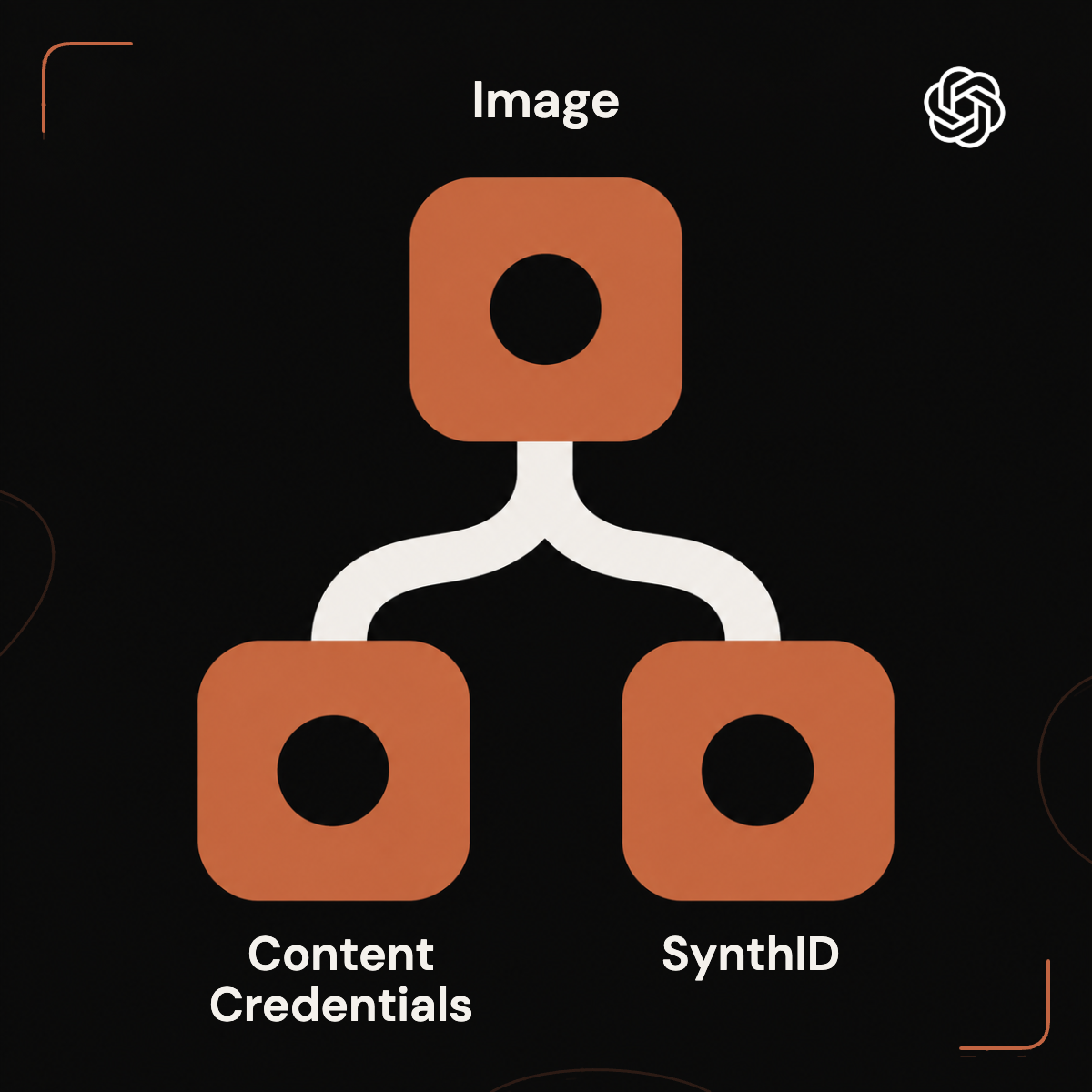
OpenAI’s current content-provenance documentation provides a concrete example of bounded results. Its image checks can return separate Content Credentials and SynthID entries, and the guide says to read each applicable entry independently. A result about one signal should not erase another signal’s state or become a universal approval label.
 View image detail
This gives the team a clearer way to report a check. Name the file, the checking service and what that service reported. Say what the tool found before saying what you think it means. “The check found a supported watermark” preserves a useful observation. “This image is verified” leaves the reader guessing whether you mean production history, factual accuracy, ownership or permission. Clear wording helps the next person understand the result.
When a tool finds no signal, its answer still has limits. It is a mistake to turn that answer into proof that a human made the file. OpenAI explicitly explains that its not_detected result does not rule out AI generation. Its tool checks supported OpenAI signals rather than all other companies’ models, and transformations or older generation methods can leave those signals unavailable.
The two results do not mean opposite things. A mark the tool recognizes can give a clue about how the file was made. No mark does not tell you which of the other ways made it. That part of the question stays open. You need additional information about the file’s history before reaching a broader conclusion.
In the hypothetical launch-image example, imagine that a check does not identify a watermark. The account manager could ask the designer which tool produced the asset and whether the submitted copy matches the original delivery. The manager might receive a straightforward explanation that helps choose the right disclosure. Nothing about the missing signal requires accusing the designer or declaring the asset human-made.
A result with no signal can tell the team what to ask next. It does not close the case. It tells you where this check stopped. That is useful if the team preserves the actual wording and scope. It becomes misleading if a spreadsheet replaces every unrecognized result with a green “authentic” label, because the label silently adds a conclusion the verifier did not supply.
 View image detail
NIST’s 2024 overview of digital content transparency describes watermark detectors as having nonzero probabilities of false positives and false negatives. That technical context does not measure the new SynthID portal. It gives a reason to examine the evidence and the setting in which someone uses it. Be careful about what a missing signal means, especially when the answer could harm someone’s name or shape a public claim.
SynthID is the watermark technology. Each tool that checks for it still has its own limits. Google’s public portal, Gemini and OpenAI’s tools do not all check the same set of files and signals. Read the help for the tool you use. Do not assume that a rule for one also applies to the others.
Gemini’s verification help says that its SynthID checks currently recognize content created by Google AI tools, even though other companies have adopted the watermark technology. That is narrower than the October portal announcement’s named partner coverage. A person who learns about the public expansion should not assume the same expansion applies to every Gemini conversation.
OpenAI has separately expanded its own provenance work. Its May 19, 2026 announcement, updated July 31, describes the SynthID partnership and subsequently adds supported audio verification and API access. The developer guide describes checks for supported OpenAI image and audio signals. These changes show why tools can use the same watermark technology and still check different things.
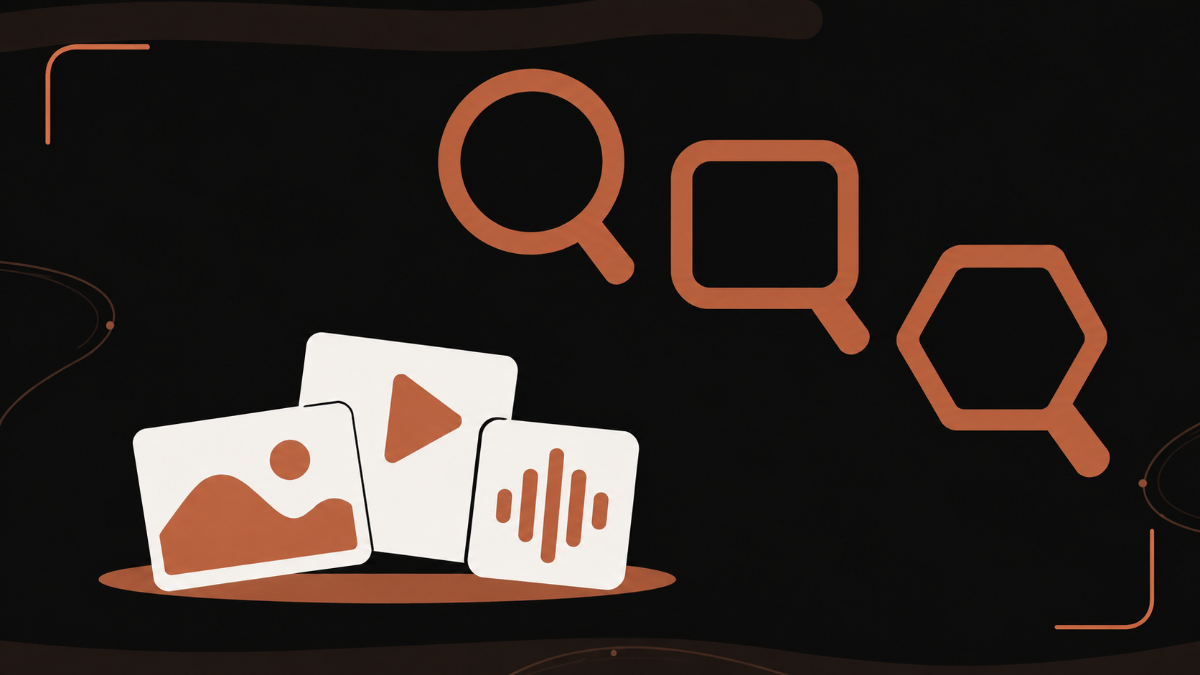
For an editor, the first decision is the question being asked. Checking whether a file contains supported OpenAI signals differs from checking the broader set of partners Google names for its portal. An API serves a different job from a public tool you open in a browser. A team linking checks to other software needs to know who may use the API and what its answers mean. Someone checking an occasional delivered image needs an interface that supports the file and the origin question they want to ask.
 View image detail
Avoid turning this into a contest with an invented winner. The sources here do not establish which service produces the fewest errors on a common test set. They establish availability, mechanism and result scope. Compare what the tools check and who can use them. We still need a fair test to compare how often they get the answer right. That approach helps someone select a relevant question without pretending that a product table replaces actual testing.
For creative teams, the shift happens when someone who receives a file can check for clues about how it was made. That can help when the tool that made the file and the tool that checks it use the same signal. Their limits still matter.
The agency example makes that consequence concrete. The designer understands the creative intent; the editor understands the page; the client understands the claim the campaign makes. Each person brings information the others need. Origin evidence gives them another point of reference for that conversation. It can help the editor ask whether a visual represents a real product, a proposed concept or an illustrative scene before the client signs off on its use.
A team might choose AI on purpose to explore a look or make an illustration. It can explain that choice as part of the work. A clear production explanation can make the delivery easier to understand. The problem begins when the explanation disappears and the next recipient interprets the image as something else, such as a photograph, an actual customer endorsement or evidence of a finished product.
A check result will not follow every new copy on its own. People still decide what context to keep with the work. Keep the explanation with the file the next person receives. If a designer sends an original concept and later replaces it with a revised version, the editor should know which version the accompanying origin check describes. Otherwise, a correct result for one file becomes a claim about a different one.
 View image detail
Rise’s guide to keeping shared work in context explores the related problem of making working material understandable to collaborators. For media provenance, the same practical concern appears in a narrower form: a file can arrive without enough explanation to make a good decision. A public check adds a clue. The people sharing the file still need to explain what it is for and what changed along the way.
A disclosure needs to explain how the asset was made and what it means. The checker can add an origin finding. The surrounding copy tells the audience what the publisher wants the asset to show.
Return to the hypothetical product launch. Suppose the team deliberately uses a generated image to communicate the feeling of a future workspace. A production note identifying it as an AI illustration can fit that creative choice. The editor should also ensure the page does not imply that the pictured room already exists. The origin statement explains how the image came about; the surrounding copy explains what the reader should believe about the proposed workspace.
The same distinction helps explain different uses of audio. A synthetic audio track can be an intentional creative asset, while a clip presented as someone’s actual statement needs a different review. The question concerns the representation the publisher makes to the audience. A provenance check can help clarify production, and a factual review can examine the representation. Neither job becomes unnecessary because the other produced a useful finding.
 View image detail
The proposed benefit is a clearer account of the work: a note tells the audience how the asset was made, and the surrounding copy explains its purpose. This is an editorial view, not a measured gain in sales, trust or time saved.
The strongest objection is that some files have no supported mark and some marks may be missed. Public access does not add an origin signal to files made by tools that never put one there. An edited file can also carry less useful evidence than its original. Those gaps limit the conclusions a team can draw. They do not make the supported information worthless.
NIST distinguishes provenance tracking from content-based detection and discusses complementary technical and social approaches. That matters because these methods ask different questions. A record of where a file came from, a tool’s result and a person’s review of the claim can each add a piece to the case. Several checks that you do not understand are not necessarily better than one whose meaning and limits you know.
This article does not report a detector benchmark or an uploaded-file experiment. The current originals establish the access change and documented mechanics. They do not supply a universal detection rate or show that the October expansion eliminates deception. To find out how well a tool works for your publishing task, test the kinds of files you plan to use. Set out what counts as a right answer and how you will handle mistakes. A vendor’s claim that its mark resists edits does not replace that test.
 View image detail
Use the new public access to check for supported origin signals, keep what the service actually says, and examine the file’s factual claim with the evidence it needs. A useful check becomes a sound publishing decision when the caption says only what those findings support.
Checked for this article
Sources
- Global public SynthID Detector announcement
- SynthID technology and detector overview
- Verify AI-generated images, videos, and audio
- SynthID Detector announcement (May 2025)
- Advancing content provenance for a safer, more transparent AI ecosystem
- Content provenance
- Reducing Risks Posed by Synthetic Content: An Overview of Technical Approaches to Digital Content Transparency
Keep reading
Related posts

Systems and Workflows
AI Media Verification: Build a Review Beyond One Detector
A proposed media review workflow that keeps the file, the verification evidence and the delivery decision connected.
15 min read
AI in Practice
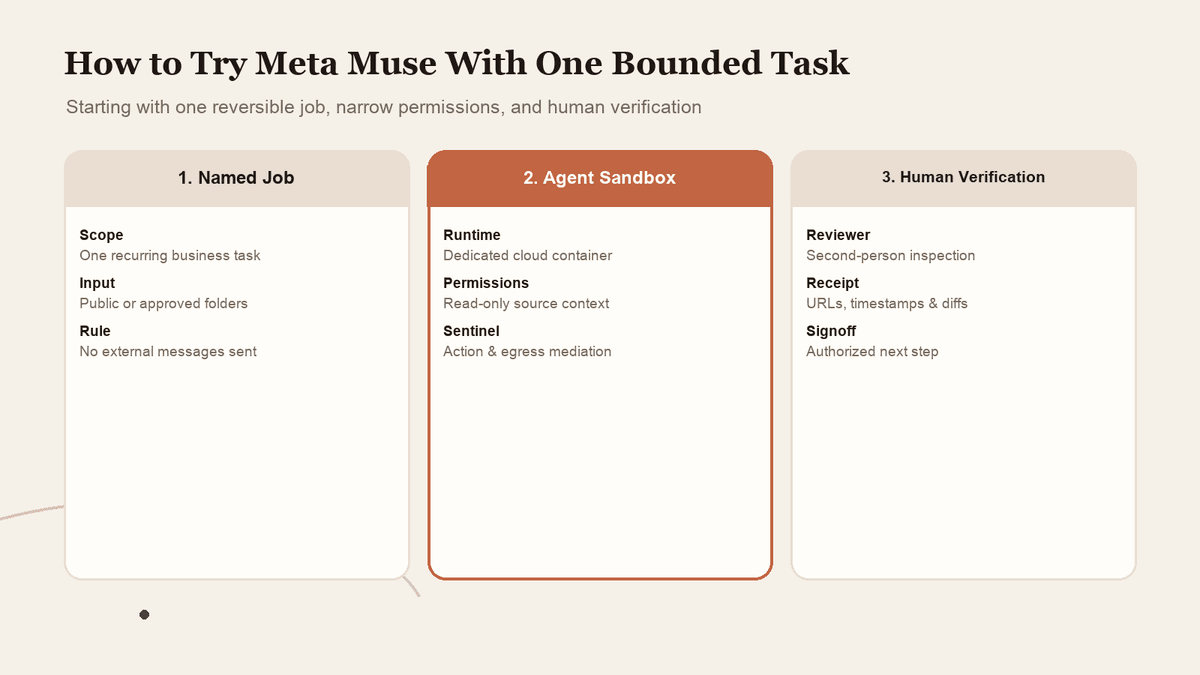
How to Try Meta Muse With One Bounded Task and Limited Access
A personal agent can look useful long before you know whether you should connect everything. Start with one reversible job, narrow permissions, and verified completion.
16 min read
AI in Practice
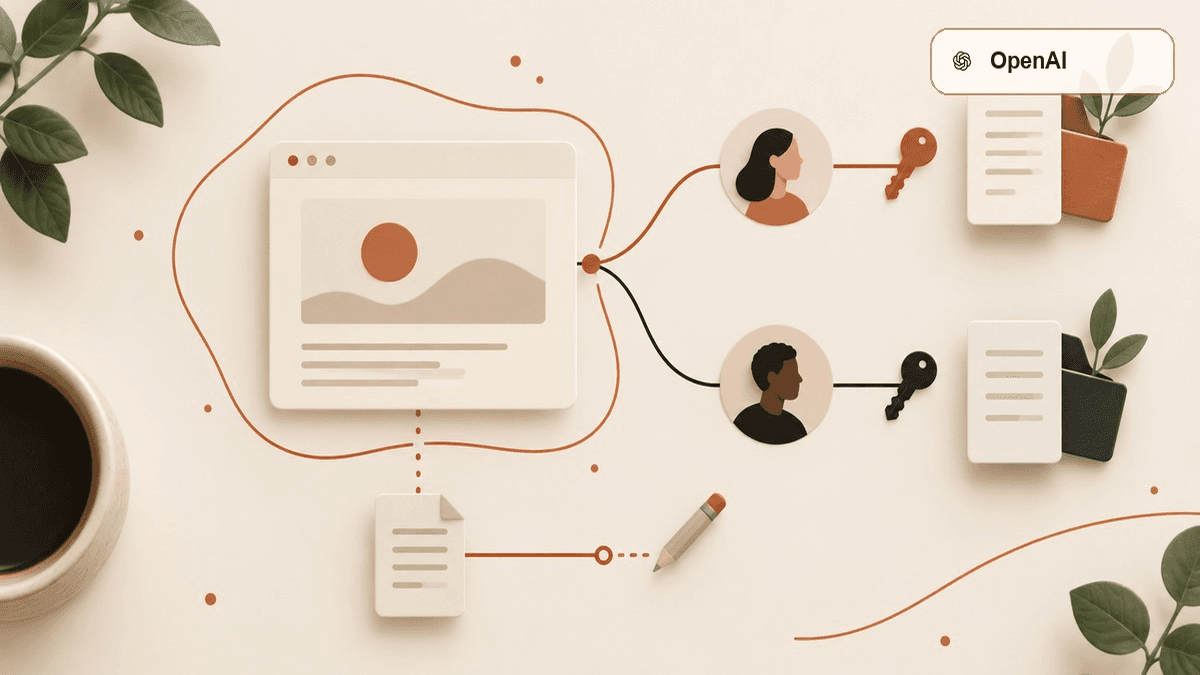
ChatGPT Sites and Connected Apps: Who Can See What?
A shared Site does not make every coworker\x27s source account the same. Map the separate controls, test a normal member\x27s path, and make access understandable before rollout.
14 min read