
Automation and Agents
Supabase $150M Raise and Turso: What AI Builders Should Check
Supabase’s financing and Turso acquisition plan raise a practical question for AI builders: which agent state belongs locally, which needs sync and what makes a result ready for production?

On this page
- What the $150 million announcement actually establishes
- Database creation is a signal, not your workload measurement
- Decide which state belongs in a temporary workspace
- A private database does not settle every permission question
- Choose local, shared or synced state deliberately
- Make the promotion into production a separate decision
- Keep Supabase Compute's private-alpha status visible
- Compare a completed job instead of an invented benchmark
- Funding can expand options without removing operating work
- Start with one job worth making repeatable
Supabase's $150 million raise and plan to acquire Turso give AI builders a reason to examine how their agents use databases. Start by separating temporary working state, shared coordination and accepted application records. Then check the available products, their access conditions and the evidence from one real task before changing the architecture.
On October 2, 2026, Supabase announced the financing and acquisition plan. Its stated direction includes supporting large numbers of agent-created databases. That creates an interesting opening for smaller, task-specific stores alongside a durable application backend. It does not make every agent workload a database problem, or every existing Postgres application a candidate for replacement. This is a reading of the announcement and current documentation, followed by a proposed evaluation. No product installation, latency test, security audit or cost benchmark was performed for this article.
Key takeaways
- The funding and acquisition announcement describes direction and investment, not a completed Supabase-Turso integration.
- Local working state, synced collaboration and durable business records have different requirements. Pick the boundary before the engine.
- Supabase Compute is currently in private alpha. Its evaluation terms and availability belong in any adoption decision.
- Test one bounded job for correctness, access, recovery and total operating effort before expanding an agent's authority.
What the $150 million announcement actually establishes
The issuer's announcement identifies GIC as the lead investor, alongside CapitalG, IronArc and SquarePeg. It follows Supabase's $500 million Series F four months earlier. The company says the round will support further agent-focused product development and employee liquidity. It also says it is acquiring Turso and that Turso will continue operating, with a path into the broader Supabase ecosystem.
Those are different kinds of information. Financing concerns the company's resources. An acquisition concerns its plans and ownership. A product announcement concerns what a customer can access. A tested workflow concerns what actually happened under specified conditions. Reading one category as proof of another is how a promising piece of news becomes a premature architecture recommendation.
For an existing Supabase customer, my reading is that this is a reason to watch the database lifecycle more closely. It is an invitation to ask what an agent should create, how long that state should survive and what makes its output ready for the application's records. It is not evidence that the customer's current database has reached a limit.
A team can respond without migrating anything. Keep a short record of the announcement, the currently supported products it uses and the future capability it wants to evaluate. When integration documentation appears, compare that documentation with the recorded need. Change the deployment only when the documented capability addresses that need.
The transaction also should not be treated as proof of profitability, a new disclosed valuation or a guaranteed product timetable. The money raised is not the revenue earned. For builders, the practical consequence is a research question and a possible future option, rather than a promise that operating work will disappear.
 View image detail
Database creation is a signal, not your workload measurement
Supabase reports adding more than one million users and four million databases per month, with 70 percent of new databases created by agents or AI-driven tools. These are company-reported creation figures from the October 2 announcement. They are not a count of simultaneous queries, production customers or successful agent tasks. (Supabase announcement)
That distinction matters because creation and use can put pressure on different parts of a system. A task may create a database once and do very little with it. Another may use a long-lived database heavily without creating a new one. A monthly platform total cannot tell an individual operator which of those patterns applies to its own work.
Consider a hypothetical team building an agent that checks a proposed application change. The agent might need sample records, a place to record test results and a clean environment for a trial migration. Its important questions are whether the sample is appropriate, whether the test completed and whether the resulting change is safe to propose. Counting the number of databases created does not settle any of those questions.
A useful starting record names the task, the number of concurrent sessions it actually needs, the state each session reads or writes and the point when the state can be removed. If waiting for setup is a problem, record that wait. If a shared service runs out of connections, record the service's observed limits and configuration. These observations establish a local problem that a different storage approach might solve.
This is where I would put the attention behind the news. More software-generated environments make lifecycle decisions more important. They do not establish that a particular engine will fail, or that a smaller engine will finish the job correctly. The comparison becomes useful when it starts with the work and its observed constraints.
 View image detail
Decide which state belongs in a temporary workspace
Temporary working state and authoritative application records can serve different purposes. A task-specific store might hold selected sample data, intermediate tool results or proposed changes. The application's main database might hold accepted customer records, permissions and business transactions. Keeping those jobs distinct can make a review easier to understand. It is an architectural option, not a rule that every application must have two database engines.
Turso's agent database guide describes local embedded databases for independent work and cloud-connected sync for persistent or coordinated work. The guide provides a useful set of choices. It does not determine what a given team's data is allowed to leave, which records are authoritative or who may approve a write.
Return to the hypothetical application-change agent. It could receive a small synthetic dataset and keep its exploratory results in a local workspace. Its final deliverable could be a proposed migration and a report of the checks it ran. A reviewer would then decide whether to proceed through the application's existing change process. The local store helps separate exploration from acceptance; it does not provide the acceptance decision.
A different task might be better served by an existing database with a narrowly scoped read identity. If an agent only needs to retrieve an approved report, copying that report into another engine could add state to maintain without improving the result. A second engine should solve a specific problem in that job.
PostgreSQL's documentation describes a server model with a backend process for each connection. That is a real architectural consideration, but it does not imply that every agent connects directly or that a pooled application inevitably fails. The team still needs to inspect pooling, session behavior and its actual workload. (PostgreSQL connection architecture)
The decision should therefore name what changes. If the proposed workspace reduces shared setup work, show how. If it makes a trial easier to discard, identify the supported cleanup path. If it duplicates an existing record, name the owner responsible for keeping the copies consistent. Before the trial, mark which records the application treats as authoritative and which are only a working copy. That label makes it possible to check whether the proposed design reduces confusion or simply moves it. A new storage layer earns its place by solving a defined task problem.
 View image detail
A private database does not settle every permission question
A separate database can limit which records share a workspace. It cannot compensate for an agent that still carries credentials to unrelated systems. The meaningful boundary includes the files, services, accounts and actions available to the task, not only the location of its database.
Turso documents a database-per-agent pattern and a Platform API for creating databases and managing tokens. Its examples create a database and generate a scoped token as separate actions. That separation is useful: making a store and granting access to it are two decisions an operator can inspect. It is not proof of the complete security properties of a particular deployment. (Turso Platform API)
For a proposed evaluation, give the agent only the sample and actions needed for its assignment. Record the owner of that sample, the identity used to access it and any capability that reaches beyond it. A task that can write a local test record should not silently gain the ability to update a customer account or send a message on the team's behalf.
A hypothetical failure makes the distinction clear. An agent might produce a bad SQL statement inside its working copy. That is one event to inspect. If the same agent can also call an external application with a broad token, its separate database does not prevent a different action there. The operator needs a view of both paths before describing the task as contained.
The record should also explain when access ends. Retiring a workspace, revoking an identity and removing retained copies may be separate operations. Check what the selected products and the organization's policies support. Do not assume that a closed session means all data and authority disappeared.
This is the same review habit developed in Rise's guide to checking real data before using Octop. The products differ. The transferable question is whether the operator can explain the source, identity, authority and recovery path without relying on a reassuring product label.
 View image detail
Choose local, shared or synced state deliberately
Local state is useful when the task needs a working copy on one machine. Shared or synced state may be useful when work must survive a restart or reach another participant. Adding sync changes the data route and the failure cases the team needs to consider. It should answer a real coordination requirement.
Current Turso documentation distinguishes the Turso Database engine and its local or sync packages from the supported libSQL client. The current TypeScript reference recommends different packages for local use, cloud sync and remote access. It also describes libSQL embedded replicas whose writes go to the cloud primary. Those distinctions should be checked against the exact package and version selected for the project. (Turso TypeScript reference)
It would be misleading to describe all of these options as one identical replication mechanism. A team should choose the documented path it needs and review its behavior, rather than treating a familiar engine name as an explanation of every SDK. This article provides no tested implementation or combined Supabase-Turso SDK example.
In the hypothetical change-review job, the agent may need no shared state at all. It can complete a bounded check and hand over a report. If another worker needs part of its result, specify the records to share and when they are ready. An incomplete intermediate record should not become an approved result just because another agent can read it.
If sync is necessary, record what crosses the network, which account receives it, what happens during an interruption and how the operator will notice a missing or stale update. The question is not simply whether local reads are possible. It is whether the entire path meets the task's durability and coordination requirements.
Local execution may avoid a network trip for a local operation, but the whole workflow can still make model, tool, sync and application requests. A meaningful comparison measures the completed task, including those routes. It does not promise zero network activity or a fixed response time from the choice of a local file.
 View image detail
Make the promotion into production a separate decision
The point when working state becomes an accepted application change needs an explicit process. A local test result does not become trustworthy merely because it sits in a separate database. Nor does passing a unit test establish that the change is authorized, complete or appropriate for a customer-facing system.
For the hypothetical agent, the deliverable could include the proposed change, the source snapshot it used, the checks performed and the limitations encountered. A reviewer can compare that package with the assignment. If a check did not finish, the record should say so. If the source changed while the work was running, the proposed result may need to be reconsidered.
The application should accept changes through a path whose permissions and validation the team understands. That could include an existing review, migration or transaction process. The exact choice depends on the application. There is no evidence in the funding announcement of an automatic cross-engine pipeline that turns arbitrary local agent changes into approved Postgres writes.
This is also where compatibility matters. A task developed against a local engine may not exercise every behavior of the production engine. The operator needs to decide which checks must run against the actual target before accepting a change. A convenient scratchpad should not hide the differences the application relies on.
A practical stop rule is to leave the proposal uncommitted when its source, permission or validation status is unclear. That is not wasted work. The agent has produced something the team can inspect, and the team has retained the distinction between a candidate output and an accepted result.
My view is that this boundary is more important than an impressive provisioning number. Creating another workspace can be automated. Deciding which changes count as completed work requires a standard, an owner and evidence that matches the standard. Design that handoff before making the agent run more often.
 View image detail
Keep Supabase Compute's private-alpha status visible
Supabase Compute is a related product to watch, but its current availability changes how it can be evaluated. The official Compute page, checked for this article, labels it private alpha and offers a waitlist. Its terms describe internal evaluation and say it should not serve production workloads or the evaluator's own end customers.
The page describes sandboxes and longer-running services inside a Supabase project, alongside its application backend. That is a company description of the preview. It does not establish that Turso is already installed inside those environments, that a particular underlying virtualization technology is used, or that an agent's complete task has a specified performance improvement.
An existing team may want to evaluate a runtime closer to its data. Its first question should be whether it has access and whether the preview's permitted use matches the trial it wants to conduct. A public product page is not an invitation to route production work through a private preview.
A bounded evaluation can use a synthetic job with an existing alternative available. Record the invited account, the permitted environment and what would happen if access changed. Keep important customer work on the supported path until the team has appropriate availability, terms and operational evidence for a different choice.
It is also reasonable to wait. If the current application runs adequately and the team cannot yet access the preview, tracking its documented status may be the complete useful action. Planning an irreversible migration around capabilities the team has not used would add uncertainty rather than remove it.
The news may make the possible relationship between compute and state more interesting. It does not merge them into a tested product on the reader's behalf. Keep the current product boundary in the decision record so a later announcement can be assessed against the same requirement.
 View image detail
Compare a completed job instead of an invented benchmark
A storage comparison should use the same task and the same acceptance conditions. Otherwise, an apparent improvement may simply mean that one option did less work, kept fewer records or skipped a review the other option required. This article offers a proposed measurement approach, not measured prices, latency or savings.
For the change-review example, start with one approved sample and a fixed expected deliverable. The agent should identify material problems, report the checks it completed and produce a proposal the reviewer can assess. Keep that standard consistent when comparing the current setup with a task-specific workspace.
Record setup time separately from execution time. Then record review and repair time. A short setup may be useful, but it may not help the team if a reviewer must spend longer reconstructing where the result came from. Likewise, a complete task may be delayed by model calls or external tools rather than storage.
Costs should include the resources actually used under the selected products' current terms. An embedded file is not proof of a free workflow. Compute, retained storage, sync, external requests, model use and human operating time can still contribute. Use the actual account and billing basis for the trial rather than an unsourced price for a hypothetical fleet.
Keep the required work equal across the candidates. A disposable sample store and a managed application backend are not interchangeable if the job requires authentication, retained records or a supported recovery path. If one option depends on another service for those requirements, include that service in the comparison. Otherwise, the cheapest-looking design may simply leave part of the assignment unfinished.
A compact comparison record can answer five questions: did the output meet the agreed standard, what was the elapsed wait, which access paths were used, could the state be recovered or removed as intended, and how much review or repair was required? Separate an observed result from a proposed check in that record. These observations support a decision without needing an impressive improvement percentage.
If the first trial is inconclusive, say what remains unknown. A repeated job may expose an interruption or cleanup issue that the first clean run missed. The next test should investigate that uncertainty. The point is to reduce the uncertainty that matters to the team, rather than to keep running until a favorable number appears.
 View image detail
Funding can expand options without removing operating work
The announcement gives builders a reason to expect further attention to agent infrastructure. It does not give them evidence of future retention rates, a universal database winner or the financial outcome of the transaction. An attractive investment story and a useful operating decision require different kinds of support.
For a team, the quieter work remains: deciding who owns the application state, who approves a new connector, who updates dependencies and who investigates a task that did not finish. Adding another engine or sync path can create a useful boundary, while also creating another item the operator must understand.
Consider what happens after the initial demonstration. The original designer may leave the project, a token may need rotation or a new task may require different source data. The operating record should be clear enough for another person to identify the current configuration and the limits of the job. A successful first run is not a substitute for that record.
AgentFS is relevant to this discussion because its documentation describes file-oriented agent state, auditing and optional cloud sync. It also explicitly labels the software beta and advises caution with production data and backups. That combination is worth preserving: a documented capability can be useful while its stated conditions still affect an adoption decision. (AgentFS introduction)
The sensible response to the funding story is therefore conditional interest. Follow the integration documentation, availability and operating requirements. Change the architecture when those facts and the team's trial support the change. The size of a round is not a substitute for an owner who can explain where the work and its data will go.
 View image detail
Start with one job worth making repeatable
A useful first pilot is narrow enough that the team can recognize a correct result. Choose a task with approved input, an explicit output and a reviewer who knows the difference between a plausible answer and a finished piece of work. Keep production writes outside the first trial unless the team has deliberately authorized and designed them.
Write down the current way to finish that job before proposing a different one. Then explain the specific problem the workspace is expected to solve. It may be setup waiting, a clearer review boundary or easier disposal of temporary state. If there is no named problem, another storage layer may simply make the diagram more interesting.
The pilot record should retain the exact product and version, the source used, the identity and allowed actions, the result and the checks actually completed. A proposed code change that runs against sample data but has not passed the target application checks remains a proposal. Leave an observation blank when it was not made. A funding announcement, a vendor feature and an unperformed test should never fill the same field.
Proceed when the result meets the agreed standard and the team can operate the new path. Keep the current approach when the alternative adds work without solving the problem. Pause when a material access, recovery or availability question remains unresolved. Each is a legitimate outcome of an evaluation.
For the broader question of which jobs deserve automation, Rise's Work Worth Doing framework connects the task, tool, workflow and result. Here, the next step is more concrete: select one job, define what finished means and collect the evidence needed to decide where its state should live.
 View image detail
Checked for this article
Sources
- Supabase announcement: $150M financing and Turso acquisition plan
- Turso agent database patterns
- Turso TypeScript package and engine reference
- Turso Platform API: database and token management
- PostgreSQL connection architecture
- Supabase Compute: private-alpha availability and terms
- AgentFS introduction and beta limitations
- SiliconANGLE reporting: announced funding and acquisition agreement
Keep going
Related notes.
Automation and Agents
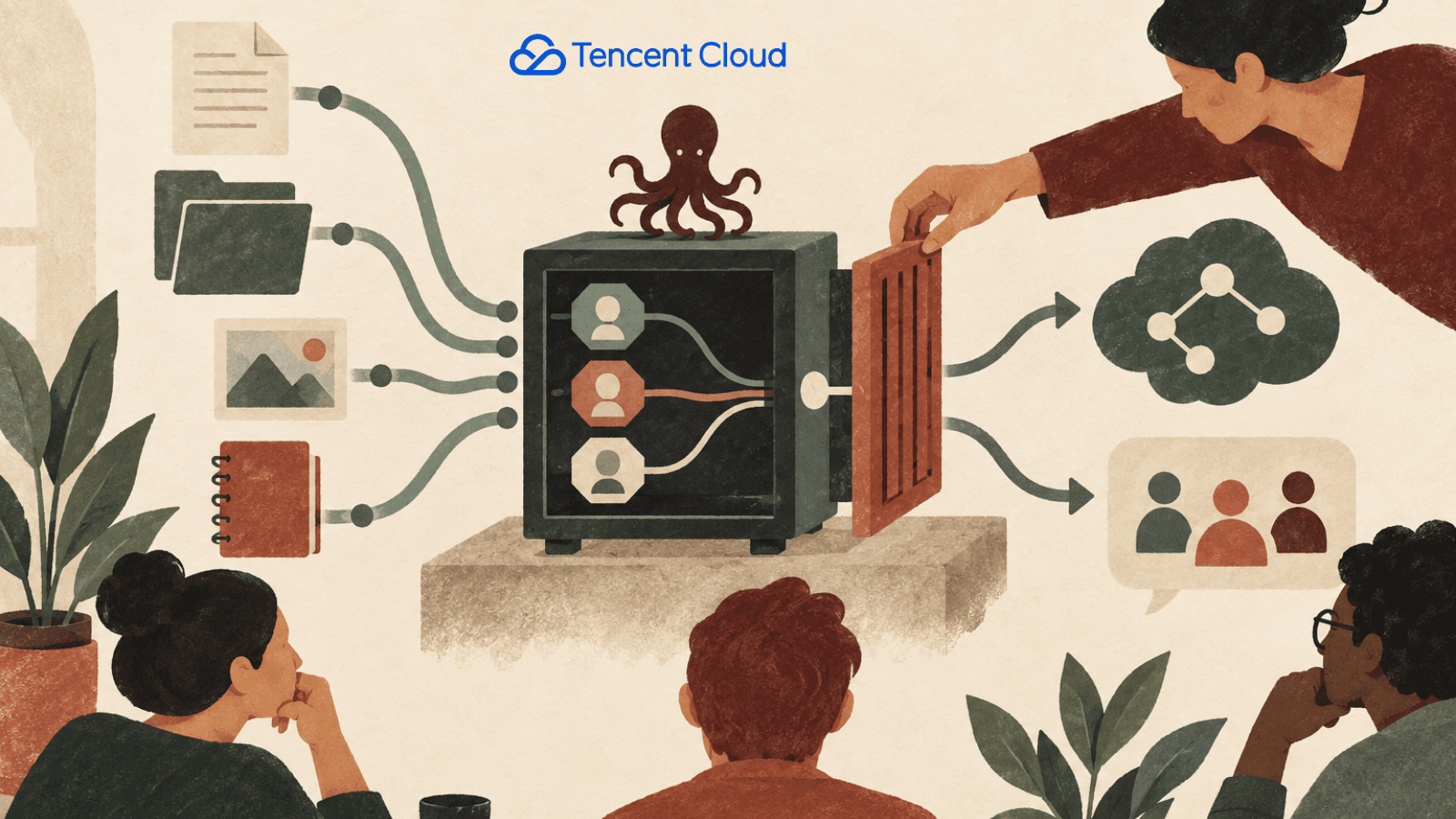
Tencent Octop 1.0: A Self-Hosted AI Assistant for Small Teams?
Octop combines a self-hosted dashboard, agents, chat channels, connectors, coding tools and schedules. Here is how a small team can decide whether that consolidation fits.
Read the article
Automation and Agents
Inside Codex Alpha 10: Incremental Tool Catalogs and Code Mode MCP
How Codex Alpha 10 tracks changed tool declarations in Responses Lite and keeps Code Mode MCP resource helpers available, with the source and access limits.
Read the article
Automation and Agents
Agent-Native 0.187: Where Should Tool Approvals Resume?
A source-based review of how embedded app approvals reach their paused run, with proposed checks for the bridge, message route and receiving action.
Read the article