
Automation and Agents
Is OpenClaw Enterprise Ready for an Internal Agent Pilot?
OpenClaw Enterprise is pre-1.0 and positioned for internal pilots. Here is how to test deployment, isolate one workload, and verify recovery before expanding.
On this page
- What OpenClaw announced, and what "pilot" commits you to
- Separate the Compose preview from a working agent
- Start with a job that deserves automation
- A practical readiness screen
- Know what each documented control does and doesn't cover
- Count the operating burden honestly
- Turn the pilot into a test, not a demo
- Decide what the evidence means
- A measured go/no-go recommendation
- Sources
OpenClaw Enterprise is worth evaluating if your team can run a contained internal pilot. Its announcement is not a reason to route production work through it today. OpenClaw describes the platform as pre-1.0 and says it is something organizations can use for internal pilot workloads. The practical question is whether your team can operate the infrastructure, identity, model access, review and recovery around one agent, then prove that the agent does a useful task under your rules.
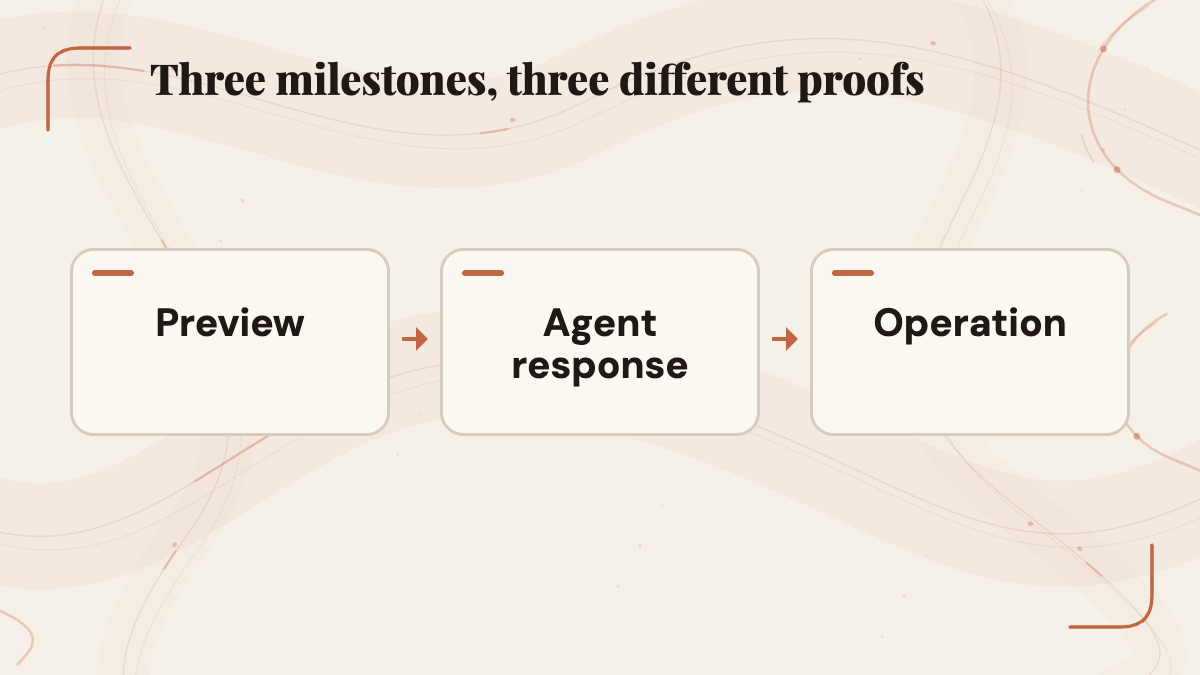
The most common early mistake will be confusing three different milestones. The first is a local control plane that starts. The second is a deployed Agent that returns a model response. The third is a system your organization can operate when something breaks. The current repository README says the default occ dev up command starts a Compose control-plane preview that cannot deploy Agents. Deploying an Agent locally requires the Kubernetes-only development profile. Production operation is a separate path again: the operating guide calls for an authenticated control-plane request, a production Agent deployment, model-response verification and a named handoff owner.
This is a readiness guide built from OpenClaw's launch post, source repository and operating documentation, plus NIST's general risk-management framework. Rise has not deployed OpenClaw Enterprise or tested an Agent. The recommendation is simple: treat OCE as a candidate for a small, reversible pilot, not as a finished production guarantee.
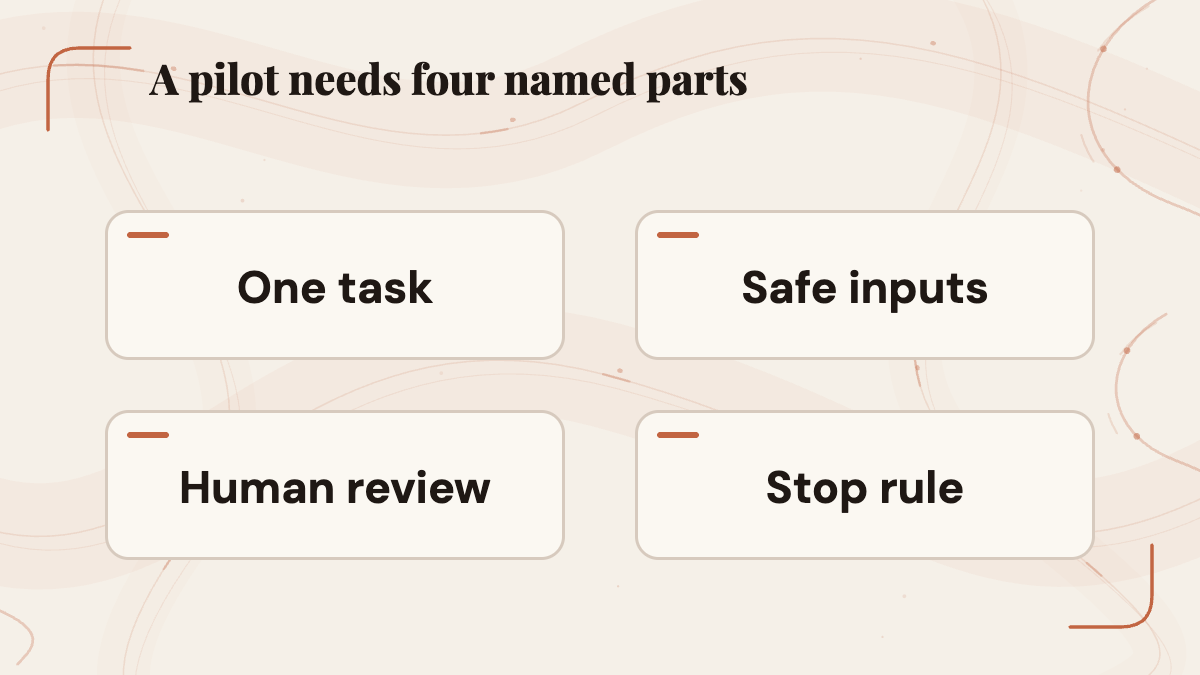
The short answer >A suitable first pilot has one named operator, one low-consequence task, synthetic or approved inputs, a human reviewer, a written acceptance rule, narrowly scoped credentials, a visible failure path and a stop date. If you can't name the person who responds when the agent fails, you don't have a pilot yet. You have an installation experiment.
 View image detail
What OpenClaw announced, and what "pilot" commits you to
OpenClaw announced OpenClaw Enterprise (OCE) on September 29, 2026 in its launch post. It describes OCE as an open-source, vendor-neutral control plane for managing persistent agents in sensitive environments. According to the announcement, the project is being developed in the open ahead of a 1.0 release planned for later in 2026. In OpenClaw's words, it is currently something organizations can use for internal pilot workloads. The post says OCE is designed to support multi-tenancy, "hard security boundaries," sandboxing, fine-grained permissions, and governance and auditability across the agent lifecycle. It also says core pieces such as the harness, model and sandbox can be swapped for third-party or internal implementations.
Those are OpenClaw's descriptions of its design goals. They are worth reading closely, but they are not an independent audit. No independent security assessment or user benchmark of OCE turned up in the sources reviewed for this article. The planned 1.0 date is a stated plan, not a delivery guarantee.
The word "pilot" matters. OpenClaw is asking organizations to try bounded workloads and help shape the platform before 1.0. That is a reasonable invitation for an engineering group that can read the code and run its own infrastructure. It does not mean "production ready," "secure for any organization by default," or "a validated replacement for your current agent setup." If your decision record uses any of those phrases, it has stopped describing what the vendor actually said.
The announcement also says OCE runs on your own infrastructure and "will always be free for any organization to use." That is OpenClaw's stated free-to-use position, not a statement about what it costs to run. A self-hosted control plane comes with cluster capacity, a database, model-provider usage, identity configuration, observability, upgrades and the time of the people who keep it running. When you compare self-hosting with a hosted agent product, count those responsibilities. Free to use does not mean free to operate.
Finally, the launch post says OCE is being piloted internally at companies including Red Hat and OpenAI. That shows early interest from serious engineering organizations, but nothing public describes their workloads, configurations, evaluation methods or failure rates. Treat those names as a reason to look closer, not as a substitute for your own acceptance test.
Separate the Compose preview from a working agent
The README makes a distinction that should shape every evaluation plan. If you run occ dev up without choosing a profile, you get a Compose control-plane preview, and the README says plainly that this preview cannot deploy Agents. It is useful for exploring the control plane's interface and local setup. It cannot show an agent completing your task.
The local path that does deploy Agents uses the Kubernetes-only development profile. The prerequisites in the README are noticeably longer: Docker Engine or Podman, k3d, kubectl, Helm, Bash, Python 3, Go, Node.js 24 or newer, and the pinned pnpm version. Even after that profile is running, the first-Agent walkthrough needs model credentials and then a separate model request to confirm that the Agent actually answers. A ready control plane does not mean you will get a useful response.
For a cluster your team already operates, the operating guide lays out a longer sequence:
- Prepare the cluster, storage and network.
- Install the control plane and make an authenticated API request. The guide notes that Helm readiness alone does not verify API access.
- Deploy a production Agent and verify the selected runtime. The guide notes that an active revision alone does not prove a model can answer.
- Prepare the production handoff, which records who responds to failures and who owns credentials and access.
Each of those notes describes a way a system can look healthy at one layer and still fail at the next. A Helm release can report ready while the API rejects requests. An Agent revision can be active while its model credential is invalid. Your evaluation plan should check each layer separately.
Before anyone spends engineering time, write down which stage you are testing:
- Local Compose preview: What it can show: The control-plane interface and local setup; What it cannot show: Any deployed Agent, task output or model response
- Kubernetes development profile with a first Agent: What it can show: That an Agent deploys and returns a model response on a development cluster; What it cannot show: Behavior under your data, operators, failure modes or production controls
- Production installation and handoff: What it can show: Authenticated access, a production Agent, verified responses and named owners; What it cannot show: Long-term reliability, upgrade safety or fitness for wider data classes, unless you test those separately
These are three different tests. Passing the first should never be reported as passing the second or third.
Start with a job that deserves automation
Choose the work before you choose the agent. Rise's Work Worth Doing test starts with the task's purpose, how often it repeats, how stable it is, how much judgment it needs and what a failure costs. That order matters with a new agent platform, because once the infrastructure is running, it is tempting to go looking for a task to justify it.
A good first task comes up regularly, starts from known inputs, produces output a person can check and has a safe manual fallback. One hypothetical example is gathering a set of public project updates into a structured internal draft for an analyst to review. That example illustrates the shape of a first task; neither OCE nor an OpenClaw Agent has been shown doing it here. Pick something your team already understands well enough to grade.
Don't choose a high-stakes process because automating it would impress a meeting. A workflow that can send external messages, change access, modify production data or make consequential decisions is a poor first test. It only works as a pilot if every one of those powers is removed and each consequential action waits for a human. If the agent can act on customers or infrastructure before anyone reviews its work, the pilot carries more risk than it needs to learn anything.
Use the current manual process as your baseline. Record the inputs, the steps, the elapsed time, the review effort, the common exceptions and what a correct result looks like. This does not need to be a formal benchmark. It only needs to be clear enough to show whether the pilot changes anything. If the team can't describe today's process, it won't be able to tell whether an agent-assisted version is better or just a new source of rework.
Then define an accepted output. For a classification task, that might mean the right category, a pointer to the source text that supports it and an explicit abstention when the record is ambiguous. For a summary, it might mean no unsupported facts, every required field covered and a link back to each source record. "Looks good" is not a pass rule. A written rubric makes disagreements visible and gives the reviewer something specific to check.
 View image detail
A contained pilot starts with one task and named boundaries.
A practical readiness screen
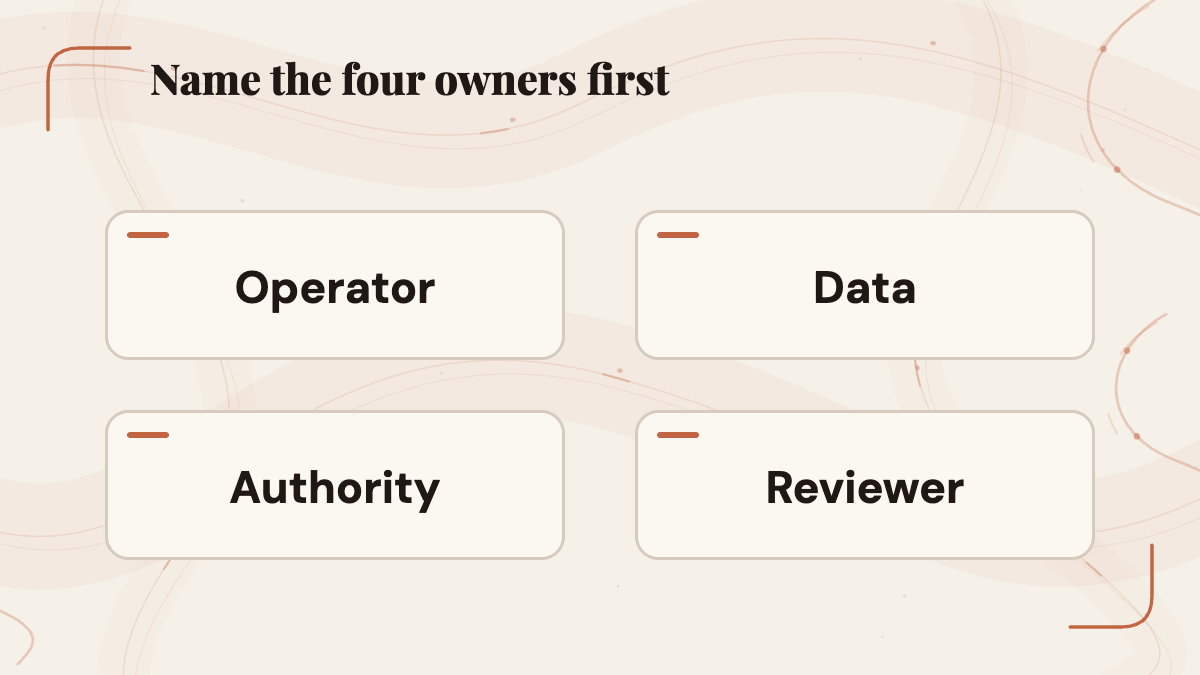
Before you install anything beyond a disposable preview, name owners for every decision around the Agent. A control plane doesn't decide who can connect the agent to data, who sees its output, which model account pays for requests, who reviews results or who takes responsibility when the normal path stops. Those assignments are part of the pilot design, and you can make them before writing a line of configuration.
- Who operates the installation?: Evidence to collect before the first useful task: A primary owner and a backup with access to the cluster, database, release notes and support route.
- What data can enter?: Evidence to collect before the first useful task: An approved input list, a way to keep customer secrets and unrelated records out, and a test set that can be reset.
- What can the Agent do?: Evidence to collect before the first useful task: The smallest set of tools and credentials that cannot change production state or contact a customer.
- Who reviews the output?: Evidence to collect before the first useful task: A named reviewer, a review time budget and an escalation path for uncertain cases.
- What is success?: Evidence to collect before the first useful task: A prewritten rubric, the baseline, known failure cases and a sample size the team can actually inspect.
- What does it cost?: Evidence to collect before the first useful task: Model usage, cluster and database load, retries and human review time, tracked separately.
- How do you stop?: Evidence to collect before the first useful task: A disable procedure, a credential revocation plan, a data cleanup step and a date for the continue-or-stop decision.
 View image detail
Name the people responsible for operation, data, authority and review.
Know what each documented control does and doesn't cover
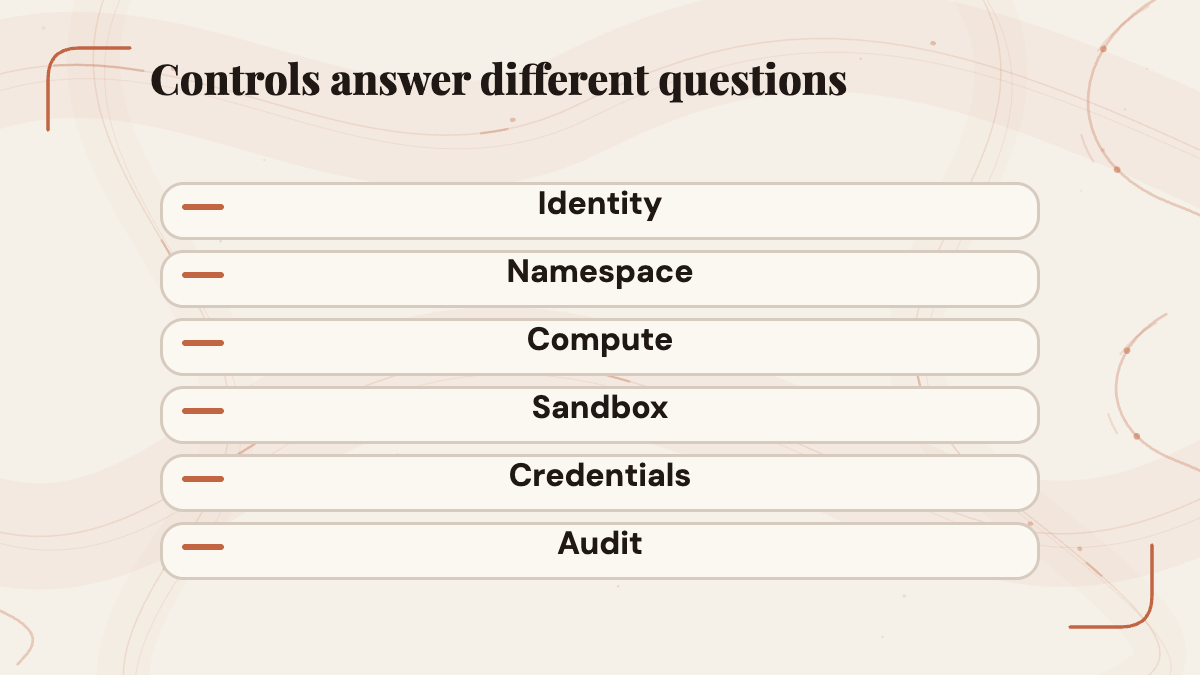
OCE's documentation describes several controls, and each has a stated scope. Read those scopes before you assume a control protects the pilot.
- Namespaces and IAM. The documentation describes Namespaces as the unit of resource ownership and isolation. Access is checked separately: the selected IAM Driver evaluates the exact action, resource and scope. This is how the product documents its behavior, not the result of an independent security review. Confirm the behavior in your own installation by trying an action that should be denied.
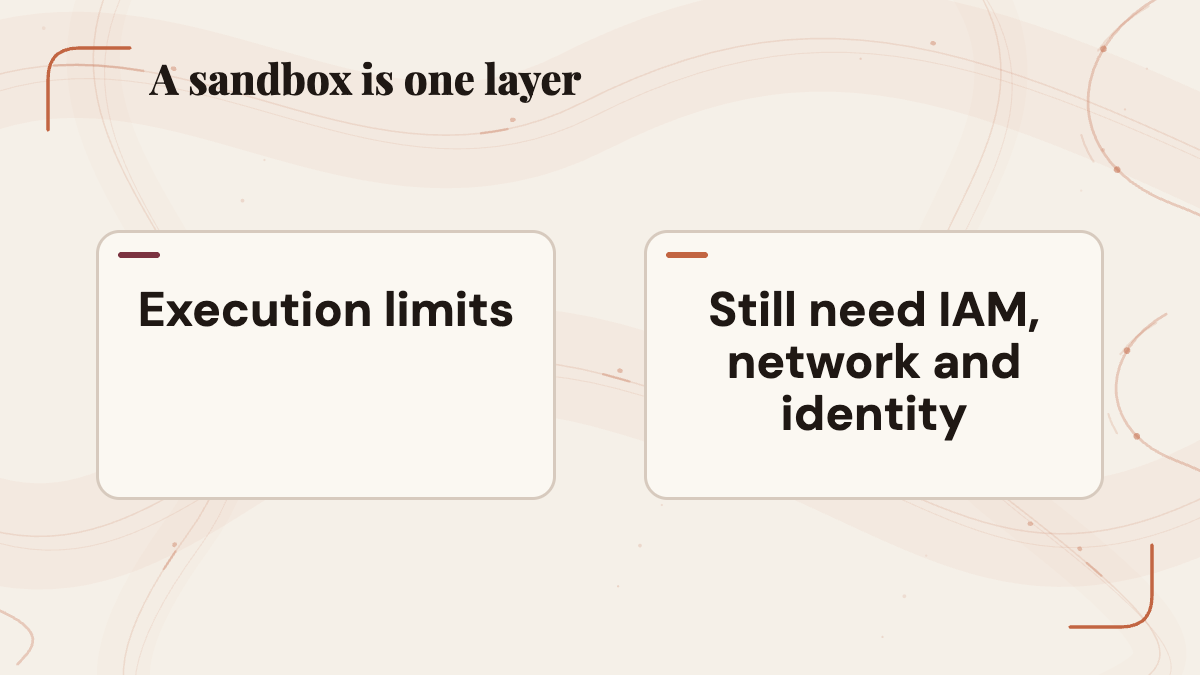
- Sandboxing. The sandbox documentation describes sandbox selection as optional and constrained. It also says choosing a sandbox does not add per-tool authorization and does not replace Namespace network controls, workload IAM or credential isolation. If your pilot design assumes "the sandbox handles it," check which of those layers you have actually configured.
- Audit. The documented audit stream covers bootstrap, successful resource changes, authorization denials and lifecycle events. It is not a general record of reads, prompts or model responses. If reviewers need to trace an output back to the prompt and inputs that produced it, plan for that retention separately.
- The cluster underneath. OCE runs on Kubernetes, so the cluster's own hardening still matters. Kubernetes' Restricted Pod Security Standard is one well-known pod-level baseline. Meeting it hardens pods; it is not a security conclusion about the whole agent system.
For a layer-by-layer view of the OpenClaw Enterprise security boundaries, including which checks belong to the operator, see the companion article. For a readiness decision, the point is narrower: each control answers a specific question, and the pilot plan should say which questions are covered and which are left to other layers.
 View image detail
Controls sit at different layers and leave different responsibilities.
Count the operating burden honestly
Self-hosting moves responsibilities into your organization: cluster capacity, database backups, account and credential lifecycle, upgrade planning, incident response, model-provider coordination and access reviews. The exact split depends on your deployment. In every case, "we can run it" should mean more than one person can start a development command on a laptop. Ask who handles a failed migration, a stuck reconciliation, an expired model key, an unavailable cluster or an urgent revocation while the primary operator is away.
Be specific. Put each component in an ownership table with an escalation route. If the control plane depends on a database team, name that team. If an external model provider runs inference, name the person who can check account access and usage. If the security team must approve a new sandbox or network path, put its lead time in the schedule. A promising test can fail because the system around it has no owner, not because the model wrote a poor draft.
Don't confuse an architecture diagram with operational evidence. A Namespace can be provisioned while its worker isn't processing queued work. A deployment can show as active while its model credential is invalid. A runtime can answer one prompt and then fail on the task's normal exceptions. Use the product's documented verification steps to tell those states apart, and write down what your own monitoring can and cannot see.
 View image detail
A sandbox is one boundary in a wider control plan.
Turn the pilot into a test, not a demo
A demo asks whether the happy path looks impressive once. A pilot asks whether a bounded workflow stays useful when inputs vary, the model hesitates, a tool fails or a person has to take over. Before you grant any access, write the test plan in plain language. It should state the OCE version and model route, the allowed records, the blocked actions, who checks each result and what evidence you keep.
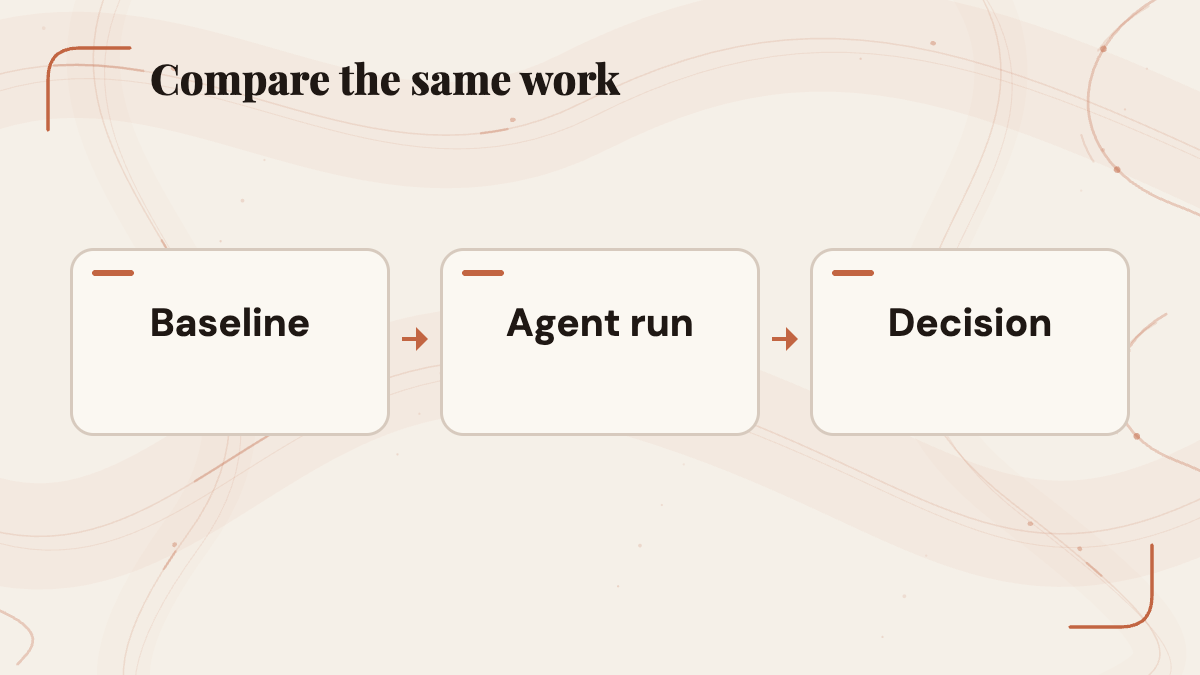
Use a small sample that includes both ordinary cases and the exceptions the current workflow already sees. Keep test inputs separate from production wherever you can. If you need production-like data, remove or mask fields the task doesn't need and set a clear retention window. Then run the existing process and the agent path on the same examples, and have reviewers score both against the same rubric. Don't compare a polished agent demo with a messy, undocumented baseline.
Count the whole cost of each accepted task. If the agent calls a tool, retries, produces something that needs correcting and then takes time to review, all of that belongs in the record. A faster first draft can still create more work if the reviewer has to reconstruct where each claim came from, and a lower token bill doesn't prove a lower cost per accepted result. This article includes no benchmark or price comparison because none was run.
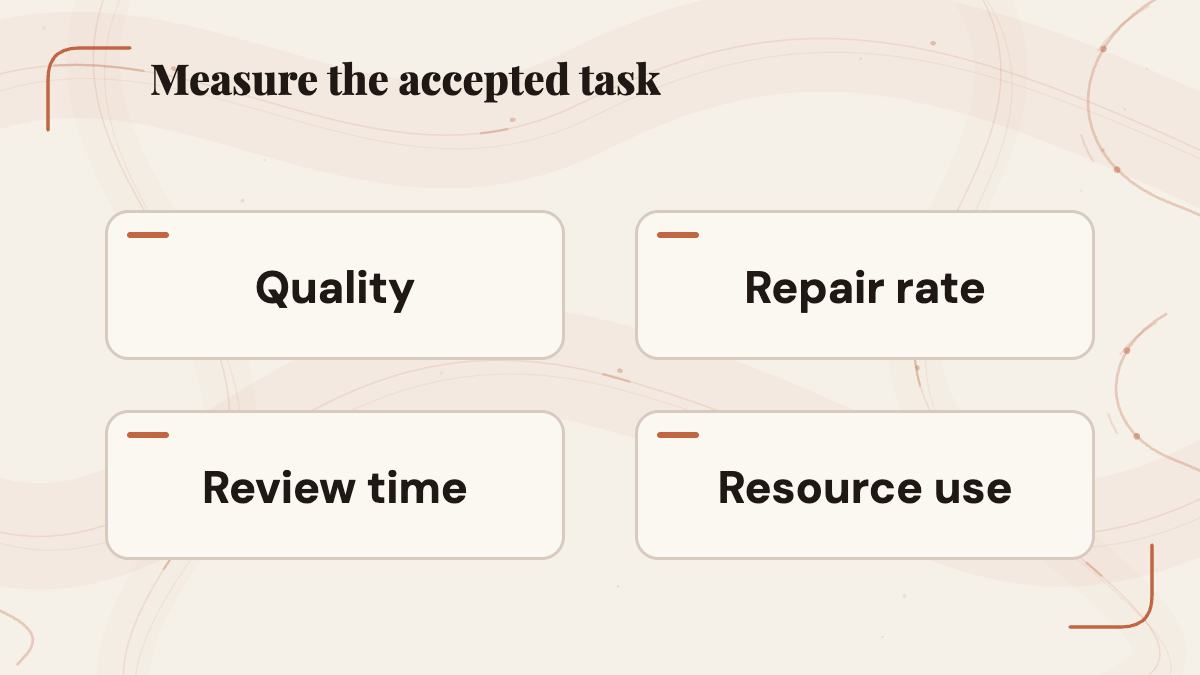
Track at least four outcomes separately:
- Quality: does the result meet the rubric?
- Repair rate: how often does the agent abstain, or produce output that needs fixing?
- Review load: how much reviewer time does each result take?
- Resource use: how much infrastructure and model usage does the run consume?
Also log every attempted action outside the allowlist and every authorization denial. The documented audit stream should capture the denials, and that is worth checking during the pilot. A single blended score can hide a workflow that is efficient on ordinary cases but unacceptable on the exceptions that matter most.
Set stop rules before you start. For example, stop if the Agent attempts an action outside its allowlist, if reviewers can't trace outputs to inputs, if failure handling takes longer than the team's response window or if a required credential can't be scoped to the pilot. Decide who can pause the test and who can authorize a restart. Without stop rules, pilots tend to drift into production.
 View image detail
Keep the task and acceptance criteria constant when comparing outcomes.
Decide what the evidence means
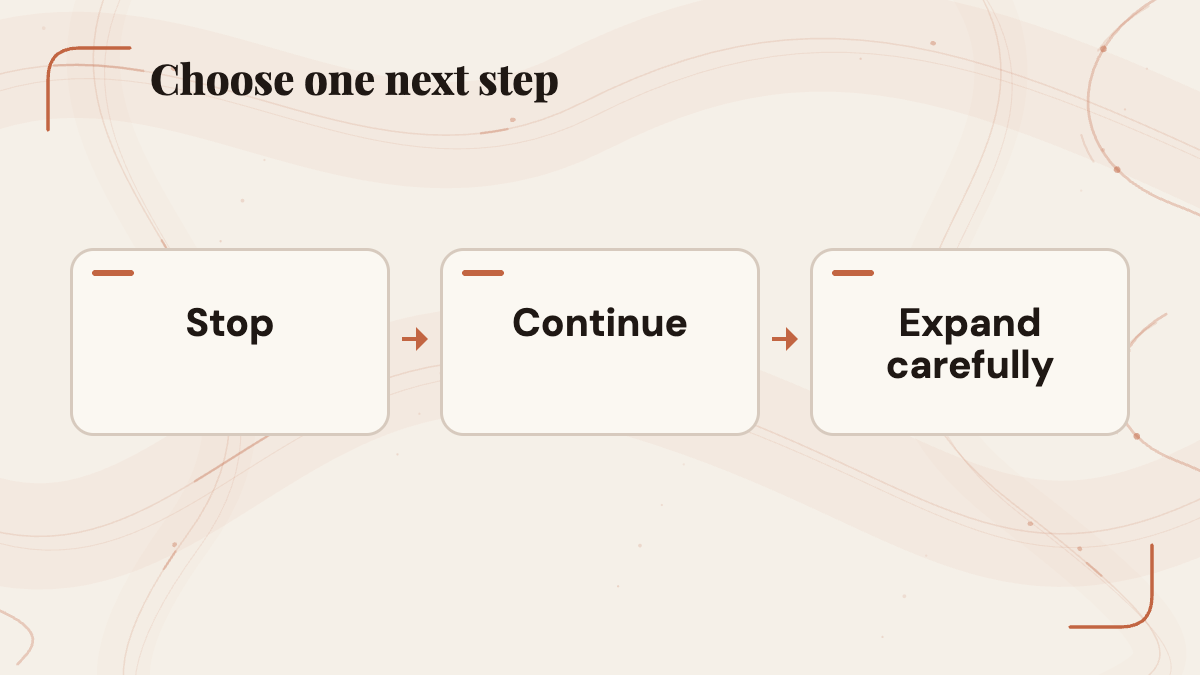
At the end of the test, choose one of three outcomes: stop, continue the same bounded pilot, or propose a new test that changes one thing. Don't turn one small sample into a claim that the platform is ready for every department. The result only answers the question you tested, under the model, runtime, inputs, operators and review rules you actually used.
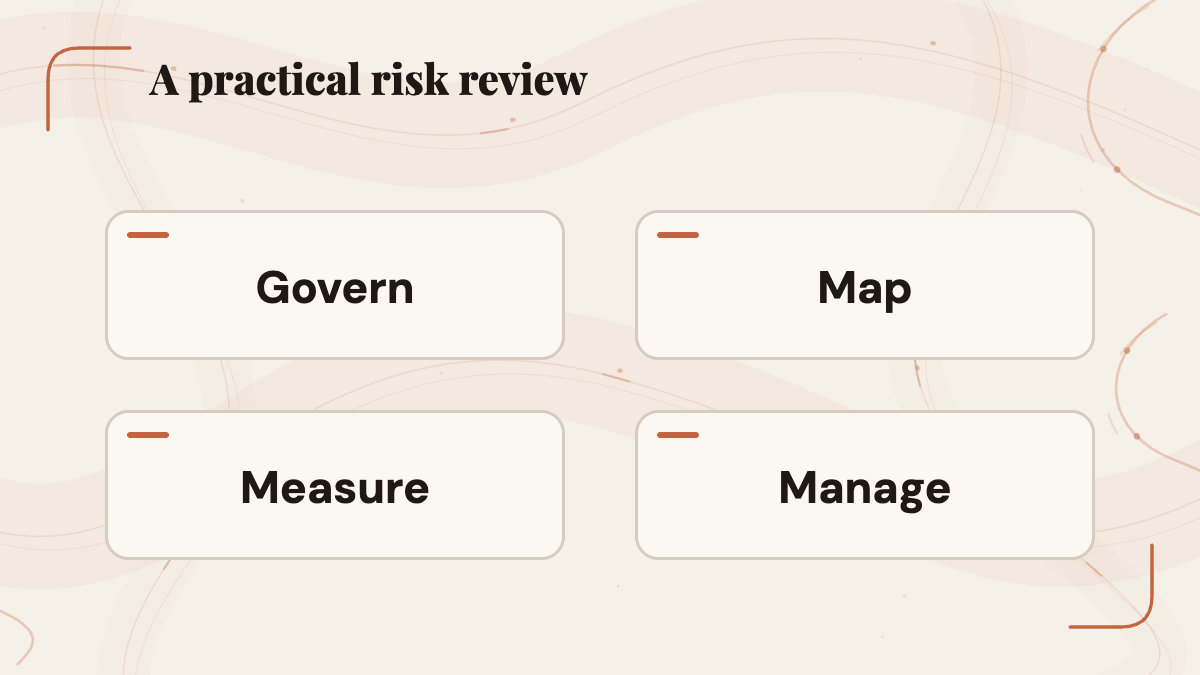
The NIST AI Risk Management Framework offers a useful general structure here. It is voluntary guidance with four functions applied across the system lifecycle: govern, map, measure and manage. It is not a certification. NIST has not assessed OCE, and using its vocabulary doesn't make a pilot compliant with anything. As a lens for this decision:
- Govern: assign authority and responsibility, including the people who can pause and restart the pilot.
- Map: document the task, its inputs, where the Agent runs and which controls apply.
- Measure: test real behavior and uncertainty against the rubric, including exceptions and denied actions.
- Manage: act on the results, including stopping when controls or performance fall short.
Write down what you still don't know. You might have confirmed that the control plane starts, but not tested resilience. You might have observed one authorization denial, but not assessed the cluster underneath. You might have read the audit documentation, but not confirmed that every event your policy requires appears in your deployed configuration. A useful pilot record makes those gaps specific enough to assign.
Only expand when the evidence supports the next scope. A new team, data class, model provider, tool integration or external action changes the system you are evaluating. Treat each as a new risk decision, not a free extension of the first pilot. Keep each result tied to the conditions it was produced under, so nobody later reads "passed a sandboxed synthetic test" as "approved for all company data."
 View image detail
Measure the task the pilot actually owns.
A measured go/no-go recommendation
OCE's pre-1.0 status isn't an automatic no. OpenClaw is openly inviting internal pilots, and the public repository and detailed operator documentation give technically capable teams a lot to examine. Neither the announcement nor a running local preview shows that your Agent can do a real task reliably, or that your organization has the operating controls to back it up.
Go if one team can name an owner, choose a low-consequence task, isolate the environment, restrict inputs and credentials, set a human review rule, verify an actual model response from a deployed Agent and shut the test down cleanly. Keep the scope narrow, use a resettable test set and record the first failures as carefully as the first successes.
Not yet if any of those conditions is missing. In that case, spend an hour clarifying the workflow and its owners before you spend a week installing the platform.
That standard applies to any early agent platform. Progress isn't "we connected a model." It's "we found one job worth doing, we can show what the system did and a person is still responsible for the outcome."
 View image detail
Human review stays in the decision path.
 View image detail
Use risk review to structure questions, not to claim independent validation.
 View image detail
Choose the next step from documented evidence.
Sources
- OpenClaw: OpenClaw Enterprise announcement, September 29, 2026
- OpenClaw Enterprise repository README
- OpenClaw Enterprise operating guide
- OpenClaw Enterprise authorization reference and Namespaces reference
- OpenClaw Enterprise sandbox guide
- OpenClaw Enterprise audit log guide
- NIST AI Risk Management Framework Core
- Kubernetes Pod Security Standards
- Rise Productive: What Is Work Worth Doing?
Checked for this article
Sources
Keep going
Related notes.
Automation and Agents
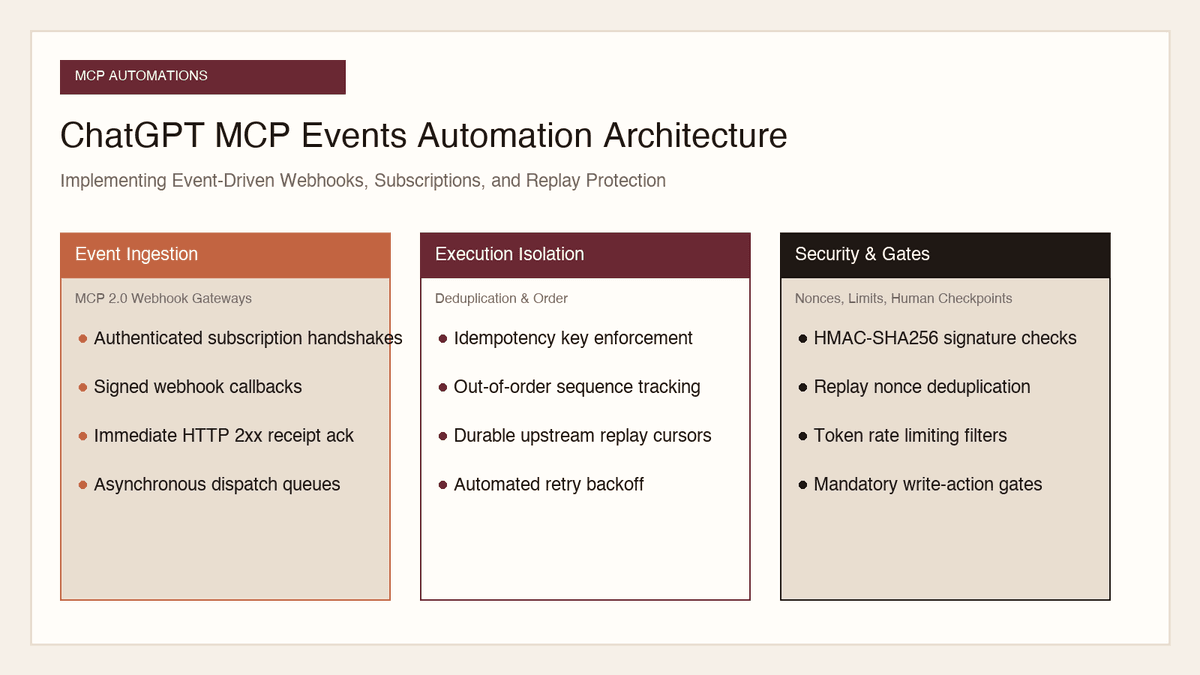
How to Implement MCP Events in ChatGPT: Event-Triggered Automations
Autonomous conversational agents no longer need to rely on wasteful polling loops. Here is how to implement event-triggered automations using ChatGPT MCP Events.
Read the article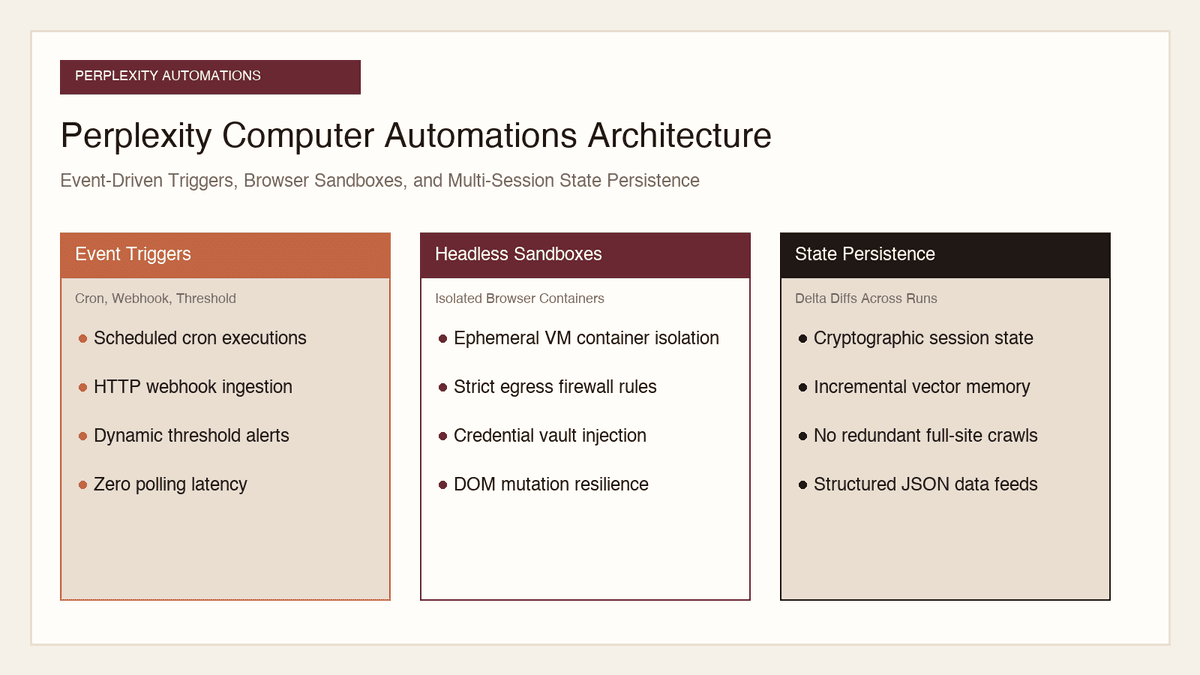
Automation and Agents
How to Build Recurring Web Automations with Perplexity Computer
Web scraping scripts break whenever a layout shifts. Here is how to build durable, recurring web automations using Perplexity Computer and persistent state.
Read the article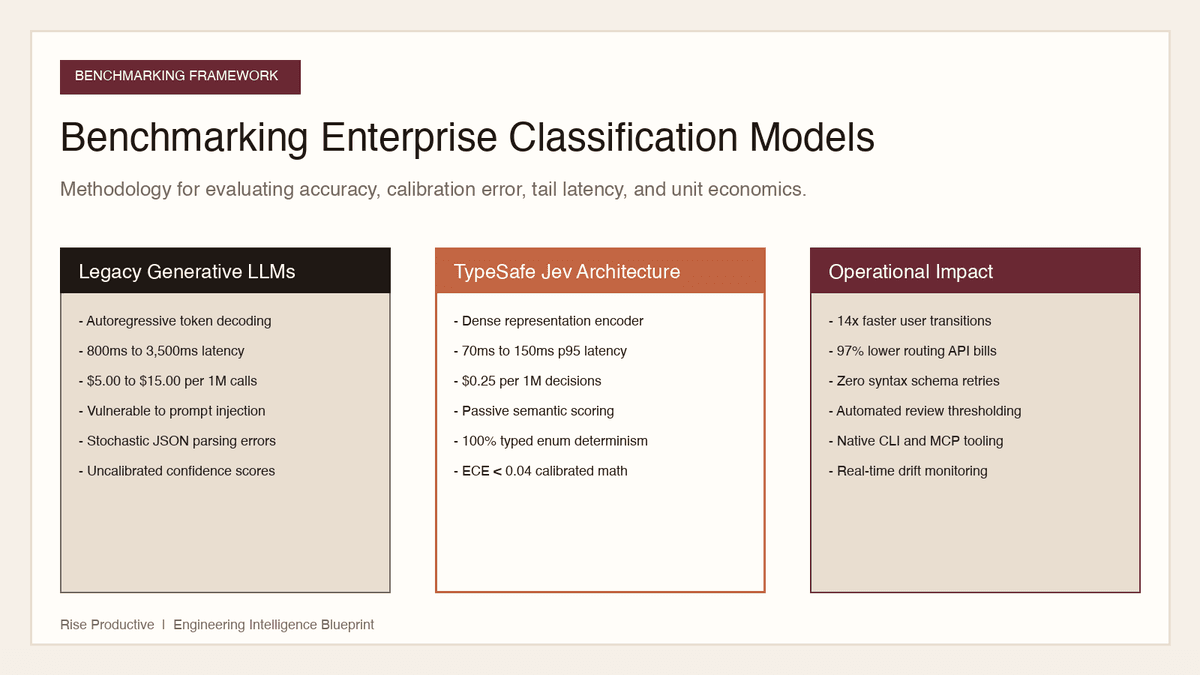
Automation and Agents
How to Benchmark Classifier Models: Latency, Cost, Determinism
Evaluating AI classifiers requires looking beyond static accuracy. Here is how to benchmark probability calibration, latency percentiles, and unit economics.
Read the article