
Creator Workflows
Suno Speech Beta: How to Evaluate a Spoken Track With Music
Suno says Speech beta generates spoken voice and background music together. Here is a proposed way to brief and review a short track without mistaking an early draft for a finished asset.
On this page
- What Suno announced
- The creative decision is bigger than the prompt
- Pick a first use that can tolerate a rough draft
- Write a brief that gives the review a fair starting point
- Listen for the words before the atmosphere
- Judge voice and music as a pair
- Decide what to do when the draft misses
- Keep release questions separate from listening questions
- A go, revise or stop decision
- Related reading
Suno says its new Speech beta can generate spoken voice and original background music together as one track. For a creator with a short message, that is an interesting way to explore the sound of a complete piece. It is also a reason to listen closely: music can make words feel more compelling while making them harder to understand.
The practical question is whether a particular track communicates the intended message. A useful first trial would keep the words short and fixed, describe the desired voice and musical style, then review the result against the original text. That is a proposed test. I have not accessed Speech or heard an output.
What Suno announced
In its October 1, 2026 announcement, Suno describes Speech as a beta model for creating spoken audio set to original background music. The company says a user can enter an idea, a poem or something they have written, then describe a voice and musical style. Suno presents voice and music as a single generated track.
The announcement says Speech was tested with a small group during the preceding month and that Suno is opening the beta to everyone. That is Suno's rollout statement. The captured article does not establish whether a particular account can access it, whether plan or region limits apply, or what controls appear after sign-in. Its displayed date is October 1, 2026; the captured article text does not establish an exact publication time.
Suno’s October 1 release entry separately lists Speech on mobile and web. That is a second publisher statement about availability, not confirmation that a particular account has access or permission for an intended use.
Suno also calls attention to beta behavior. Its article says accents can drift and dramatic pauses can become exaggerated. It does not report how often either issue occurs. Those cautions give a creator two concrete things to check in each output. They do not tell us how an untested track will sound.
 View image detail
The creative decision is bigger than the prompt
A spoken piece has several jobs at once. The words need to be correct. The delivery needs to fit the listener. The music needs to support the meaning without covering it. A single generated track could make those parts easier to consider together during an early creative review. Whether it actually saves production time, gives enough control or produces a usable final file remains untested here.
Consider a hypothetical welcome message for a small community event. The same words could be delivered in a calm voice over restrained music, or with a large cinematic score. Neither treatment is inherently better. The choice depends on whether listeners need a warm introduction, a playful opening or a dramatic moment. If the score changes the message's emotional meaning, that belongs in the review, even when every word is technically audible.
This is why the brief should start with the listener and the purpose. “Make it inspiring” leaves many decisions open. “Welcome first-time attendees in a calm voice, with music quiet enough that names and instructions remain clear” gives a reviewer something to assess. These are illustrative creative directions, not verified Suno prompt syntax. The announcement does not show how precisely Speech follows such directions.
A creator can make that brief before opening any audio tool. Decide which words must remain exact, where a pause would help, which phrases carry practical information and what the music should do. The generated track can then be judged against a stated intention instead of whatever happens to sound impressive on the first listen.
 View image detail
Pick a first use that can tolerate a rough draft
A personal poem, an internal welcome and a client announcement all involve spoken words and music. They demand different levels of precision. Comparing them on the same criteria helps a creator choose a sensible first experiment.
For a personal poem, expressive delivery may be part of the appeal. A surprising pause might even suggest another reading of a line. The creator still needs to decide whether the words were preserved and whether the music changes the meaning in a welcome way. The stakes may be low enough to explore several interpretations, assuming access is available.
For an internal welcome, the tone can be flexible, but details such as a person's name, a place or a time need to be understandable. A track that creates a pleasant mood while obscuring the one instruction people need has missed the job. Reviewers should listen once without the script to see what an actual listener can catch, then compare the audio with the saved text.
A client-facing announcement raises the standard again. Exact wording, brand tone, approval and permitted use may all matter. Suno's captured announcement does not settle commercial rights, sharing terms, voice-related consent requirements or plan conditions. Those questions must be checked against current terms and the account before an output is offered as a client asset. An attractive draft cannot answer them.
For an initial trial, I would choose a short, low-stakes piece whose original words are easy to retain. That keeps the review focused. A longer script, multiple named people or a tightly timed advertisement would introduce more conditions before we know how the beta behaves for a simple case.
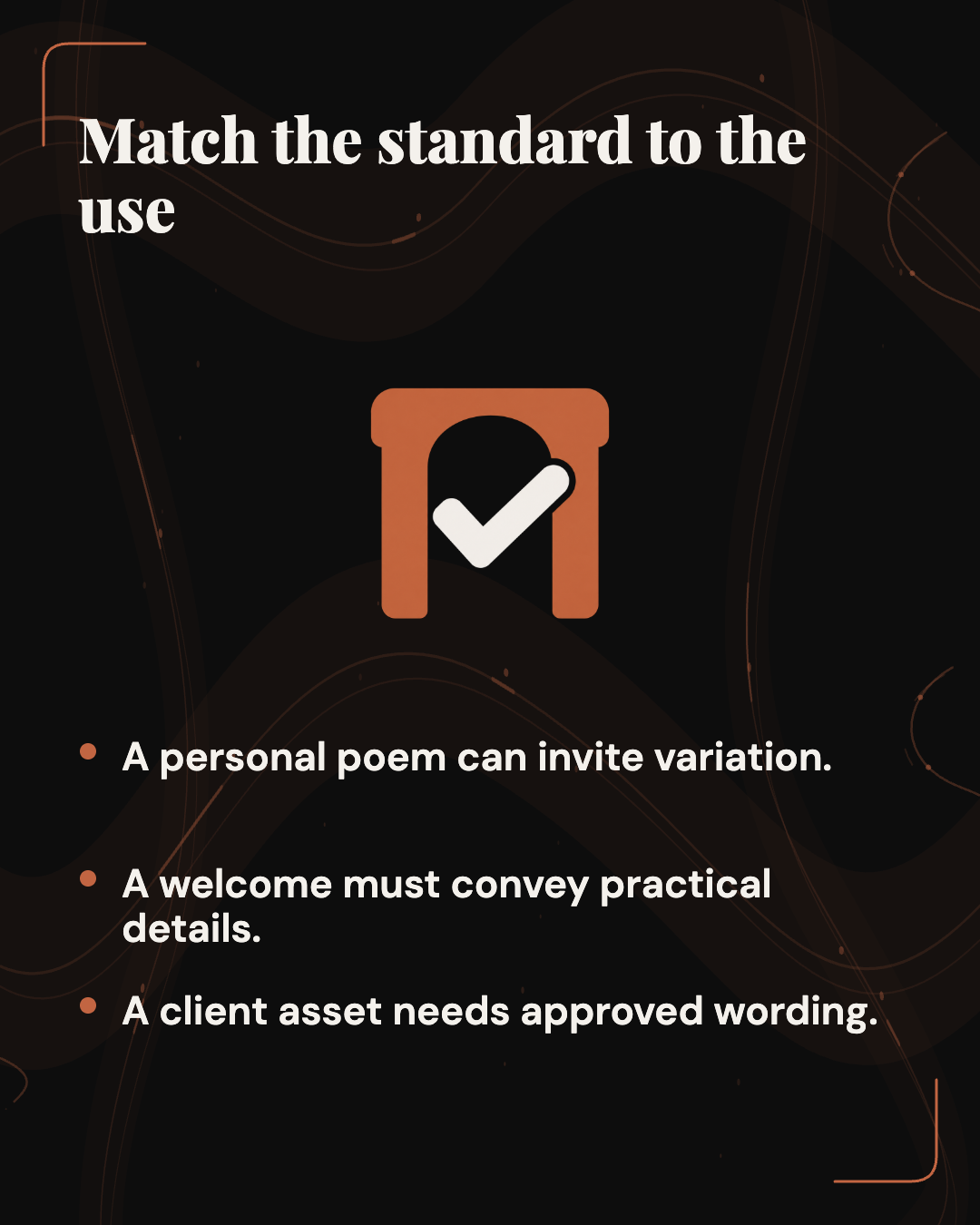
The useful comparison is the cost of a mistake for each listener. A poem can invite another interpretation. An internal welcome fails if people miss where to go. A client announcement can fail even when it sounds clear if its approved wording changes or the intended use is not permitted. Set that acceptance standard before generating anything. Otherwise, the most enjoyable draft can become the default choice simply because no one defined what the audio needed to accomplish.
 View image detail
Write a brief that gives the review a fair starting point
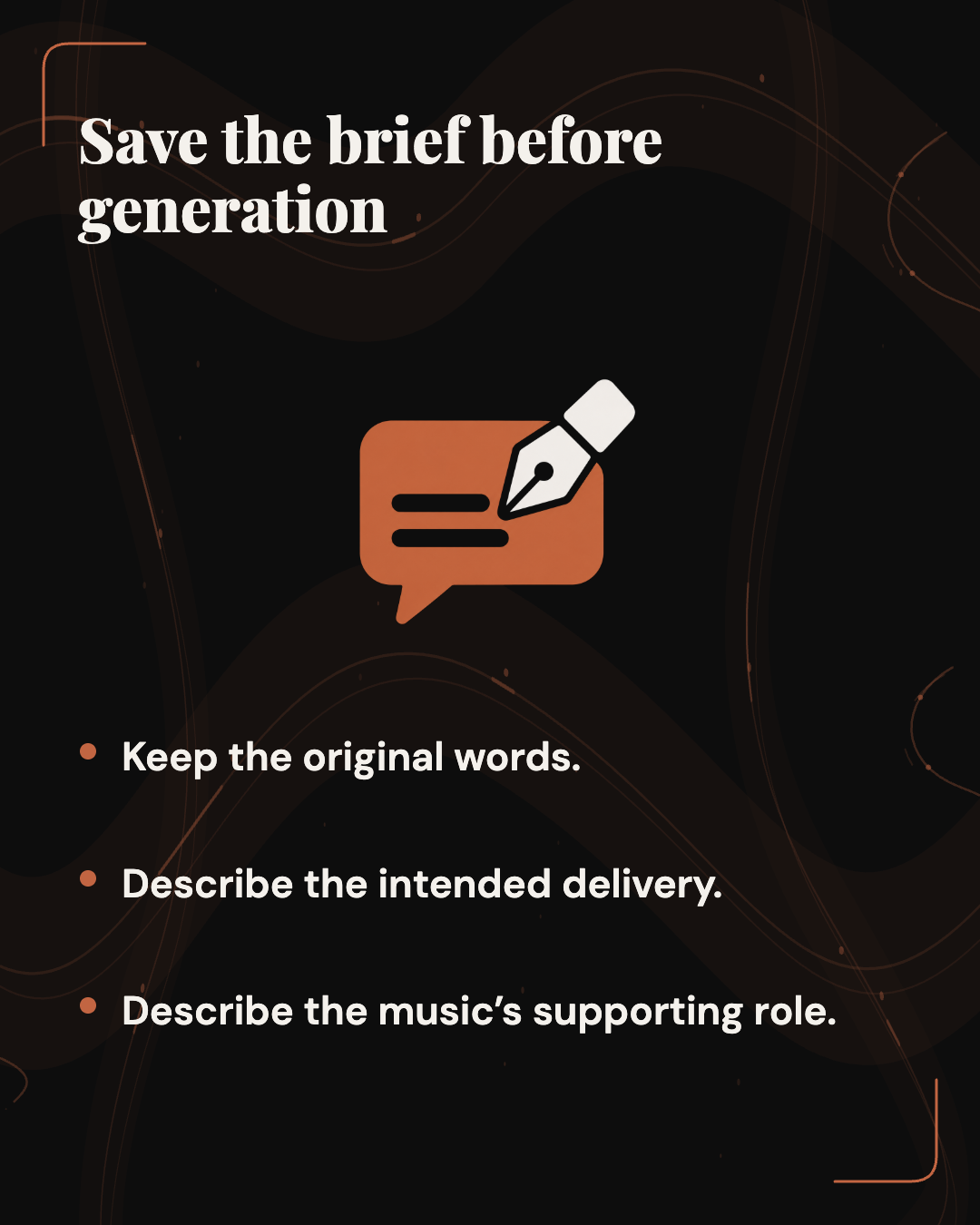
Suppose the project is a short welcome for a local workshop. An original draft might say: “Welcome to tonight's workshop. Settle in, meet someone new, and keep your questions nearby. We'll begin in a moment.” This is an illustrative script written for this article. It has not been submitted to Suno or turned into audio.
The brief can record three separate decisions. First, the words are fixed for the purpose of this trial. Second, the intended delivery is calm and friendly, with enough space after the welcome for the listener to settle. Third, the music should sit behind the voice rather than make the workshop sound like a movie trailer. Those decisions give a later reviewer a clear basis for judging the track.
Keep the source text and creative direction in a document before generating anything. If an output is later available, the reviewer can compare it with what was intended. Without that record, it is easy to remember the result as “close enough” while overlooking a changed word, an awkward emphasis or a musical cue that steers the message somewhere else.
The captured Suno article supports the broad input types: an idea, a poem or written text, plus descriptions of voice and musical style. It does not establish character limits, exact field names, prompt controls, timing controls or how the system treats fixed text. A real walkthrough would need to inspect the signed-in product before giving interface instructions.
This brief is useful even if Speech is inaccessible or unsuited to the task. It can guide another production method because it separates the message from the sound around it. The goal is a reviewable creative choice, not a claim that one product must provide every step.
 View image detail
Listen for the words before the atmosphere
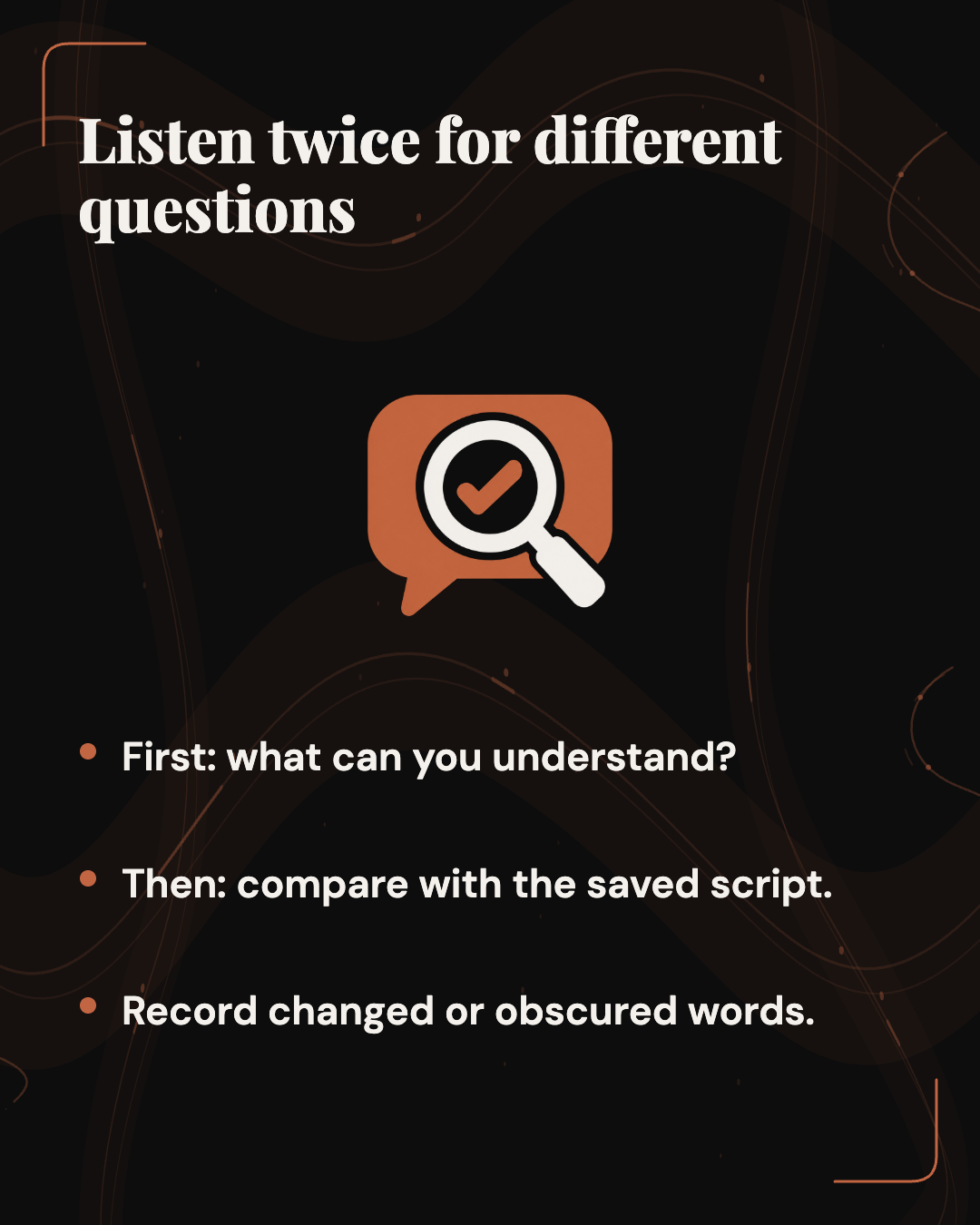
The first playback should answer a plain question: what did you understand without reading along? Put the script aside. Listen at a normal level. Note any phrase you cannot catch, any name you would need to hear again and any point where music draws attention away from speech. This would be a proposed review procedure, not a report of a performed test.
On the second playback, follow the saved text. Check for words that sound changed, missing or inserted. Note pronunciation and emphasis when they affect meaning. A welcome message can survive a little expressive variation; a date, address, disclaimer or approved line may not. The acceptance rule should follow the job the audio must do.
A compact review note could list the intended phrase, what a listener heard and the decision it creates. For example, if a hypothetical output made the workshop's start time unclear, the note would call for revision or another production method. This example describes a possible failure. It is not an observation about Suno Speech.
There is a useful distinction between “the words appear in the track” and “a listener can understand them.” Music might cover a consonant. A pause might make two related sentences feel disconnected. A delivery might emphasize a minor phrase while flattening the instruction that matters. Those are reasons to listen without the script first, then use the script to diagnose what happened.
The review should also account for the listening situation. A piece meant for a quiet room may be judged differently from one expected to play through a phone speaker in a busy setting. The announcement provides no measurement for either situation. If the intended destination matters, assess the actual file under that destination's conditions before making a claim about suitability.
 View image detail
Judge voice and music as a pair
After checking the words, listen to the delivery. Does the pace give a listener time to take in the message? Are pauses helpful or distracting? Does the voice maintain the intended character? Suno's warning about accent drift and exaggerated pauses makes these sensible checks, although its announcement does not quantify the risk.
Next, listen to the music at the moments where the words do important work. It may create a fitting mood at the opening yet compete with a name or instruction later. A score that rises under the closing line may help a reflective piece and overwhelm a practical reminder. The question is what the combination does for this message, with this listener in mind.
A track can pass one part of the review and fail another. In a hypothetical case, the voice might pronounce every word clearly while the score makes a friendly welcome sound strangely solemn. In another, the mood might feel right while a long pause interrupts the instruction. These examples show why “sounds polished” is too broad a verdict. No such result has been observed for Speech here.
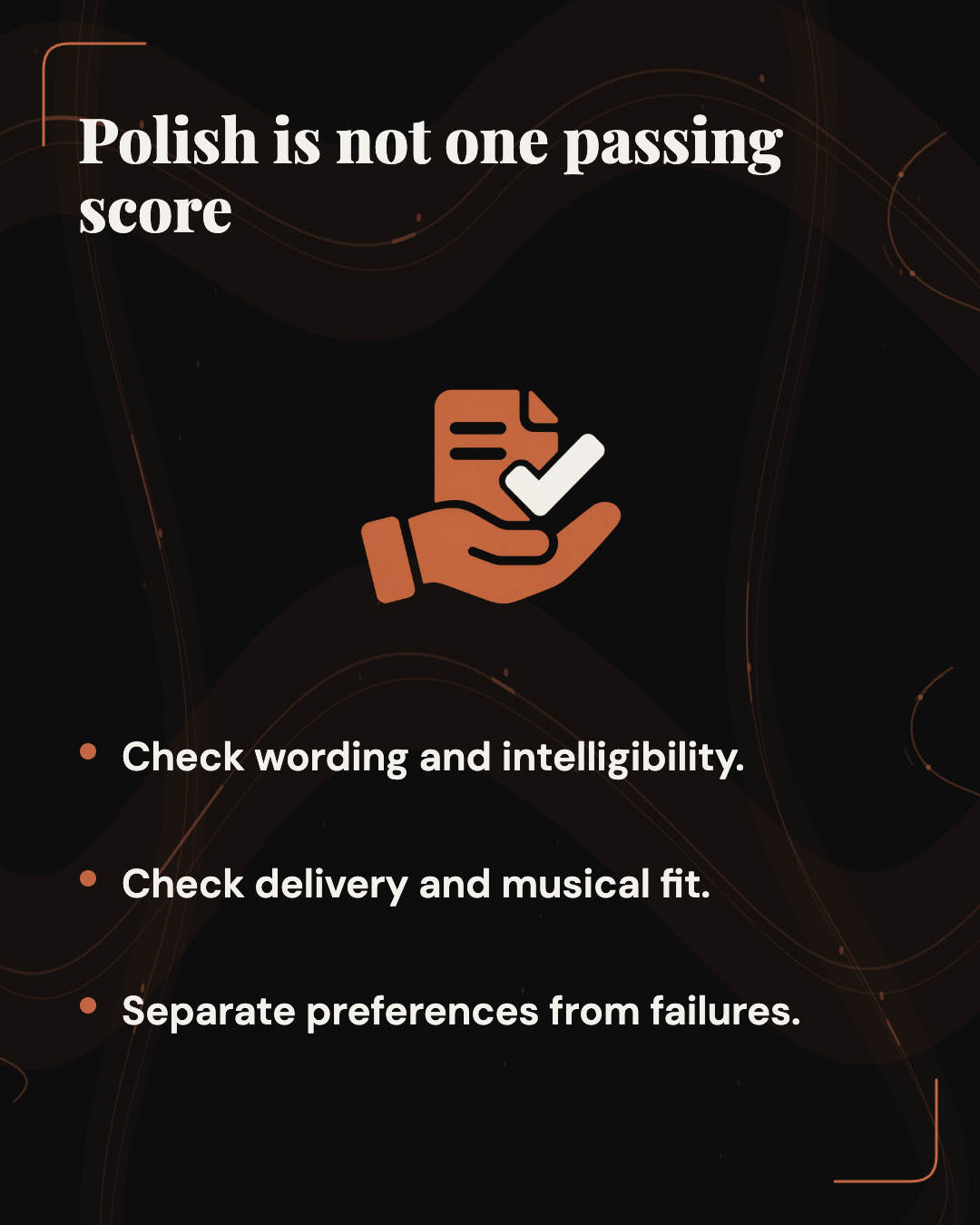
It helps to distinguish a creative preference from a requirement. “I would prefer a quieter opening” may invite another version. “Listeners cannot understand the event time” is a functional failure for that use. Recording the difference keeps feedback actionable and prevents a review from turning into an endless search for a vaguely better sound.
A simple decision record might have four headings: wording, intelligibility, delivery and musical fit. Under each, write an observation only after hearing a track. If there is no track, leave the result blank. The brief can establish the criteria in advance; it cannot establish the outcome.
 View image detail
Decide what to do when the draft misses
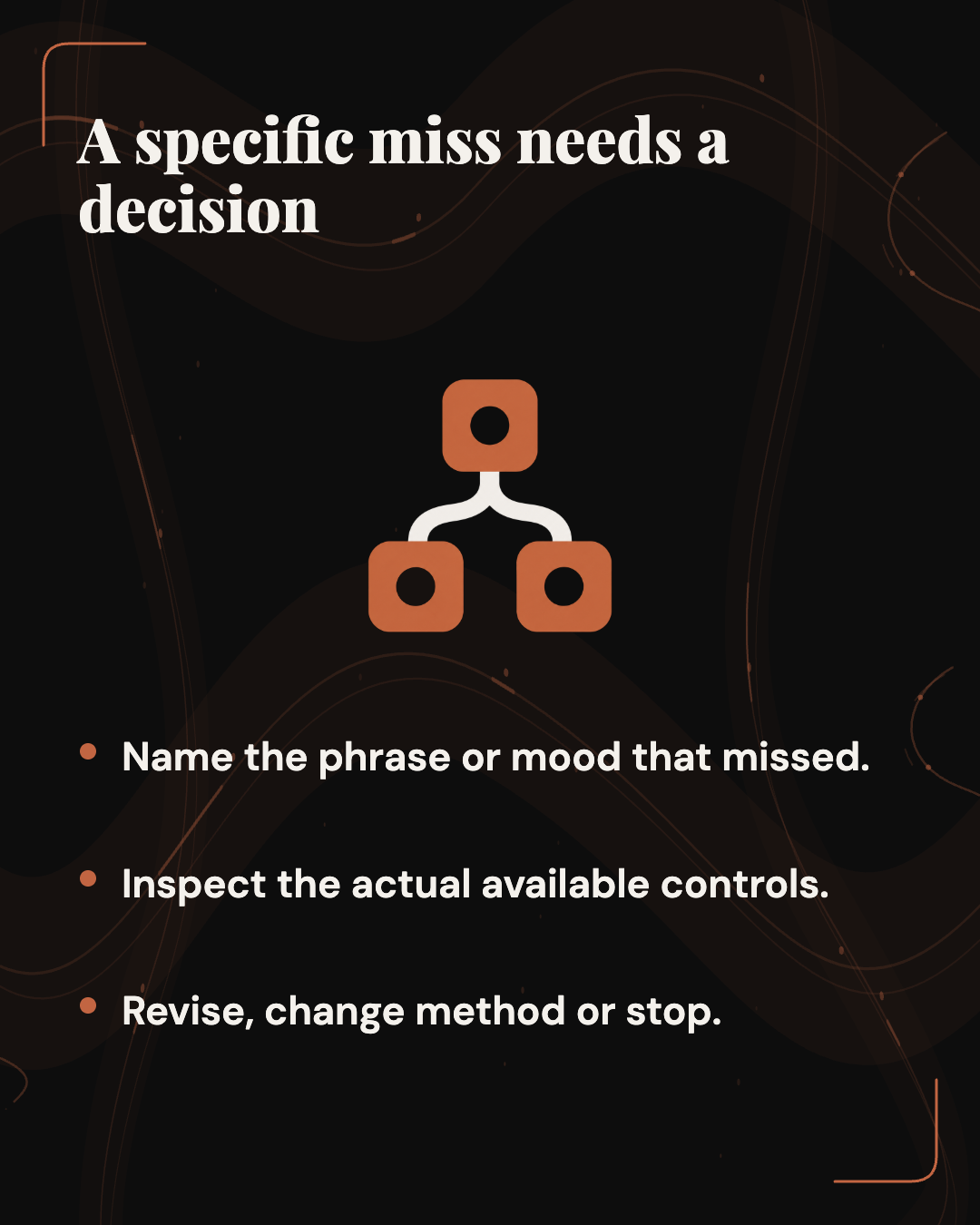
If a future track misses the brief, the next action depends on the kind of miss. Unclear words may call for shorter source text or a different production approach. A mismatched mood may call for different creative direction. A pause or accent issue may call for another attempt if the available product controls support one. These are possible decisions, not a verified list of Speech editing functions.
The captured announcement does not say whether voice and music can be edited separately, whether part of a track can be regenerated, whether timing can be set precisely or which export controls exist. A creator should inspect the product before planning a workflow around any of those operations. If a requirement depends on separate stems or exact timing, treat that as an open requirement until it can be confirmed.
The review can still prevent wasted effort. Write down the failure in terms of the job: “the event name is hard to hear” is more useful than “make it better.” Then decide whether another generation could reasonably address it, whether the original wording needs work, or whether a method with more direct control is appropriate. No number of retries can be recommended from the announcement alone.
There is also a point at which a draft is enough. If the goal is to explore how a message could feel with music, an imperfect version may help a team discuss tone. That is different from accepting it as a public asset. Keeping those purposes separate lets a creator use an early concept without quietly lowering the standard for release.
 View image detail
Keep release questions separate from listening questions
A clear, appealing track still needs a permitted use. Before posting, delivering or selling an output, check the current terms that apply to the account and the intended use. The captured Suno announcement does not establish pricing, a commercial-use entitlement, sharing rules, consent terms or any voice-cloning feature. It also does not establish a Speech API. Those facts remain open; they should not be inferred from the product description.
For a client project, the approval path matters as much as the sound. Someone needs to confirm the exact words, intended audience, usage rights and final file. A saved brief and listening notes can make that review easier to conduct. They do not provide legal clearance or prove that a client approved the result.
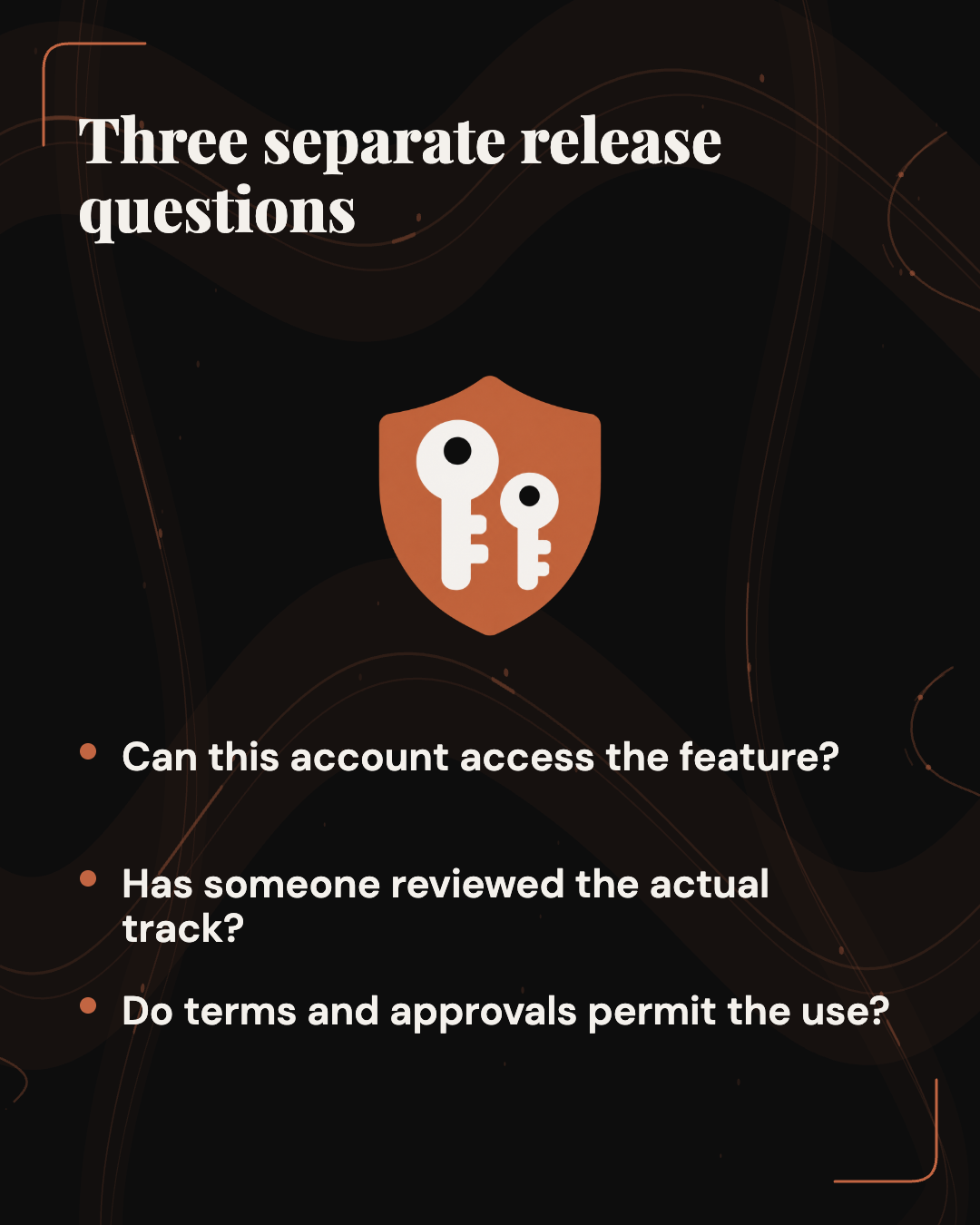
A creator might therefore use three separate decisions. Is Speech accessible in the relevant account? Does the generated piece meet the message and sound criteria? Do the current terms and required approvals permit this use? A “yes” to one does not answer the others. The captured source supports planning the questions, while actual account access, output review and terms review must supply the missing answers.
This boundary should be set before building a deadline around the beta. If a piece must be published on a fixed date, unresolved access or rights are production risks. A short exploratory draft is a good place to learn. A committed client deliverable needs evidence that the required route actually works.
 View image detail
A go, revise or stop decision
For a first trial, “go” means the creator has confirmed access and chosen a use that can tolerate exploration. The brief fixes the message, audience and desired sound. If generation succeeds, the track can be reviewed for intelligible words, suitable delivery and supportive music. “Revise” means a specific issue seems addressable with the controls actually available. “Stop” means a necessary condition, such as clear wording, suitable control or permitted use, cannot be met or remains unresolved for the intended release.
For a broader check on whether this recurring task deserves automation, the Rise guide to work worth doing asks about frequency, input stability, judgment, failure consequences and maintenance. That framework can help decide where listening and release approval belong. It does not verify Suno’s output quality.
The three decisions should stay visible on one review record. Before generation, mark account access and the intended use. After generation, add observations about the actual words, voice and music. Before release, check the terms that apply to that account and ask the responsible person to approve the specific file. A missing entry is a question to resolve, not a passing score. This record does not need to be elaborate. Its value is that an attractive draft cannot silently stand in for an access check, a careful listen or permission to use it.
Suno's October 1 announcement gives enough information to design that evaluation. It says Speech combines spoken audio and original background music and invites users to describe both voice and musical style. It also acknowledges beta issues with accents and pauses. It does not tell us how this particular test would turn out.
For a creator with a short spoken idea, that makes Speech worth a bounded look if access is available. Keep the first brief small, save the words and judge any actual output against the job it must perform. A finished deliverable requires more than an appealing preview: it requires a track that has been heard, the relevant terms checked and the right people satisfied with the result.
Related reading
For a related look at the authority boundary, read OpenAI Agents API browser permissions and recovery. For a different coding-agent decision, see what to review before expanding an AI agent’s authority.
Checked for this article
Sources
Keep going
Related notes.

Creator Workflows
Qwen Image 2.1 RGBA: Can It Replace Background Removal?
Native transparency could remove a separate extraction step. The useful test is whether the saved layer works in your actual design, with less repair and a clear delivery handoff.
Read the article
Creator Workflows
Can Gemini 3.8 TTS Support a Reusable Voice for a Content Series?
A recurring Gemini 3.8 TTS voice needs rights, production access, multi-scene consistency, manageable review and usable source files. This article maps a pilot before a team commits to a series.
Read the article
Automation and Agents
Google CC for Households: What Members Can Share and What to Check
Google says CC can turn selected household information into a shared brief, Calendar entries and Tasks. Here is how to assess the inputs, the plan and permission before outside action.
Read the article